
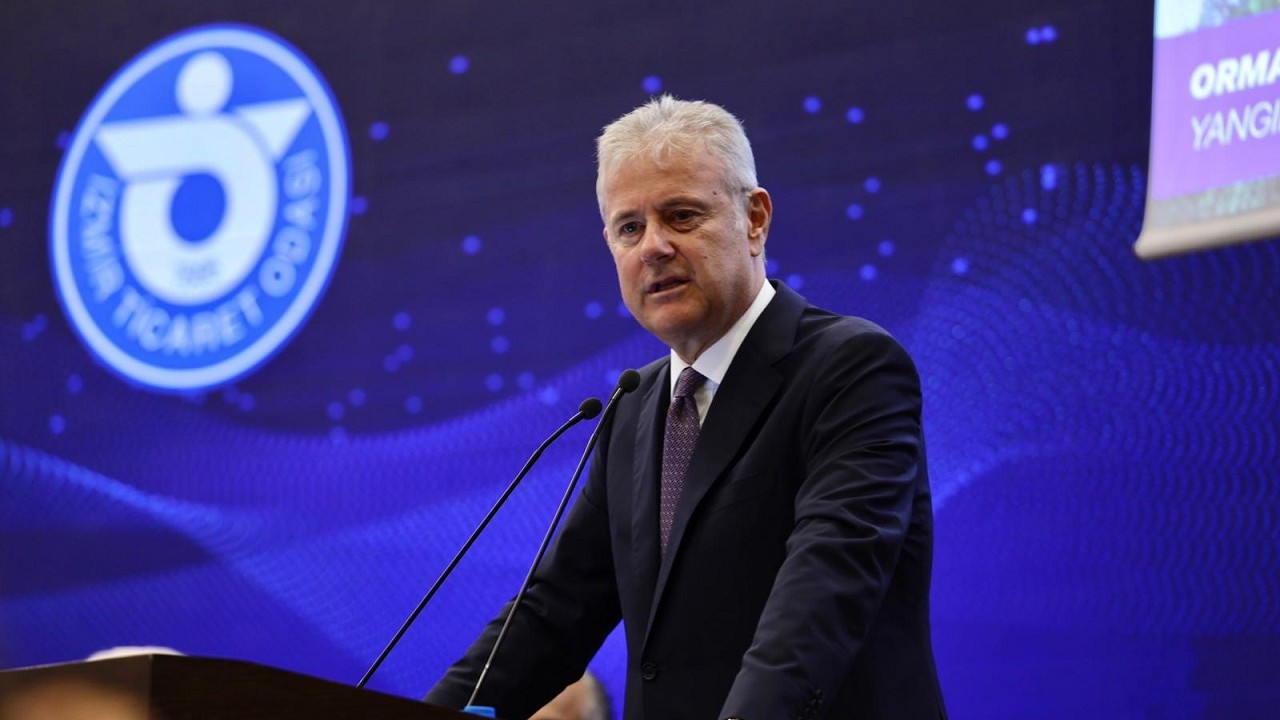
In his address during the July session of the İzmir Chamber of Commerce Assembly, Chairman Mahmut Özgener offered a sobering analysis of Türkiye’s export-oriented manufacturing sector. He warned that the country is rapidly losing its competitive edge—especially in labor, intermediate goods, and financing costs—while rivals are pulling ahead with structural advantages and dynamic productivity policies.
Mounting Costs Erode Türkiye’s Competitive Advantage
According to Özgener, the gap between Türkiye and competing countries is widening, especially in terms of input and labor costs. What was once Türkiye’s key advantage—its youthful and affordable workforce—has now, he argued, turned into a liability.
“Our labor force used to be an advantage, particularly in 2017 and 2018. Today, it’s become a point of concern,” he noted. “While labor costs are rising, productivity is stagnating, driving up per-unit production costs and leaving us behind in global competitiveness.”
He pointed to a broader economic issue plaguing Türkiye: static productivity loss. Özgener emphasized that unless this trend is reversed, implementing dynamic productivity models, as seen in many developed economies, will become increasingly difficult.
Financing Costs Now a Major Obstacle for Industry
High borrowing costs remain one of the most pressing challenges for the Turkish business community. Özgener stressed that financing difficulties—compounded by inflation and monetary tightening—are now severely limiting investment, production, and sustainability.
“One of the biggest barriers our members face is accessing finance. Rising interest rates and narrowing capital bases are putting immense pressure on operations,” he explained.
Although expectations earlier this year included a decline in inflation followed by accelerated interest rate cuts, the current outlook is less optimistic. The Central Bank has initiated a cautious rate-cutting path, but inflationary pressures continue to slow progress.
Özgener believes that, despite the setbacks, the broader economic program is still moving in the right direction. However, he acknowledged that the costs of stabilizing inflation have exceeded projections.
Economic Indicators Will Shape the Central Bank’s Next Move
Looking ahead, Özgener noted that economic indicators for July and August—particularly inflation figures—will be pivotal in shaping the Central Bank’s decisions in its September policy meeting.
He also pointed to ongoing weak industrial production and soft consumer demand as additional variables that may influence the pace and depth of future interest rate adjustments.
“Our hope is that the inflation control program yields results soon and that we can begin to see a meaningful, lasting decline in inflation,” he said.
Global Trade Disruptions and the Urgency of New Agreements
Touching on global economic uncertainties, Özgener warned of an increasingly challenging period ahead regarding customs tariffs. He emphasized that Türkiye must act swiftly to complete bilateral and multilateral free trade agreements to avoid trade isolation.
“We are entering a phase where global customs policies will be more protectionist and volatile. To navigate this, Türkiye must accelerate its free trade negotiations,” he stated.
He drew attention to the fact that the post–World War II political and economic order is under scrutiny globally, with countries reintroducing traditional industrial tools such as strategic tariffs, local subsidies, and export controls for sensitive technologies.
“Especially in response to China’s industrial ascent, advanced economies are returning to protective policies to maintain technological sovereignty and industrial strength,” Özgener added.
He urged Türkiye to not only respond to this global shift but also to commit to systemic transformation rather than reactive protectionism.
Static vs. Dynamic Productivity: A Critical Divide
At the heart of Özgener’s message was the idea that Türkiye’s current productivity model is outdated. While the rest of the world shifts toward dynamic productivity—leveraging technology, innovation, and workforce training—Türkiye remains stuck in a static mode.
“If we continue on this path, we risk missing out on the global race for competitiveness. Our economic bottlenecks are clear symptoms of deep-rooted structural problems in productivity,” he cautioned.
The call to action was clear: Türkiye must break free from short-term fixes and develop long-term productivity strategies to sustain industrial growth and maintain global relevance.
Support for Businesses Through the Nefes Loan Program
In response to ongoing financial strain, Özgener praised the launch of the TOBB Nefes Loan Program, a credit initiative aimed at offering favorable loans to small and medium-sized enterprises (SMEs).
“We’ve consistently emphasized how vital access to affordable financing is. In a tightening economy, companies need every bit of support they can get,” he said.
According to Özgener, İzmir has so far received 1.6 billion TL from the Nefes Loan pool, with 770 out of the 1,000 total beneficiaries being members of the İzmir Chamber of Commerce. He expressed hope that this initiative would provide the financial breathing room many businesses urgently require.
The Path Forward: Adaptation, Reform, and Collaboration
Özgener’s address painted a comprehensive picture of Türkiye’s economic crossroads. From financing hurdles and inflation risks to structural productivity challenges and global trade shifts, his remarks called for a forward-looking strategy that embraces transformation over improvisation.
He closed with a message of cautious optimism, stressing that while the road ahead will be difficult, decisive action, institutional cooperation, and smart economic planning can help Türkiye adapt and thrive in a rapidly changing world economy.