
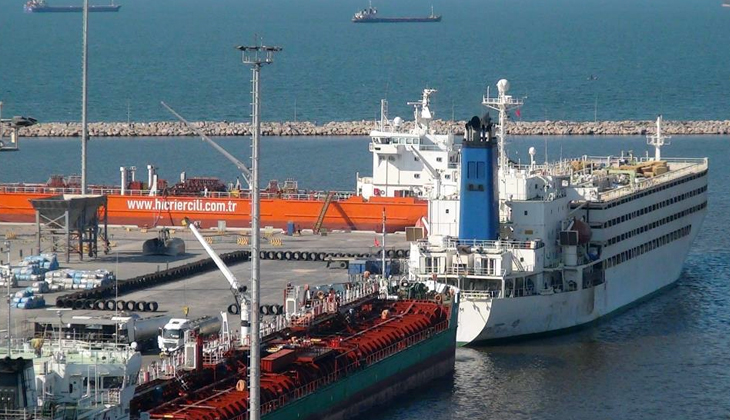
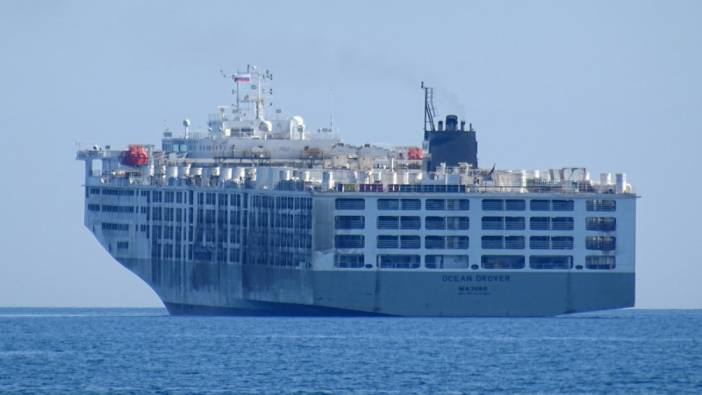
In Bandırma, Balıkesir, a significant environmental issue has emerged as an imported livestock vessel carrying hundreds of cattle has remained anchored at Çelebi Port for more than a week without being unloaded. Authorities have yet to grant import approval due to discrepancies between the animals’ official passport documents and their ear tag numbers. This delay has turned the ship into a floating concern for the city, creating health and environmental challenges for residents, who are struggling with overwhelming odors and an increase in flies, forcing many to keep doors and windows closed for days.
The ship, known as Spiridon-II, arrived at Çelebi Port eight days ago. Despite docking successfully, the vessel has yet to be cleared for unloading due to mismatched documentation. According to reports, the ear tag numbers of the imported cattle do not correspond with the official paperwork, halting customs clearance. As a result, the ship has become more than just a logistical challenge; it has started to affect the quality of life for nearby residents. Citizens living in the Paşabayır and Paşakent neighborhoods report that the foul smell spreads across the city, worsening with every breeze. One resident explained, “Since the arrival of the ship, even stepping outside has become difficult. The odor is pervasive, and it seems to invade every corner of our homes.”
Residents have expressed frustration over the silence of Çelebi Port authorities and relevant governmental agencies. Many describe this lack of communication as negligence, stressing that the city is witnessing an environmental crisis that appears to have no immediate resolution. Citizens have urged officials to take responsibility and implement measures to alleviate the growing problem, emphasizing that urgent action is required to protect both public health and animal welfare.
Animal Welfare Challenges on the Ship
While port authorities have provided supplemental feed to prevent the animals from going hungry, conditions on the ship continue to deteriorate. Reports indicate that the cattle are confined to limited space, contributing to rising stress levels and unsanitary conditions. Veterinary experts have voiced concern about prolonged confinement in such environments, stating that it can lead to both physical and psychological stress in animals. Furthermore, the exporting country has refused to accept the return of the livestock, leaving the ship in a logistical deadlock. Consequently, the animals cannot be unloaded at the port, nor can they be sent back to their country of origin, creating a scenario with serious implications for animal welfare.
Experts in animal transport stress that operations involving live animals carry significant environmental and health risks, particularly when conducted near densely populated urban areas. Transporting live animals through city-adjacent ports increases exposure to potential hazards, including odors, insect infestations, and waste accumulation. “Transporting live cattle so close to residential areas poses substantial risks,” said a veterinary logistics specialist. “Bandırma is currently experiencing firsthand the environmental strain that such operations can cause.”
Public Health Risks and Community Response
The environmental impact of this situation is evident in the rapid proliferation of flies and the pervasive stench emanating from the ship. Local residents report difficulties in maintaining basic living conditions, citing respiratory discomfort and general health concerns. The accumulation of animal waste and the deteriorating condition of the livestock pose a risk not only to the animals themselves but also to humans in nearby neighborhoods.
Despite the growing public concern, officials at Çelebi Port have not issued detailed statements, leaving citizens feeling ignored and frustrated. Many residents are taking matters into their own hands by documenting conditions and sharing information through social media, emphasizing the need for immediate intervention. Health specialists have also highlighted the risk of potential disease outbreaks linked to unsanitary conditions, pointing out that vector-borne illnesses could affect both livestock and humans if the situation persists.
Logistical and Legal Complications
The ongoing impasse highlights the complexity of international livestock transport. Legal and logistical hurdles have combined to create a situation in which neither unloading nor returning the animals is currently feasible. Customs authorities cite mismatched documentation as the primary reason for the delay, while the exporting country’s refusal to accept a return shipment compounds the problem. This combination has left authorities scrambling to find a resolution that meets regulatory, humanitarian, and environmental standards.
Additionally, the presence of a large number of livestock in close proximity to residential areas underscores the importance of strategic port management. City planners and logistics specialists note that high-risk operations such as live animal transport should be relocated away from urban centers to prevent environmental crises. Experts suggest that designated livestock terminals with proper containment and waste management facilities would significantly reduce such risks in the future.
Strategies for Addressing the Crisis
Authorities are being urged to implement immediate and long-term strategies to resolve the Bandırma situation. Emergency measures could include temporary relocation of the ship to a less populated area, installation of odor control systems, and provision of veterinary care to ensure animal welfare. Long-term strategies should focus on relocating live animal import operations to ports designed to handle high-risk cargo, implementing pre-shipment verification of documents, and establishing rapid-response protocols for environmental and health emergencies.
Community engagement is also critical. Officials need to communicate transparently with local residents, providing updates on the status of the livestock and the steps being taken to resolve the situation. Involving citizens in monitoring and reporting environmental conditions can enhance accountability and help ensure that authorities respond promptly to any deterioration in conditions.
Broader Implications for Live Animal Transport
The Bandırma incident illustrates the broader challenges of transporting live animals internationally. It highlights the need for accurate documentation, meticulous planning, and coordination between exporting countries, port authorities, and local governments. Effective management is essential not only for economic efficiency but also for maintaining animal welfare and public health standards.
Experts argue that incidents like this could serve as learning opportunities for improving regulatory frameworks and operational protocols in the live animal transport sector. By establishing clear guidelines, monitoring systems, and emergency response plans, authorities can mitigate the environmental impact of livestock shipments while safeguarding both human and animal populations.
Call for Action and Accountability
As the crisis continues, residents are calling on local and national authorities to take decisive action. They emphasize the urgency of protecting public health, ensuring animal welfare, and minimizing environmental damage. Immediate measures, coupled with long-term policy adjustments, are necessary to prevent similar situations from arising in the future.
This unfolding situation in Bandırma underscores the delicate balance required in managing live animal imports. The case demonstrates how lapses in documentation, logistical planning, and community communication can escalate into significant environmental and public health challenges.
Editor’s note: This article is based on firsthand accounts from local residents, statements from veterinary and logistics experts, and verified news sources. All efforts have been made to provide a thorough, accurate, and informative overview of the ongoing situation in Bandırma.