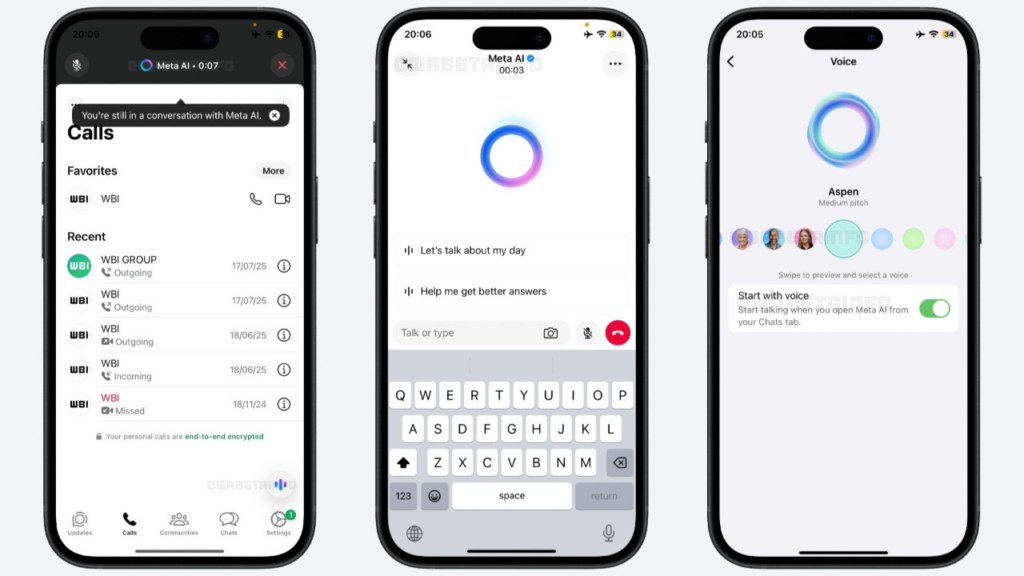

WhatsApp, one of the world’s most widely used messaging platforms, is preparing to take user experience to a whole new level. A recent feature spotted in the iOS beta version reveals that Meta AI—the artificial intelligence system developed by Meta—is gaining a powerful upgrade: voice interaction. This means that users will soon be able to engage in real-time, spoken conversations with the AI assistant, without the need to type messages manually.
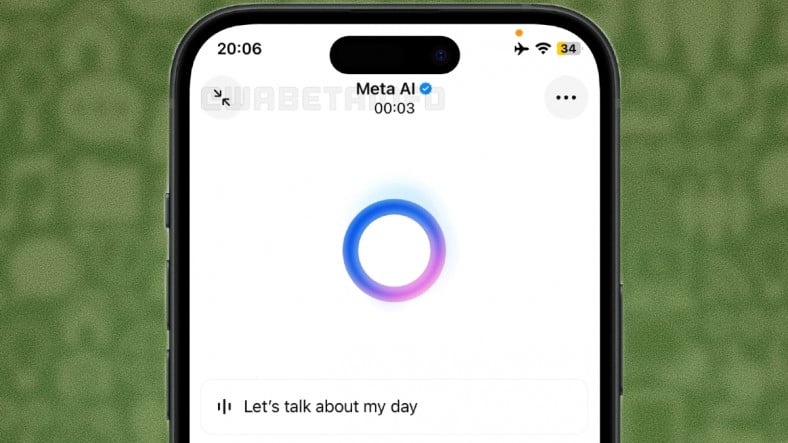
Voice Interaction Brings AI Conversations to Life
Until now, most AI-powered chatbot interactions—including Meta AI—have relied exclusively on text-based exchanges. While typing is convenient for many, it lacks the natural flow and speed of spoken conversation. With the introduction of voice chat, WhatsApp aims to make AI interaction faster, more intuitive, and accessible—especially for users who may find typing cumbersome or time-consuming.
The new feature allows users to access Meta AI directly from the chat screen and communicate using their voice, similar to how they would with virtual assistants like Siri or Alexa. According to early testers, a dedicated microphone icon has been added to the bottom-right corner of the search tab in the iOS beta version. Tapping this icon instantly initiates a voice session with Meta AI, opening the door to a more human-like conversational experience.
A Shift Toward More Natural Communication
The move aligns with a broader trend in the tech industry where companies are striving to humanize digital interactions. Meta’s ambition to integrate AI more seamlessly into its apps is no secret. By bringing voice capabilities to its chatbot, Meta is signaling its intent to compete directly with services like ChatGPT Voice, Google Assistant, and Amazon Alexa.
This voice chat functionality is not just a convenience—it has the potential to transform how users engage with information, manage tasks, or even entertain themselves through WhatsApp. For instance, asking Meta AI for travel advice, recipe suggestions, or real-time translation could become as simple as having a phone call.
Feature Still Unavailable in Türkiye
Despite the excitement surrounding this innovation, users in Türkiye may have to wait. Currently, Meta AI is not active in Türkiye, and there has been no official statement from Meta regarding a rollout timeline for the country. This limitation means that Turkish users won’t be able to access the voice interaction feature just yet, even if it becomes globally available in other regions.
The lack of availability underscores a broader concern about regional disparities in access to emerging technologies. While WhatsApp is quick to innovate in global beta channels, localized rollouts often lag due to regulatory, technical, or market-specific challenges. It remains unclear when users in Türkiye will be able to interact with Meta AI, either via text or voice.

What This Means for the Future of Messaging
Even though this specific feature isn’t immediately usable in Türkiye, its mere existence is a clear signal of where digital communication is heading. The integration of voice-controlled AI in messaging apps represents a pivotal shift from reactive texting to proactive, conversational computing. It’s no longer just about sending messages—it’s about building an intelligent assistant into your everyday chat experience.
This development could set the stage for a future where messaging apps become true productivity and lifestyle tools. Imagine scheduling appointments, summarizing emails, generating creative content, or even engaging in mental wellness conversations—all through spoken interactions within WhatsApp.
Voice AI Integration in Messaging: A Growing Trend
WhatsApp is not alone in this race. Tech giants across the board are experimenting with voice and AI in their messaging ecosystems. Apple has been gradually enhancing Siri’s contextual capabilities, while Google is integrating Gemini AI into Android’s system-level functions. Meanwhile, OpenAI has launched Whisper, a speech recognition model that powers voice-to-text features in various tools.
The common denominator in all these efforts is the push toward hands-free, voice-first interfaces. These systems aim to offer convenience, speed, and inclusivity—especially for users with accessibility needs. With Meta AI now joining the fray in WhatsApp, the competition in AI-driven communication is likely to intensify.
What to Expect Next
While users in Türkiye may need to wait for official support, the introduction of this voice feature raises important questions: Will Meta AI offer multi-language support for voice recognition? How will privacy and data protection be handled with voice input? Will this functionality be extended to group chats or third-party integrations?
Given Meta’s investment in AI infrastructure and its vision of the metaverse, it’s reasonable to assume that this is just the beginning. Future updates could expand the assistant’s capabilities, potentially enabling real-time translation, smart replies, and even interactive voice-driven content creation.
A New Layer of Convenience and Intelligence
The ability to speak directly with Meta AI may reshape how people interact with technology on a daily basis. Especially for busy users who multitask or need instant answers on the go, voice interaction offers a uniquely powerful tool. It reduces friction, saves time, and mimics the most natural form of human communication—speech.
More importantly, it demonstrates how AI is evolving from a behind-the-scenes tool into a proactive digital companion. As Meta fine-tunes its AI across platforms like Instagram, Facebook, and now WhatsApp, the integration of intelligent, voice-based support is likely to become a staple rather than an exception.