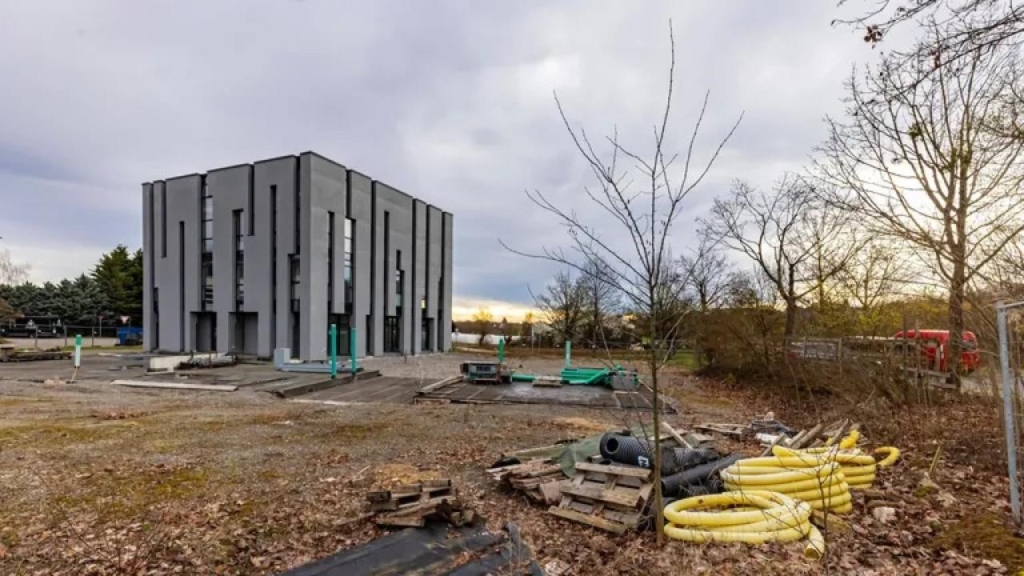

A mosque construction project in the German town of Leinfelden-Echterdingen is making national headlines—not for its completion, but for the fact that it will soon be demolished by official decree. This decision, made by the local city council, marks the first time in Germany that a municipality has ordered the demolition of a mosque built by a religious organization. The case has sparked legal, political, ecological, and cultural controversy, raising profound questions about integration, trust, and the future of religious infrastructure in Germany.
Background of the VKBI Mosque Project
The mosque in question was initiated in 2014 by the Kultur, Bildungs- und Integrationsverein (VKBI), a local organization operating under the umbrella of the Verband der Islamischen Kulturzentren (VIKZ), or the Union of Islamic Cultural Centers. VIKZ is one of Germany’s oldest and most established Muslim organizations, second only to the Diyanet-affiliated DİTİB in terms of membership and institutional reach. Founded in 1973 in Cologne, VIKZ currently oversees more than 300 mosques and religious centers across the country and represents a network closely aligned with the Süleymancı movement, which follows the teachings of Süleyman Hilmi Tunahan.
The VKBI began construction on municipal land granted through an easement agreement—a form of right-of-use deal often made between local governments and cultural or religious organizations. The agreement included a four-year timeframe for completion of the mosque, but over a decade later, the structure still stands incomplete.
Why the Mosque Will Be Demolished
The local government’s patience appears to have reached its limit. In a council meeting held last week, Leinfelden-Echterdingen’s city council voted to cancel VKBI’s rights to the land and ordered the organization to demolish the nearly completed mosque by the end of this year at its own expense—including covering the cost of demolition. The final push for this drastic move included:
Missed construction deadlines
Unresolved technical issues
Controversy over the inclusion of a student dormitory—a component not originally approved in the city’s planning documents
The municipality claims it made extensive efforts to resolve the issue through dialogue. However, local media reports that “trust was irreparably broken”, especially after the VKBI continued pushing for a student residence project that had already been rejected by the city.
Legal Repercussions and Court Rulings
VKBI’s failure to complete the project within the agreed timeframe triggered the cancellation of its easement rights. In response, the organization requested ownership of the land, but both the Stuttgart Higher Regional Court and Germany’s Federal Court of Justice (BGH) rejected this plea in successive rulings. The BGH’s January 2024 decision definitively sided with the municipality, effectively granting it the legal authority to proceed with demolition.
This ruling sets a significant precedent—not just for local governance but also for religious freedom discourse in Germany. Critics argue that the city’s decision is excessively punitive, while others see it as a legitimate exercise of urban planning enforcement.
A Dormitory That Divided Opinions
One of the central sticking points in negotiations was VKBI’s insistence on building a student dormitory as part of the mosque complex. While the organization viewed this as an extension of its educational and cultural mission, the municipality expressed consistent concern about its compatibility with the local zoning plan.
Some city officials viewed the dormitory as a breach of the original development agreement and a potential risk to neighborhood cohesion. When compromise failed, it deepened the breakdown in trust that ultimately led to the council’s vote.
Public Reaction: Ecology, Politics, and Integration
The fact that the mosque is almost finished but still set for demolition has led to public outcry across multiple fronts:
Ecological Concerns: Activists have questioned the logic of tearing down a nearly completed building in an age of climate crisis and resource conservation.
Integration Debate: Supporters of the Süleymancı community argue that the decision reflects growing skepticism toward Muslim organizations in public life, while others claim that legal and contractual obligations should apply equally to all groups.
Political Ramifications: Opposition politicians and civil rights groups have begun using the case to critique the city’s approach to religious cooperation.
A First in German History
Once the mosque is demolished, Leinfelden-Echterdingen will become the first local government in Germany to legally force the demolition of a mosque—a symbolic and practical turning point in the country’s evolving relationship with its Muslim communities. While mosque construction has been contested in various cities before, never has a project been legally reversed at this scale after such significant progress.
This raises uncomfortable questions: Could this set a precedent for other municipalities? Will stricter oversight be applied to future mosque construction plans? And more importantly, what does it mean for Germany’s broader commitment to religious plurality?
The Position of VIKZ and the Süleymancı Movement
The Süleymancı movement is known for emphasizing religious education, discipline, and integration through cultural centers and boarding facilities. VIKZ has been generally viewed as a conservative but cooperative player in Germany’s Islamic landscape. With around 100,000 members, it has often avoided political headlines—until now.
This conflict puts VIKZ and its local affiliates under scrutiny not just for religious leadership, but also for project management, legal compliance, and community relations.
What Comes Next
VKBI has not yet made an official statement regarding how it will proceed, nor whether it will attempt to appeal the demolition order through any European legal mechanisms. Local residents remain divided—some support the council’s firm enforcement of building regulations, while others see it as a failure of multicultural cooperation.
It is unclear whether any elements of the existing structure can be repurposed or whether the land will be cleared entirely. What is certain is that the city’s decision is now legally binding and must be executed by the end of 2025.