In the ever-shifting landscape of global energy logistics, the Turkish Straits — comprising the Bosphorus (Istanbul Strait) and Dardanelles (Çanakkale Strait) — remain essential arteries connecting the Black Sea to the Mediterranean Sea and beyond. Today, these narrow but vital waterways continue to perform with remarkable efficiency, with 14 oil tankers scheduled for transit, according to the latest bulletin shared by Tribeca Maritime Services via ForInvest News.
At a time when geopolitical uncertainty often clouds international shipping routes, the smooth operation of Türkiye’s maritime gateways offers not only logistical assurance but also a degree of economic and energy stability for several regions — including Eastern Europe, the Middle East, and Central Asia.

No Disruptions Reported as Maritime Conditions Remain Favorable
In the report issued to ForInvest News, Tribeca confirms that no significant delays or navigational obstructions have been identified in either of the straits. The weather forecast remains mild and stable over the next 48 hours, with no fog, no wind advisories, and ideal visibility, ensuring that maritime authorities will not be forced to issue warnings or suspend passage.
This is welcome news for oil traders, freight forwarders, and energy strategists who closely monitor the passage of tankers through the Turkish Straits — one of the few maritime chokepoints where civilian and energy transit converge under complex international agreements, notably the Montreux Convention.
Why the Turkish Straits Are Critical to Global Energy Flow
More than just a regional passage, the Bosphorus and Dardanelles are a geopolitical fulcrum. Every year, tens of thousands of ships — many of them carrying crude oil, liquefied natural gas (LNG), and petroleum products — pass through these straits, making them a core component of the global energy chain.
The Black Sea region, including countries such as Russia, Kazakhstan, Azerbaijan, and Ukraine, relies on these passages to export oil and natural gas to European and global markets. With Russia’s traditional pipelines under increasing scrutiny, maritime transport has become more critical, increasing traffic pressure on Türkiye’s straits.
14 Tankers Set to Cross on Schedule
According to today’s data, 14 tankers are planned to transit the Bosphorus and Dardanelles, with varying sizes and cargo types. This number is in line with standard daily figures, suggesting that current marine coordination efforts are functioning efficiently.
Even at full capacity, the Turkish authorities, including Kıyı Emniyeti Genel Müdürlüğü (Directorate General of Coastal Safety) and Vessel Traffic Services (VTS), maintain stringent monitoring to ensure safe navigation. Vessels often proceed in convoys with assigned time slots, and large tankers — particularly those carrying hazardous materials — are required to employ local pilots and tugboat escorts.
Managing Congestion Without Compromising Safety
Though today’s outlook is positive, the challenge of congestion in these narrow channels remains a persistent concern. The Bosphorus, at its narrowest point, is only 698 meters wide, with complex curves, shifting currents, and heavy ferry traffic — all of which require high precision navigation. The Dardanelles, while wider, presents its own hazards, including strong winds and seasonal fog.
Turkish authorities continue to invest in modern traffic control systems, satellite surveillance, and emergency response infrastructure. These systems help manage large-scale commercial movements without compromising safety for passenger vessels, fishing boats, or touristic traffic — all of which coexist with commercial tankers in these straits.,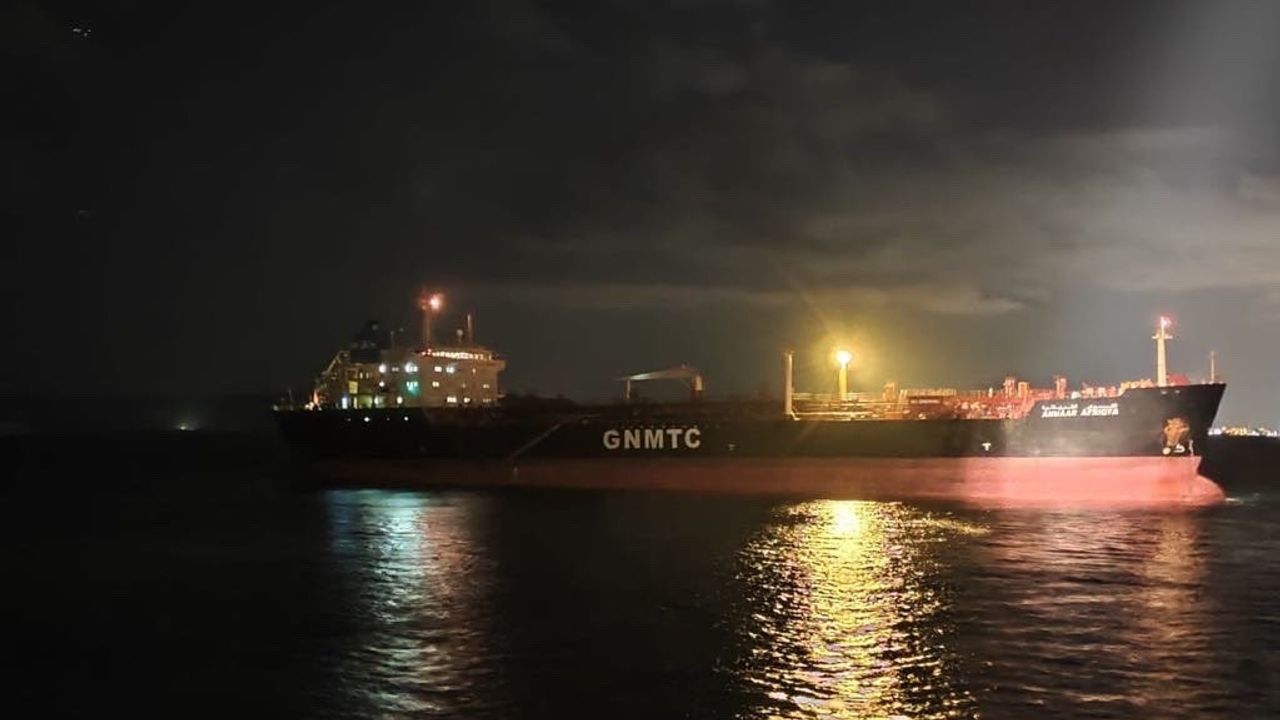
Tanker Size and Average Waiting Times
Although today’s bulletin did not provide specific numbers on waiting times by tanker size, historically, larger vessels (VLCCs and Suezmax types) tend to experience longer delays due to stricter safety measures and scheduling protocols. The average waiting time can range from 12 to 36 hours, but during peak congestion or adverse weather, delays may stretch to 3–5 days.
For now, average waiting times remain low, a sign that maritime flow is well-managed and that current port conditions are favorable.
Economic Importance of a Smooth-Running Maritime Corridor
Beyond energy security, the uninterrupted operation of the Turkish Straits has major economic implications for Türkiye. The straits serve as a key source of maritime service revenue, including pilotage, tugboat operations, ship chandling, and port fees. With each passing tanker contributing to Türkiye’s service economy, the efficient flow of vessels boosts ancillary industries ranging from logistics and warehousing to insurance and maritime law.
It also positions Türkiye as a critical stakeholder in Europe’s energy diversification strategy, especially as European nations seek to reduce dependency on pipelines from politically unstable regions. In this context, the Turkish Straits are more than just waterways — they are strategic diplomatic instruments.
The Role of Montreux and Maritime Sovereignty
Türkiye’s authority over the Turkish Straits is governed by the Montreux Convention of 1936, which regulates passage rights through the Bosphorus and Dardanelles. While the agreement ensures freedom of navigation in peacetime, it also grants Türkiye the right to regulate transit for security and environmental reasons, especially for warships or vessels carrying dangerous cargo.
This framework allows Türkiye to enforce strict safety and environmental standards, especially for oil tankers, which pose substantial risks in case of mechanical failure or collision. The Bosphorus, with its densely populated shoreline, is particularly vulnerable to maritime accidents. Therefore, every ship passing through these waters must comply with meticulous Turkish maritime protocols.
A Growing Priority
While trade and commerce dominate the conversation, environmental concerns are never far behind. The Turkish Straits cut through urban centers, particularly in İstanbul, where an oil spill or tanker accident could have catastrophic consequences for marine ecosystems, fisheries, and local communities.
For this reason, Türkiye has invested in emergency spill response vessels, coastal surveillance drones, and underwater inspection technologies. These tools form a crucial layer of preventive safety infrastructure, ensuring that the volume of tanker traffic does not translate into increased environmental risk.
Public opinion also plays a role. Environmental watchdogs, urban planning groups, and local residents continue to call for reduced transit of hazardous cargoes through inner-city waters like the Bosphorus. Some advocate for redirection through the Kanal İstanbul project, although that proposal remains highly debated.
Forecasting Traffic and Sector Response
Shipping companies, oil exporters, and freight analysts closely track trends in Turkish Straits traffic. The current uninterrupted flow offers a temporary reprieve amid global shipping delays caused by supply chain disruptions and geopolitical bottlenecks in other maritime routes.
However, with seasonal changes approaching and geopolitical tensions in the Black Sea region fluctuating, maritime stakeholders remain on alert. Türkiye’s capacity to balance growing traffic with safety and sustainability will define the long-term resilience of this route.
The passage of 14 tankers today through some of the world’s busiest and most complicated waterways stands as a testament to the efficiency and strategic value of Türkiye’s maritime governance.
As Türkiye continues to develop its role as a central logistics hub, the Turkish Straits will remain not just corridors of commerce, but symbols of balance — between tradition and modernity, sovereignty and cooperation, safety and economic gain.