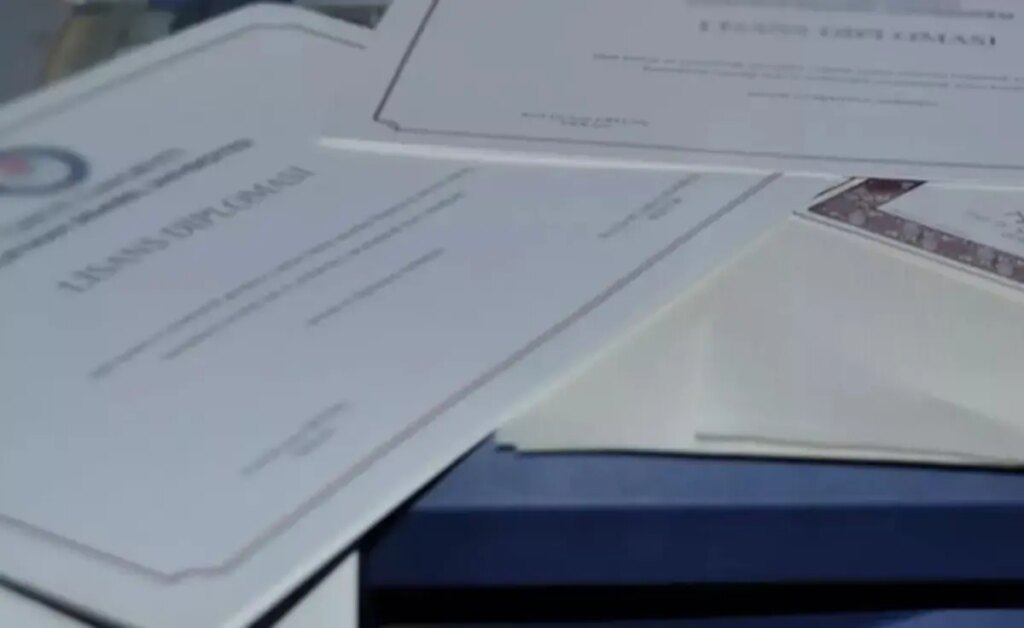

A shocking investigation into fake diplomas and forged official documents has sent shockwaves through Türkiye’s public institutions, revealing what experts describe as a deeply entrenched and highly organized criminal structure. In an exclusive interview on Haberler.com, host Melis Yaşar welcomed prominent lawyer Cüneyd Altıparmak, who exposed the hidden dimensions of this rapidly unfolding scandal.
Beyond Local Fraud: An Internationally Connected Network?
Altıparmak warned that the issue is not just a case of isolated document forgery but points to an extensive, highly coordinated scheme that may include international links. “This is not a simple case of falsifying documents. We are looking at a structure that has infiltrated public systems and created illegal documents with official access,” he stated.
According to Altıparmak, the network’s ability to penetrate government databases and produce forged diplomas, driver’s licenses, and grade adjustment forms suggests a sophisticated level of technical expertise and insider access—far beyond what individual criminals could achieve on their own.
How the Scandal Came to Light
While exact details of the initial discovery are still emerging, preliminary reports suggest that irregularities in diploma verifications triggered internal audits in multiple public agencies. Some job applicants failed background checks, and mismatches between university records and provided diplomas raised red flags.
Subsequent investigations revealed that some individuals were presenting falsified academic credentials from institutions they had never attended. The fraudulent documents carried authentic-looking stamps, signatures, and even electronic verifications.
Altıparmak emphasized the seriousness of the breach: “We are talking about unauthorized access to secure digital systems. Electronic signature mechanisms have been exploited. This reflects a breach in cybersecurity and administrative integrity.”
Fake Documents with Real Consequences
The legal ramifications of using or producing false official documents are severe in Türkiye. As Altıparmak pointed out, individuals caught using such fake diplomas or forged certificates could face 3 to 8 years in prison, as outlined under the Turkish Penal Code’s provisions on official document forgery.
Moreover, he highlighted that while some buyers paid significant amounts for these fraudulent documents, investigators have not yet found clear evidence linking the scheme to money laundering operations. However, he stressed that the underlying fraudulent activities already pose a major threat to public trust and institutional security.
A Market Fueled by Desperation and Deceit
According to sources close to the investigation, some individuals were reportedly paying tens of thousands of lira in exchange for forged academic credentials. These documents were used to apply for public service positions, qualify for salary increases, or meet eligibility requirements for certain professions.
Altıparmak expressed concern about how widespread this black market has become: “This isn’t just a few bad actors trying to cheat the system. It’s a fully functional underground network with digital know-how, bureaucratic knowledge, and the ability to mimic government documentation with alarming precision.”
The Need for a Multi-Agency Crackdown
The scale of the scandal has prompted calls for a comprehensive investigation led by Türkiye’s judicial authorities, in coordination with cybersecurity units, the Ministry of Interior, the Council of Higher Education (YÖK), and international agencies if needed.
Legal experts and lawmakers have emphasized the importance of:
Strengthening cybersecurity across government databases
Conducting background checks with advanced verification tools
Auditing existing public sector employees for fraudulent credentials
Implementing harsher penalties for intermediaries and facilitators
Not Just Türkiye’s Problem
Altıparmak hinted that similar schemes might be operating across borders, especially in regions with porous digital security standards. He urged authorities to consider international coordination with Interpol and other global watchdogs, noting that such operations often exploit global document formats and digital loopholes.
This aligns with previous warnings by international academic watchdogs that fake diploma mills and forged certification markets are becoming increasingly globalized—often operated through encrypted networks and facilitated by insiders.
Rebuilding Trust in Public Institutions
Beyond the legal and logistical dimensions, the scandal has dealt a blow to the public’s trust in the integrity of Türkiye’s institutions. If individuals can obtain forged diplomas and infiltrate public sector roles, the implications stretch far beyond education—they touch on national security, professional standards, and justice.
Altıparmak concluded the interview with a stern reminder: “Every fake diploma doesn’t just cheat the system—it devalues the efforts of legitimate students, undermines trust in public roles, and creates ripple effects in every part of society.”
Looking Forward: Institutional Reform May Be Inevitable
In response to the growing public outcry, several government agencies are reportedly preparing reforms, including:
A centralized diploma verification portal in cooperation with universities
Enhanced digital signature encryption
New legal frameworks to target third-party facilitators and document brokers
Whistleblower hotlines to report suspected forgeries
The coming months may bring arrests, courtroom trials, and a national reckoning over how official documents are created, stored, and authenticated.
But for now, the message is clear: this is no longer a minor fraud case—it’s a test of Türkiye’s institutional resilience in the face of organized digital crime.