
Şanlıurfa Governor Hasan Şıldak has announced that as part of the city’s ongoing cultural inventory project, all historical structures are being systematically recorded—including the recently documented rock-cut tomb located in the Suruç district. The discovery highlights the region’s rich archaeological heritage and offers new insights into the funerary architecture of southeastern Türkiye.
Location and General Description
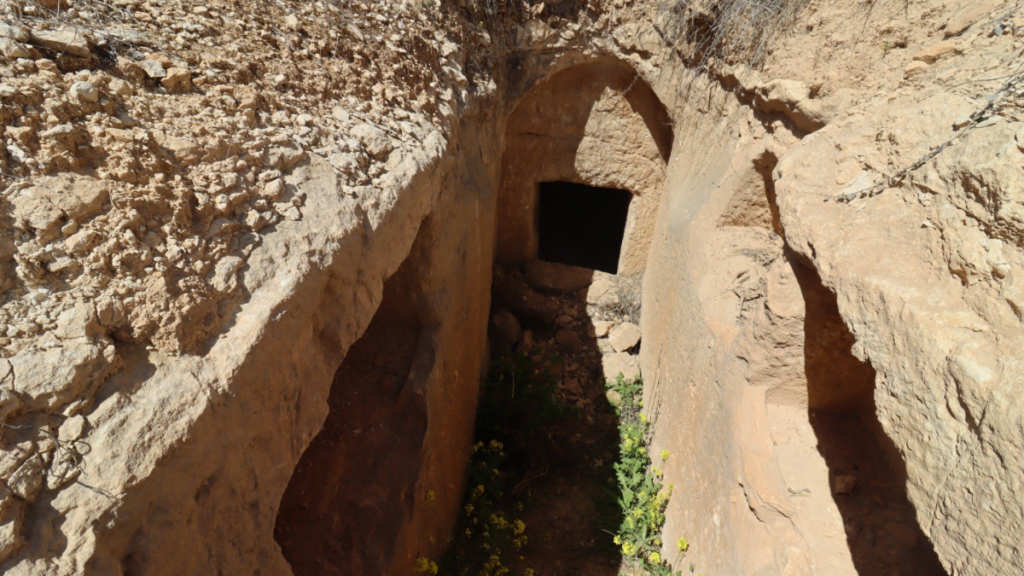
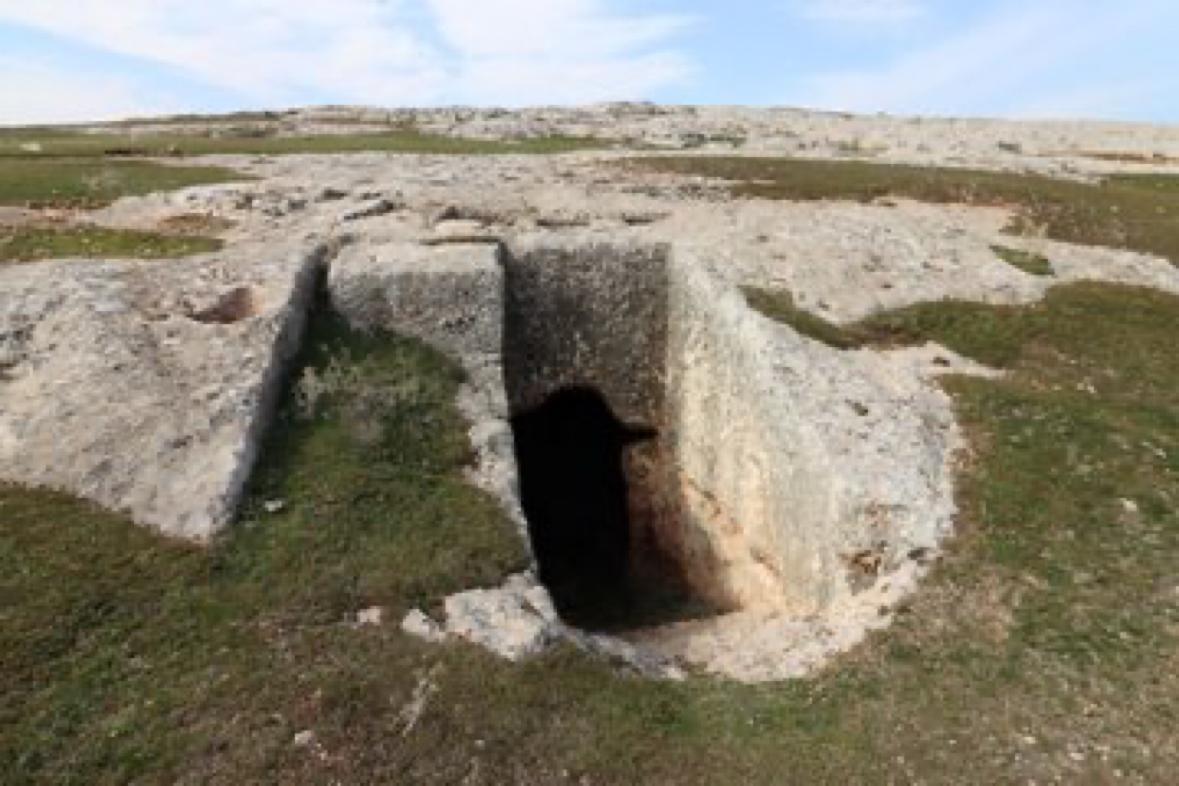
The rock tomb is situated in Köseveli, a village in Suruç, approximately one kilometer west of the village center. Governor Şıldak shared structural details of the site, noting that the tomb follows an east-west orientation and is designed with a dromos (an entrance passage) leading into a single burial chamber.
The dromos is flanked on both sides by three niches, which may have served decorative or functional purposes in the burial process. The entrance to the tomb is located on the western side, where the interior wall features a carved cross motif—an indicator of the tomb’s Christian-era origins.
Interior Layout and Architectural Elements
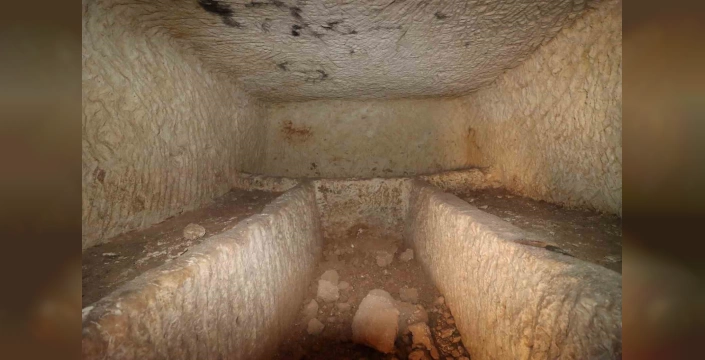
According to the documentation, the tomb’s entrance is framed by two loculus-type compartments—small rectangular recesses carved into the stone to house individual burials. Inside the chamber, each of the three walls features three symmetrical arched openings leading to klinai, the stone platforms traditionally used for placing the deceased.
In addition to these main burial spaces, there are rectangular sections on the sides of the klinai, each containing one or two burial platforms. In total, six rectangular entrances are present within the chamber, providing access to different interment areas.
The tomb’s interior also includes vaulted (tonozlu) sections above which inscriptions are carved into the stone. These inscriptions could potentially provide valuable information about the identities of those buried, the tomb’s construction date, or the cultural and religious context of the era.
Historical and Cultural Significance
The design and features of the Suruç rock tomb reflect a blend of local burial traditions and influences from the broader Near Eastern and early Christian architectural heritage. The presence of the cross motif suggests a late antique or early Byzantine origin, while the use of klinai and multiple niches points to communal or family-based burial practices.
Rock-cut tombs are significant because they not only reflect the craftsmanship of the period but also offer archaeologists clues about social status, beliefs about the afterlife, and community organization. The inclusion of inscriptions further elevates the site’s importance, as such texts can help historians reconstruct historical events, lineage records, and cultural transitions in the region.
Part of a Broader Cultural Inventory Effort
The recording of the Suruç tomb is part of a wider initiative led by the Şanlıurfa Governorship to catalog and protect the region’s historical assets. This cultural inventory project involves surveying, photographing, and archiving details of both well-known and lesser-known sites to ensure they are preserved for future generations.
Şanlıurfa, home to world-famous archaeological landmarks such as Göbeklitepe and Harran, is rich in ancient settlements, religious monuments, and burial sites. By including smaller, rural discoveries like the Suruç rock tomb in the official register, authorities aim to provide a more complete picture of the region’s history.
Preservation and Future Research
Governor Şıldak emphasized the importance of documenting these sites not only for academic study but also for cultural tourism. With proper conservation, the Suruç rock tomb could become part of heritage tourism routes, attracting visitors interested in archaeology and early Christian history.
Future archaeological research could focus on deciphering the inscriptions within the tomb, analyzing the construction techniques, and studying any artifacts or human remains that may still be present. Such studies could yield valuable data about the religious practices, artistic traditions, and daily lives of the people who once inhabited the region.
A Testament to Suruç’s Historical Depth
The discovery and documentation of the Suruç rock tomb serve as a reminder that Türkiye’s southeastern provinces remain treasure troves of untapped historical knowledge. Each new find adds another piece to the puzzle of the region’s complex past, which has been shaped by countless civilizations over millennia.
As the cultural inventory project continues, it is likely that more such sites will come to light—reinforcing Şanlıurfa’s status as one of the most historically rich provinces in the country and further underscoring the need for preservation, research, and responsible tourism development.