
Türkiye’s labor market has seen a significant transformation in the past few years, with both the total number of employed individuals and the share of university graduates experiencing notable changes. According to data compiled by Anadolu Agency (AA) from the Turkish Statistical Institute (TÜİK), employment in the second quarter of 2025 stood at 32 million 435 thousand people. While overall employment numbers declined slightly compared to the previous quarter, the number of employed university graduates continued to rise and reached a historic milestone.

Slight Decline in Total Employment
The latest figures reveal that Türkiye’s employment rate settled at 48.9 percent in the second quarter. Compared to the first quarter, there was a decrease of 41,000 people in total employment. Despite this modest decline, the structural composition of the labor force points to long-term shifts, especially regarding education levels.
University Graduates Exceed 10 Million in the Workforce
One of the most striking developments is the growth of university-educated workers. In early 2021, the number of employed graduates stood at 7.7 million. By 2023, this figure had surpassed 9 million, demonstrating both the expansion of higher education and the demand for skilled labor.
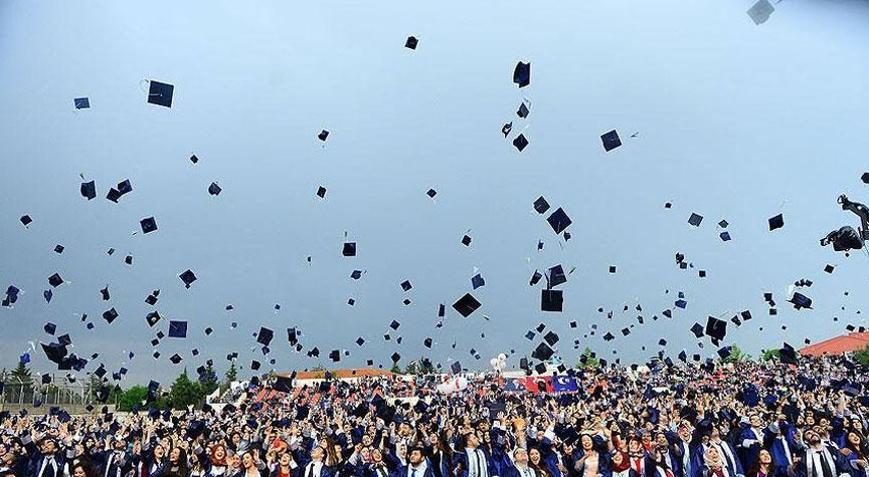
In 2025, for the first time, the number of employed university graduates passed the 10 million mark. With 10 million 27 thousand graduates actively working, this group now accounts for 30.9 percent of the total workforce. Effectively, one out of every three workers in Türkiye is now a university graduate, a reflection of the country’s evolving educational and economic landscape.
Fewer University Graduates Among the Unemployed
While the presence of graduates in the workforce has increased, their share among the unemployed has dropped. Seasonally adjusted unemployment figures show that in the second quarter of 2025, the total number of unemployed individuals was 3 million 34 thousand. Of these, 866 thousand were university graduates, a decline from 930 thousand in the first quarter.
This shift suggests that opportunities for graduates are expanding, though challenges remain. Analysts note that while the unemployment rate among graduates has improved, underemployment and skill mismatches continue to be areas of concern, with many graduates working in positions below their level of qualification.
Educational Breakdown of the Workforce
Employment in Türkiye still shows significant differences across education levels. The largest group remains individuals with less than a high school education, numbering 13 million 378 thousand in the second quarter. High school graduates accounted for 4 million 751 thousand workers, while vocational or technical high school graduates totaled 3 million 748 thousand.
Meanwhile, 719 thousand employed individuals were recorded as illiterate, underscoring persistent inequalities in educational attainment within the workforce.
Implications for the Labor Market
The steady rise in the number of university graduates within employment indicates progress in higher education accessibility and a gradual shift toward a knowledge-based economy. However, experts argue that the labor market still faces several structural challenges.
Overqualification risk: Many graduates work in jobs that do not fully utilize their skills, raising questions about the alignment of university programs with labor market needs.
Regional disparities: Employment opportunities for graduates are concentrated in major urban centers such as Istanbul, Ankara, and Izmir, while smaller cities and rural areas lag behind.
Sectoral concentration: Graduates are disproportionately represented in certain sectors, particularly education, public administration, and finance, leaving gaps in fields such as agriculture and manufacturing.

Broader Economic Context
The slight dip in total employment during the second quarter reflects broader economic trends, including global uncertainties, inflationary pressures, and fluctuations in investment. Still, the resilience of university graduate employment demonstrates the importance of higher education as a buffer against economic volatility.
Employers are increasingly seeking workers with advanced skills in technology, languages, and specialized knowledge. This demand explains why graduate employment has grown despite wider employment challenges. However, with Türkiye’s young population continuing to pursue higher education at record levels, ensuring that job creation keeps pace with the growing supply of graduates will be critical.
Looking Ahead
If current trends continue, the proportion of university graduates in Türkiye’s workforce will likely surpass one-third within the next few years. Policymakers emphasize the need to improve vocational training, foster stronger ties between universities and industries, and encourage innovation-driven sectors that can absorb skilled labor.
Experts also stress that reducing structural unemployment requires a dual approach: continuing to expand access to higher education while simultaneously aligning curricula with labor market demands. Without this balance, the risk of graduate underemployment will remain.
Editor’s Note: The growth in Türkiye’s university-educated workforce is a positive indicator of modernization, yet it highlights deeper questions about job quality, equality of opportunity, and the balance between education and employment. Families and policymakers alike are watching closely as the labor market adapts to this rapid transformation.