The Turkish Statistical Institute (TÜİK) has released the 2025 Household Information Technologies Use Survey, revealing how digital transformation continues to reshape daily life in Türkiye. From internet access and e-government services to e-commerce habits and digital learning, the findings present a comprehensive picture of the country’s evolving tech habits.

Internet Usage Reaches Record High
In 2025, internet usage among individuals aged 16 to 74 reached 90.9%, up from 88.8% in 2024. The increase reflects the growing integration of digital tools, the accessibility of mobile devices, and the digitization of public services.
A gender breakdown shows 93.6% of men and 88.2% of women use the internet, indicating a persistent but narrowing digital gender gap in Türkiye.
E-Government Usage on the Rise
Public digital services continue to gain traction. In the last 12 months, 76.1% of individuals reported using official government websites or mobile apps. When broken down by gender:
82.8% of men used e-government platforms
69.5% of women did the same
While younger users dominate e-government use, with the 25–34 age group reaching 92.8%, older populations still lag behind — only 29.6% of those aged 65–74 reported using such services.
Why Citizens Use E-Government Platforms
Key motivations for accessing e-government systems include:
68.5%: Accessing personal records stored by public institutions
53.6%: Making appointments or reservations
46.4%: Gathering information about public institutions
These statistics show how deeply integrated digital services have become in daily life and how they simplify access to essential information.
E-Commerce Sees Continued Growth
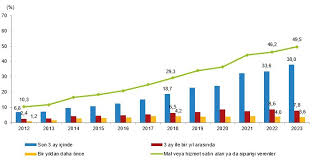
In 2025, 55.7% of internet users purchased goods or services online, up from 51.7% in 2024. The breakdown shows:
59.1% of men shopped online
52.3% of women engaged in e-commerce
Additionally, 42.3% of users made at least one online purchase in the last three months, highlighting that digital shopping is now a routine part of consumer behavior.
Online Shopping Problems Still Exist
Although e-commerce adoption is growing, challenges remain. Among users who shopped online in the last 3 months:
29% faced at least one issue
12.7% experienced delayed deliveries
11.8% received incorrect or damaged products
These concerns point to persistent weaknesses in logistics and quality control across the digital retail ecosystem in Türkiye.
Online Learning Activity Increasing
The number of people engaging in online learning has also increased. In the last three months, 17.7% of internet users took part in educational activities for professional or personal development. This marks a 3.9-point increase from the previous year.
Gender-wise, 18% of women and 17.5% of men reported engaging in digital learning, suggesting women are slightly more inclined to use technology for self-improvement.
WhatsApp Leads in Digital Communication
When it comes to communication and entertainment, WhatsApp remains the most used digital platform, with 88.6% of internet users using it regularly. It is followed by:
YouTube: 72.9%
Instagram: 68.1%
WhatsApp usage is 91.3% among men and 85.9% among women, underscoring its universal presence across all demographics in Türkiye.
Digital ID Usage Remains Low
Despite the expansion of digital services, only 15.6% of internet users reported using an electronic ID (e-ID) to access online services. By gender:
18% of men used e-ID
13.3% of women did the same
This shows that e-ID adoption is still in its infancy, although with proper promotion and trust-building, usage may rise in the coming years.
Türkiye’s Digital Future Is Promising but Uneven
TÜİK’s 2025 survey highlights major strides in Türkiye’s digital transformation. With internet access nearing saturation and e-government services becoming a core part of citizens’ lives, the country is moving confidently toward a digitally empowered society.
However, the gender gap, age-related disparities, and challenges in service quality and digital inclusion reveal that more work is needed to ensure the benefits of technology reach everyone equally.
As Türkiye continues on its digital journey, enhancing accessibility, improving infrastructure, and building trust in emerging technologies like digital ID systems will be key to creating a more inclusive and efficient digital ecosystem.