

Türkiye’s Ministry of Health has intensified its crackdown on misleading health claims and unauthorized product sales, imposing over 109 million TL in administrative fines during the first seven months of 2025. The ministry announced that widespread inspections covered products promoted through internet platforms, television, and social media, where deceptive health-related statements are commonly used to influence consumers.
What qualifies as a misleading health claim
Under the Regulation on Health Claim Inspections, a “health claim” refers to any statement suggesting or implying that a product or its ingredients have an impact on human health. Except for approved pharmaceuticals, medical devices, and foods for special medical purposes, all other products fall under this inspection framework.
Claims suggesting that failing to consume a product could harm health, promising weight loss or gain, or using endorsements from individuals or organizations to imply approval are strictly prohibited. Products found to be in violation included cosmetic items such as foaming soaps, lip glosses, hair removal creams, and body sprays.
Consumer access to verification tools
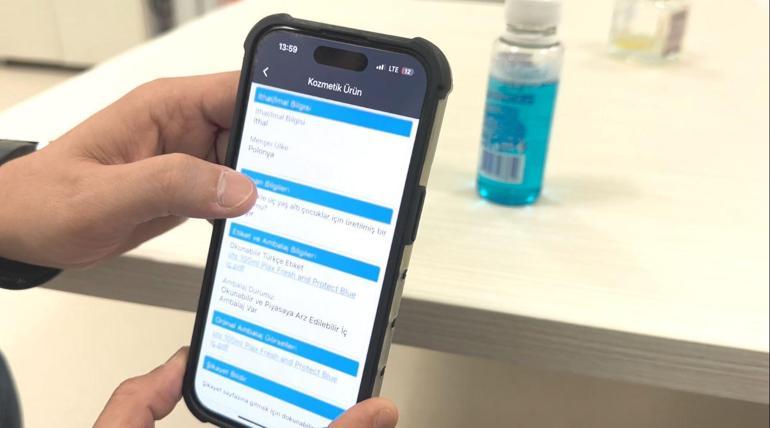
To protect the public, the ministry operates the Product Tracking System (ÜTS), which allows consumers to verify whether an item is officially registered. By scanning the barcode, buyers can access brand information, usage guides, packaging visuals, labeling in Turkish, as well as import and manufacturing details. If product data does not appear in the system, it likely indicates an unregistered or counterfeit cosmetic item. A free mobile app has also been developed to make this process more accessible.
Expert warnings about “natural” and “organic” claims
Professor Ahmet Ayar, head of the Turkish Medicines and Medical Devices Agency (TİTCK), cautioned against assuming that products marketed as natural or organic are entirely safe.
“Some ingredients may be allergenic or toxic. Wrong assumptions and misleading advertising that label products as ‘natural’ or ‘safe’ can lead to serious risks, including infertility, early skin aging, hair damage, or even increased cancer risks,” Ayar said. He emphasized that Türkiye’s regulatory framework is among the most advanced, with digital tracking ensuring both consumer safety and product authenticity.
Inspection results in the first seven months of 2025
Between January and July 2025, inspectors analyzed 642 products, finding irregularities in 412 and categorizing 14 as high risk. Administrative fines were issued according to existing legislation.
For biocidal products—including hand sanitizers, antibacterial soaps, and insect repellents—68 samples were tested. Of these, 57 were compliant, while 3 were non-compliant and 8 carried risks. Total fines in this category reached around 2.5 million TL.
In cosmetics specifically, violations were detected in a wide range of products such as antimicrobial hand and skin sprays, antibacterial hair caps, and solid soaps. These inspections resulted in penalties of approximately 4.39 million TL.

Counterfeit product seizures and online enforcement
Authorities seized 61,500 counterfeit or smuggled cosmetics during nationwide operations, often in cooperation with customs officials and law enforcement. These counterfeit items were deemed unsafe and posed direct health threats to consumers.
Digital enforcement has also intensified. In the first seven months of 2025, 2,201 websites promoting unauthorized products were shut down, with 684 reported to the Ministry of Trade for further action.
Additionally, the ministry confirmed that 17 individuals and organizations were referred to prosecutors for legal proceedings due to repeated or severe violations.
Editorial perspective
Türkiye’s regulatory efforts highlight the growing importance of consumer protection in the cosmetic and personal care market. With rising online sales and aggressive marketing, deceptive claims can easily mislead buyers. The government’s use of digital tools such as ÜTS, combined with strict penalties and law enforcement cooperation, represents a strong stance against unsafe and fraudulent products.
For consumers, the key message is caution: not every product labeled “natural” or “organic” is harmless, and official verification should always be prioritized before purchase.