

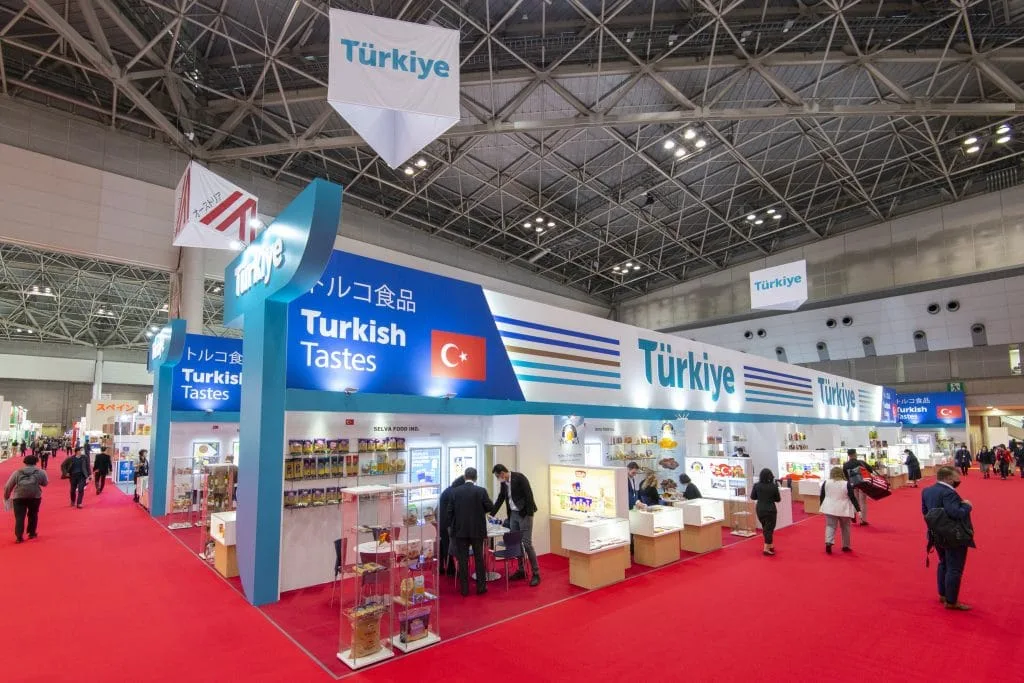
As global food trends shift toward quality, sustainability, and health-conscious consumption, Türkiye is seizing the opportunity to strengthen its presence in one of Asia’s most demanding and valuable markets: Japan. With a clear and measurable objective of reaching $1 billion in food exports to Japan, Türkiye’s exporters are gearing up for a milestone event — the Foodex Japan 2026 International Food and Beverage Exhibition, which will be held in Tokyo from March 10 to 13, 2026.
The Ege Exporters’ Associations (EİB), a pivotal institution in Türkiye’s food export landscape, has officially launched preparations for organizing the Turkish National Participation in this major event. The move not only signals Türkiye’s ambition but also reflects the country’s readiness to match Japan’s rigorous food safety and quality standards.
Building on Strong Foundations: Türkiye’s Growing Export Performance
According to Hayrettin Uçak, Vice Chair of the EİB and President of the Aegean Fresh Fruit and Vegetable Exporters’ Association, Türkiye has been steadily increasing its food exports to Japan — a market known for its strict standards and preference for premium quality.
Uçak emphasized that in 2025, 42 Turkish companies participated in the Foodex Japan fair and achieved remarkable export figures. Of the total food exports to Japan worth $126 million, approximately 35 percent were made by exporters based in the Aegean region.
What’s even more striking is the growth trajectory. Over the last five years, Türkiye’s food exports to Japan have surged by 75 percent. In 2019, the average export price per kilogram stood at $2.17, while by the end of 2024, that figure had climbed to $2.58 — a 19 percent increase. This rise in unit value not only reflects product quality and brand strength but also strengthens Türkiye’s pathway to reaching the $1 billion target.
Why Japan? A Market of Opportunity and Challenge
Japan presents both opportunities and challenges for international exporters. With a reputation for meticulous consumers who prioritize hygiene, presentation, and sustainability, the Japanese market rewards quality and consistency above all.
Mehmet Ali Işık, Sustainability and Organic Products Coordinator of the EİB and President of the Aegean Dried Fruits and Products Exporters’ Association, highlighted the shifting dynamics within Japan’s food sector. He noted that consumer preferences are increasingly leaning toward plant-based and frozen food options.
Japan’s frozen food market alone has reached a valuation of $6.6 billion. This growth is largely driven by demographic changes, such as an increase in single-person households and dual-income families, who seek convenient, high-quality food solutions. As a result, the demand for processed and frozen vegetables has spiked — a sector currently dominated by suppliers from China and the United States.
Işık extended an open call to Turkish exporters: “This is the right time to enter or expand in the Japanese food market. We encourage our producers to secure their place at the Foodex Japan fair and showcase products that meet the evolving needs of Japanese consumers.”
Quality is Non-Negotiable in the Japanese Market
Both Uçak and Işık stressed that achieving success in Japan hinges on more than just flavor or pricing — it’s about alignment with cultural expectations and market requirements. Japanese buyers value transparency, traceability, and premium packaging.
“Products exhibited at the fair should not be in bulk,” Işık warned. “Packaged, branded, and visually appealing items are more likely to attract attention and lead to sustainable business partnerships.”
Ensuring that food products meet the Japanese health and safety standards is not optional — it’s the baseline. Exporters who focus on clean labels, certifications, and environmentally responsible packaging will stand out in a competitive market.
Spotlight on Top Turkish Exports to Japan
Türkiye’s success in Japan isn’t just a goal — it’s already visible in data. In 2024, several categories of Turkish food exports gained significant traction:
Fish products topped the list with a massive $113 million in exports, reflecting Japan’s enduring love for seafood.
Pasta followed with $72 million in export value, marking it as a surprising yet promising category in a traditionally rice-based market.
Olive oil maintained its premium appeal, achieving $33 million in exports — a sign that Mediterranean diets are gaining ground in East Asia.
Dried seedless grapes brought in $24 million, while fruit juices contributed another $18.5 million.
Other notable categories included sun-dried tomatoes ($16.5 million), dried figs ($16 million), and confectionery products ($12 million).
These figures illustrate the growing appetite in Japan for diverse, high-quality Turkish food offerings and prove that Türkiye’s food industry has the potential to diversify further into niche segments.
Strategic Steps Toward Foodex Japan 2026
The path to Foodex Japan 2026 is not just about participation — it’s about positioning. EİB’s initiative to organize the Turkish National Pavilion is a calculated strategy to provide local exporters with a competitive edge.
In addition to showcasing traditional products, the 2026 event offers an ideal stage for Turkish companies to launch new lines tailored to Japanese tastes. These might include organic, gluten-free, halal-certified, and functional food products — all of which align with consumer health trends in Japan.
Moreover, the fair serves as a vital opportunity for networking, market research, and direct buyer engagement. It is a platform where exporters can establish long-term business relationships and gain real-time feedback on product-market fit.
Türkiye’s Broader Vision for Food Exports
This initiative is part of a larger vision supported by Türkiye’s government and trade organizations to expand its food export footprint globally. Japan, as one of the top importers of high-end food items, is a logical next frontier.
The EİB’s strategy aligns with national goals of promoting value-added exports, empowering local producers, and integrating Turkish brands into the global market. By focusing on innovation, sustainability, and adaptability, Türkiye is positioning itself not just as a supplier but as a trendsetter in the international food trade.
Encouraging Exporters to Think Global
Uçak and Işık’s call to action is clear: Turkish food exporters must view Foodex Japan 2026 not as a singular event but as a gateway to broader Asian markets. Japan’s influence on regional buying patterns means that success there often leads to expanded opportunities in South Korea, Taiwan, and beyond.
With the right blend of preparation, quality control, and cultural sensitivity, Türkiye can deepen its economic ties with Asia’s powerhouse markets while also creating lasting value for local producers and brand owners.