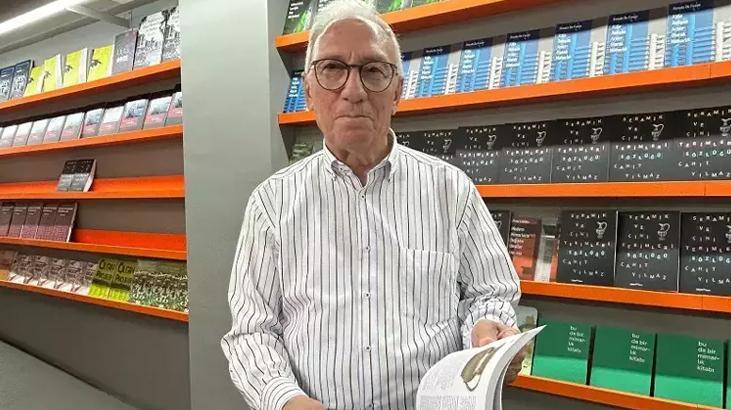

A fresh and inspiring voice has emerged in Türkiye’s artistic and cultural preservation scene — and it belongs not to an academic or a full-time artist, but to an ophthalmologist. Dr. Cahit Yılmaz, a seasoned eye specialist who spent 25 years serving in Kütahya, has turned his passion for traditional Turkish tile art into a comprehensive and visually enriched reference work. His new book, “Ceramic and Tile Terminology Dictionary,” recently published by Yem Yayınları, is the culmination of decades of interdisciplinary exploration and dedication to heritage.
More than just a glossary of terms, this publication integrates etymological research, historical context, visual documentation, and artistic perspective to present ceramics and tile-making not merely as a craft, but as a cultural narrative deeply woven into the architectural, historical, and linguistic fabric of Türkiye.
From the Operating Room to the Art Studio
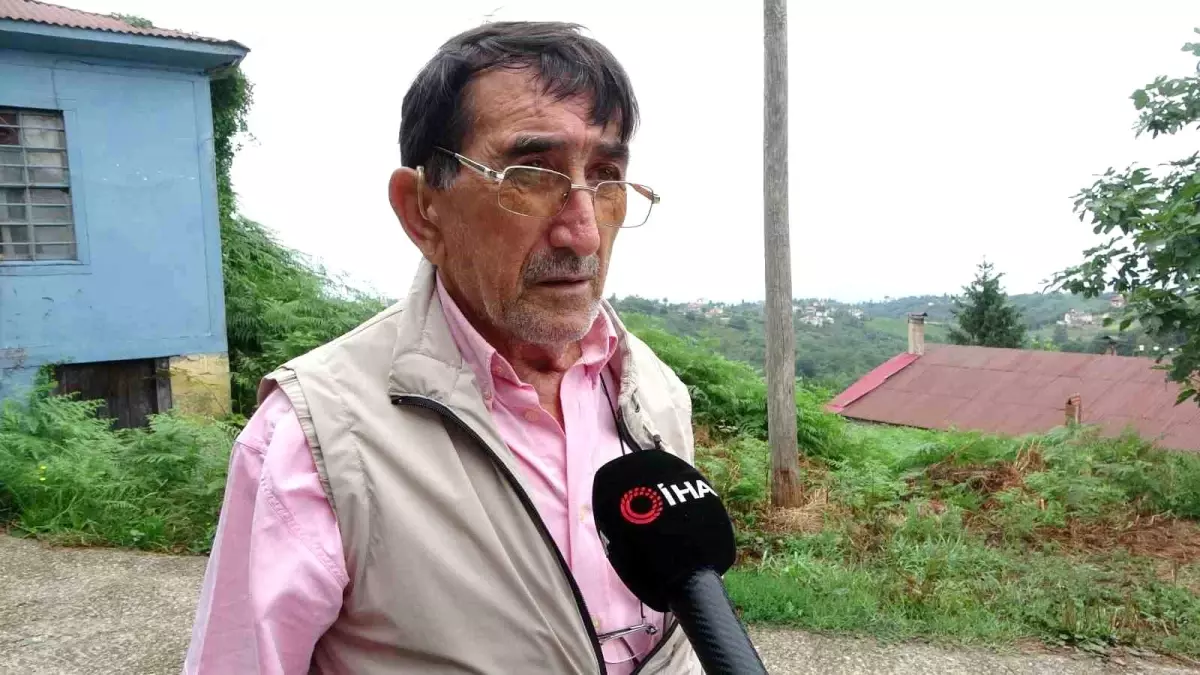
Dr. Yılmaz’s journey into the world of ceramics began unexpectedly. While practicing as a physician in Kütahya — a city known as the heartland of Turkish tile art — he was encouraged by colleagues to explore the parallels between his fine surgical skills and the precision of tile-making. What began as a playful suggestion soon transformed into a full-fledged artistic endeavor.
“I started painting tiles out of sheer determination,” he explains. “I wanted to prove something — that doctors, like anyone, can have deeply creative sides.” What followed was the staging of three tile art exhibitions, and a deep dive into the techniques, symbolism, and history of the craft.
This creative process evolved into academic writing, as he noticed a distinct gap in available literature on Kütahya tilework. “There were plenty of books and articles on İznik tiles,” he notes, “but Kütahya was always the supporting character — the secondary figure in Turkish art history. I wanted to change that.”
Identifying the Problem: Terminological Chaos
As Dr. Yılmaz began writing more seriously about ceramic arts, he encountered a recurring challenge: lack of terminological consistency. Authors from different schools and languages used terms interchangeably, or inconsistently, often based on their academic background. For instance, German-trained scholars might use “keramik”, while French-influenced writers preferred “seramik.” This inconsistency muddled understanding and hindered academic clarity.
This realization sparked the idea of compiling a standardized dictionary of tile and ceramic terms. “You can’t talk about tilework in isolation,” Yılmaz emphasizes. “It’s tied to architecture, art history, archaeology — they’re all interconnected. To define a single tile motif properly, you must understand where it sits in a building, what it symbolizes in history, and how it evolved through cultures.”
Not Just Definitions — Visuals and Contextual Depth
Unlike traditional dictionaries, which offer plain definitions, Dr. Yılmaz’s work is designed to be visually immersive and educational. “Nobody reads a dictionary like a novel,” he states. “So we decided to add vivid imagery, detailed illustrations, and photos of real-life artworks to make each term come alive.”
A large portion of the visuals come from his personal collection or his own ceramic creations. He also included works by other masters, each properly credited. By turning the dictionary into a hybrid visual encyclopedia, he hopes to make it both practically useful and aesthetically engaging for artists, students, researchers, and culture enthusiasts alike.
Terms like “Tokat ceramics” or “mukarnas” are accompanied by concise historical summaries. “Our goal was to provide essential information in an accessible format, not to overwhelm the reader with academic jargon,” he says.
The Power of Words: Etimology Meets Art
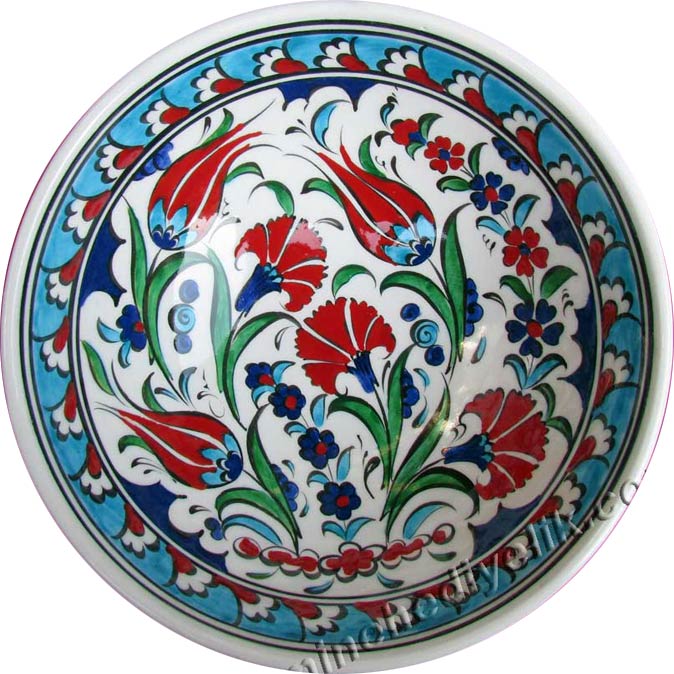
In addition to definitions and visuals, the book takes a deep dive into etymology — the history and origin of the words themselves. “People often don’t know where these terms come from,” says Dr. Yılmaz. “We all know what ceramics and keramik are, but what about the word çini?”
He reveals that çini is not a native Turkish term, but likely evolved from the phrase “Chinese work” — a description used by travelers like Marco Polo to refer to porcelain from the East. Over time, this expression embedded itself into Turkish vernacular, although it actually refers to porcelain, not the traditional tiles practiced in Anatolia.
His research also touches on lost arts, like semercilik (saddle-making), kalaycılık (tinning), and forgotten forms of woodworking. He viewed the dictionary as a time capsule to preserve not just tilework but also fragments of Türkiye’s vanishing cultural vocabulary.
A Testament to Kütahya’s Legacy
Dr. Yılmaz is especially passionate about highlighting Kütahya’s contribution to Turkish ceramic heritage. “The region was always overshadowed by İznik,” he laments, “but its influence is immense and deserves to be documented with the same respect.”
His focus on this regional richness has resulted in a collection of eight books on Kütahya ceramics, most of which are already completed. The dictionary stands as the second published volume in this series, with more titles in the pipeline — including works on tile-adorned architecture in Ankara and the lost ferry piers of Istanbul.
Publishing Journey and Artistic Integrity
Remarkably, his entry into publishing was also unplanned. “I walked into a bookstore in search of an architectural reference,” he recounts. “There I met the editor from Yem Yayınları. I showed them my first book and they were immediately supportive.” This chance encounter blossomed into a lasting partnership. Unlike many first-time authors who struggle to find funding, Dr. Yılmaz opted to self-fund his work, refusing to pursue financial backers. “I don’t want to chase sponsors. I prefer my independence,” he asserts.
Inspiring a New Generation
Dr. Yılmaz’s journey offers more than insight into tile terminology. It serves as an inspiring narrative of multidisciplinary success — a reminder that creativity can thrive alongside science, and that curiosity knows no professional boundaries.
To those who claim they lack time or talent for creative work, he offers a rebuttal: “Everyone has some genetic potential. The key is to let it surface. Nobody else can do that for you.”
Through this book, Dr. Yılmaz is doing far more than cataloging terms — he’s shaping a cultural dialogue between past and present, tradition and modernity, craft and science.
His work reflects the resilience of Türkiye’s artistic legacy, inviting readers not just to learn definitions, but to feel the depth and beauty of a centuries-old tradition — one tile at a time.