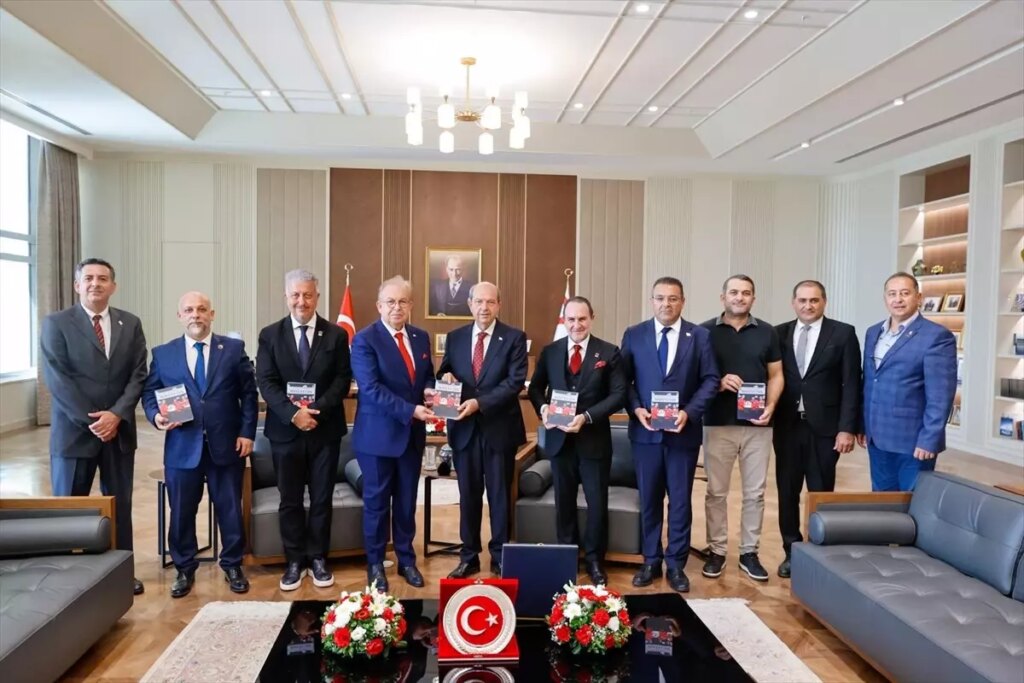

The maritime doctrine known as “Mavi Vatan” or “Blue Homeland” has become a cornerstone of Türkiye’s national defense and geopolitical narrative in recent years. A new book titled “Ersin Tatar’ın Gözüyle Mavi Vatan” (The Blue Homeland Through the Eyes of Ersin Tatar) offers an exclusive and deeply personal insight into how this doctrine shapes the regional strategy of the Turkish Republic of Northern Cyprus (TRNC) and Türkiye. The book was recently launched in an official ceremony at the Presidency of the TRNC, further amplifying its strategic significance.
This comprehensive work is curated by Prof. Dr. Emre Alkin, Rector of Istanbul Topkapı University, Prof. Dr. Cihat Yaycı, a prominent maritime strategist and head of the Blue Homeland Strategic Research Center, and Gökhan Güler, Special Advisor to President Tatar. Their editorial leadership adds both academic depth and practical insight into the evolving maritime dynamics in the Eastern Mediterranean.
Why the Blue Homeland Matters More Than Ever
From resource control to regional security, the Blue Homeland doctrine extends Türkiye’s maritime sovereignty across the Eastern Mediterranean, Aegean Sea, and parts of the Black Sea. For Ersin Tatar, President of the TRNC, this concept goes beyond strategy—it represents a fundamental pillar of identity, security, and sovereignty for Turkish Cypriots.
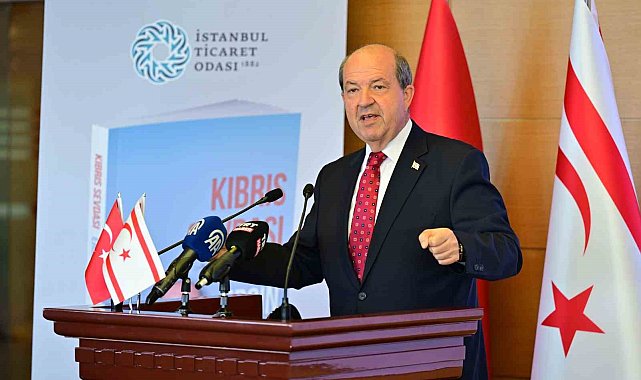
In his remarks during the launch event, President Tatar emphasized the importance of the Blue Homeland as an integral part of the national policy pursued both in Türkiye and Northern Cyprus. “This book holds immense personal and political value. It must be disseminated across Türkiye’s universities, institutions, and public agencies to strengthen public understanding of our maritime rights and national interests,” he said.
Key SEO Keywords: Blue Homeland, Ersin Tatar, Eastern Mediterranean, maritime rights, Türkiye, TRNC, Cyprus issue
Strategic Implications for Türkiye and the TRNC
At the heart of the Blue Homeland narrative is the assertion that Türkiye and the TRNC possess undeniable rights in the seas surrounding the island of Cyprus and in adjacent waters rich with energy resources. This claim challenges unilateral moves by other regional actors and underlines the critical role of Türkiye’s naval presence in preserving maritime equilibrium.
For the TRNC, the maritime doctrine is not only about territorial waters or exclusive economic zones. It is deeply intertwined with the broader policy shift towards a two-state solution in Cyprus—a political path that President Tatar passionately defends.
From Federation to Sovereignty: Tatar’s Vision for Cyprus
In line with the themes of the book, President Tatar reiterated during the event that the era of federation-based negotiations is over. He stressed that the TRNC can no longer pursue reconciliation based on frameworks that disregard its sovereignty. “We will not step back after the sacrifices, pain, and martyrdom experienced. We will never give up on Türkiye’s guarantorship and military presence,” he asserted.
This bold stance reflects not only Tatar’s political vision but also a growing consensus within Northern Cyprus that true peace can only be achieved through mutual recognition of two sovereign states. For this reason, maritime sovereignty and political sovereignty are increasingly being treated as two faces of the same coin.
What Makes This Book a Critical Read
The book offers more than political commentary; it brings together Ersin Tatar’s speeches, reflections, and diplomatic narratives throughout his presidency and earlier political career. It contextualizes his position within the wider geopolitical environment shaped by competing maritime claims, energy exploration, and the military alliances forming in the Eastern Mediterranean.
Each chapter is carefully structured to cover critical themes such as:
Historical maritime claims and international agreements
Türkiye’s and TRNC’s stance against unilateral Greek Cypriot actions
The role of international law and the Montreux Convention
The intersection of maritime security and energy diplomacy
This makes the book not just a political memoir but a valuable resource for policy-makers, academics, and students of international relations.
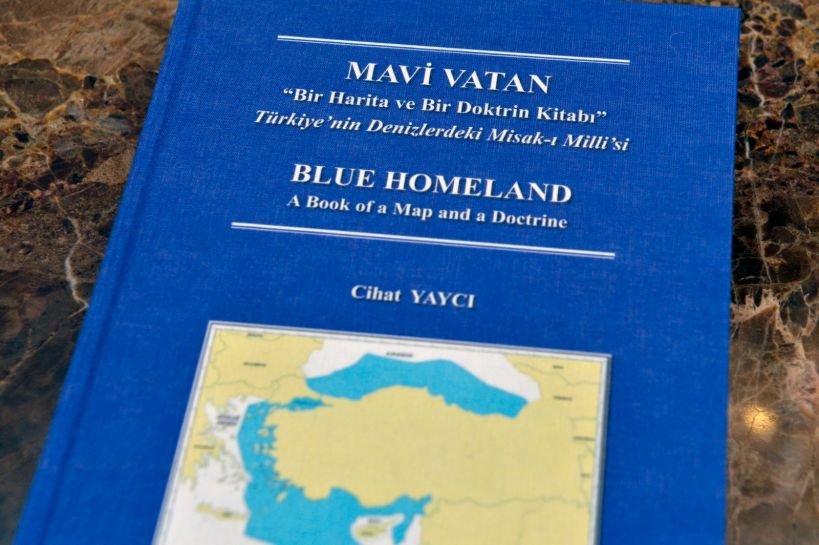
The Role of Türkiye in the Eastern Mediterranean
Türkiye’s active maritime policy, supported by the doctrine of Blue Homeland, aligns with its growing naval capabilities and strategic partnerships. Türkiye has repeatedly signaled its readiness to defend its rights and the rights of the TRNC, both diplomatically and militarily if needed.
Recent naval exercises, hydrocarbon explorations, and strategic alliances with regional and non-regional actors have made the Eastern Mediterranean a hotspot for international attention. The launch of this book is timely, offering clarity and a Turkish perspective amid competing narratives.
Educational Outreach and National Awareness
President Tatar’s request that the book be distributed widely across Türkiye’s educational institutions speaks volumes about the intent behind the publication. It is not merely a record of past policies but a tool for future strategy, designed to inform and educate the next generation of Turkish and Turkish Cypriot leaders.
Raising awareness about maritime sovereignty is essential in shaping national unity and resilience, especially in a region as volatile and contested as the Eastern Mediterranean. The book serves as an intellectual vessel for such national consciousness.
Expert Opinions and Academic Collaboration
Prof. Dr. Cihat Yaycı, a pivotal figure in conceptualizing the Blue Homeland doctrine, has long advocated for a holistic maritime policy that integrates legal, strategic, and political dimensions. His involvement ensures that the content is not only politically relevant but academically robust.
Similarly, Prof. Dr. Emre Alkin’s economic and geopolitical insights provide a multidimensional understanding of how maritime rights affect everything from energy markets to national defense budgets. Their contributions turn the book into a reference point for both policy and academia.
The Future of Maritime Strategy in the Region
As Türkiye and the TRNC continue to face challenges in the international arena, books like Ersin Tatar’ın Gözüyle Mavi Vatan become vital instruments of public diplomacy. They help articulate Türkiye’s narrative in a world where misinformation and diplomatic isolation can skew global perceptions.
The path forward requires not only naval strength and legal argumentation but also intellectual clarity and cultural articulation. This book, in many ways, is a blueprint for that vision.
Conclusion
The launch of The Blue Homeland Through the Eyes of Ersin Tatar is more than a ceremonial event—it is a strategic move in shaping the discourse around maritime rights, sovereignty, and national identity in Türkiye and the TRNC. By combining personal reflections, academic rigor, and national strategy, the book acts as both a mirror of current policy and a compass for future action.
In a time when regional tensions are high and the stakes in the Eastern Mediterranean are even higher, this publication is a timely and necessary contribution to Türkiye’s geopolitical arsenal. It is a compelling invitation to all stakeholders to better understand the maritime soul of a nation.