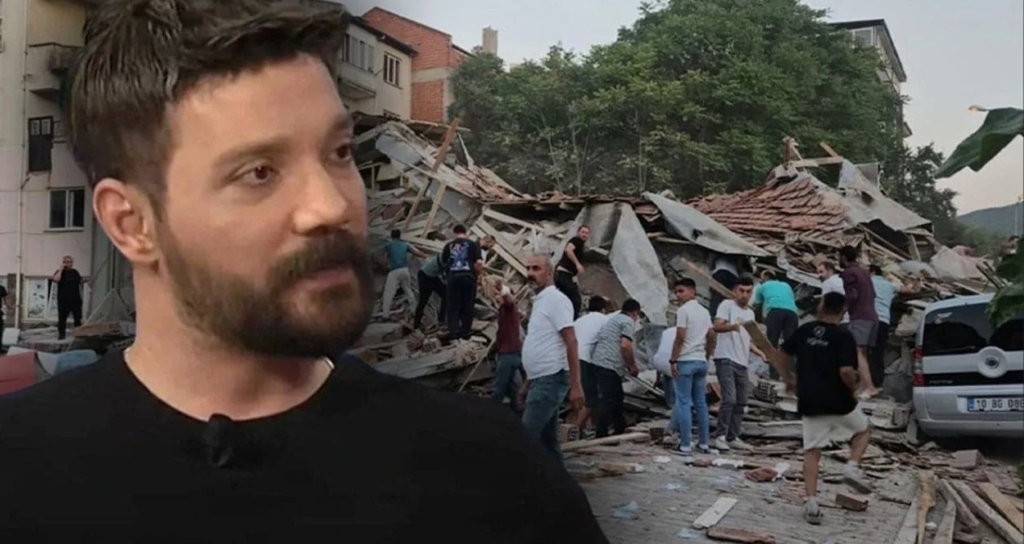

A powerful 6.1 magnitude earthquake shook the district of Sındırgı in Balıkesir at 19:53 on the evening of August 10, sending waves of panic across the region. The tremor, which was followed by aftershocks — the strongest measuring 4.6 — left behind structural damage, emotional scars, and a renewed debate about Türkiye’s readiness for inevitable seismic events.
According to official statements from Interior Minister Ali Yerlikaya, 68 rural neighborhoods were affected, with 16 buildings reported collapsed. Four of these structures were inhabited at the time, while the remaining 12 were derelict. Remarkably, residents of the occupied buildings managed to escape on their own without assistance from rescue teams, avoiding additional fatalities.

The Earthquake and Immediate Response
The epicenter of the quake was in Sındırgı, a district not unfamiliar with seismic activity but unaccustomed to tremors of this magnitude. Witnesses described intense shaking that lasted several seconds, toppling furniture, cracking walls, and prompting people to rush out into the streets. Many spent the night outdoors, fearing further collapses.
Emergency services were mobilized almost instantly. Search and rescue teams from the Disaster and Emergency Management Authority (AFAD) were deployed, supported by local gendarmerie units and municipal crews. Their initial focus was on assessing structural stability and ensuring no one remained trapped beneath debris. Mobile command centers were set up to coordinate efforts across the scattered rural areas.
While the casualty toll was mercifully low, the psychological impact was significant. For residents in Türkiye, the fear of earthquakes is deeply ingrained — a legacy of past disasters such as the 1999 Marmara earthquake and, more recently, the February 2023 Kahramanmaraş quakes that claimed tens of thousands of lives.
Oğuzhan Uğur’s Reaction and Social Media Debate
In the hours following the earthquake, social media platforms lit up with messages of concern, firsthand videos, and sharp criticism of the country’s disaster preparedness. Among the most talked-about reactions came from content creator and musician Oğuzhan Uğur, who posted a blunt statement on his X (formerly Twitter) account.
“This is the destruction a 6.2 magnitude quake can cause us! I hope everyone is okay. Our only option is to pray. In this country, we are entrusted first to God, then to God again… Get well soon,” he wrote.
The post resonated with many who share the sentiment that Türkiye often relies more on faith than on proactive measures to prevent disaster-related losses. Others defended prayer as an important cultural and spiritual response while agreeing that scientific and infrastructural preparedness must be prioritized. The discussion became a microcosm of a larger national conversation: the balance between faith, science, and governance in addressing natural disasters.
A Known Seismic Risk
Türkiye lies on one of the most active seismic zones in the world, with multiple major fault lines cutting across the country. Experts have long warned that strict adherence to building codes, regular inspections, and urban planning reforms are critical in preventing loss of life during earthquakes.
In rural districts like Sındırgı, however, older and unreinforced buildings are still common. Even moderate tremors can cause significant damage in such structures, making them high-risk in any seismic event. The fact that residents were able to evacuate the four inhabited collapsed buildings without fatalities this time is seen as more a matter of luck than of safety design.
Lessons from Past Disasters
The February 2023 Kahramanmaraş earthquakes exposed systemic weaknesses in Türkiye’s building safety enforcement. Despite updated regulations introduced after 1999, many structures — particularly those built before the reforms — remain vulnerable. Experts point out that enforcement, not legislation, is the main issue, as corruption, cost-cutting by contractors, and lack of inspection capacity undermine safety.
Dr. Ahmet Ercan, a prominent seismologist, has repeatedly emphasized that earthquakes themselves do not kill people — unsafe buildings do. His calls for comprehensive retrofitting programs, especially in smaller towns and villages, have gained renewed urgency in the wake of the Balıkesir quake.
Infrastructure, Preparedness, and Responsibility
Modern earthquake-resistant construction techniques can significantly reduce the risk of collapse. In countries like Japan, strict building codes, mandatory safety drills, and public awareness campaigns have transformed earthquake preparedness into a cultural norm. Türkiye has made progress in adopting similar strategies in urban centers, but rural areas lag behind, often due to budget constraints and lower enforcement capacity.
Public infrastructure is another concern. Schools, hospitals, and municipal buildings must remain operational during and after earthquakes to coordinate relief efforts and shelter displaced residents. However, many such structures in rural Türkiye have not undergone the necessary retrofitting, raising concerns about their ability to withstand future tremors.
The Psychological and Social Impact
Beyond the physical damage, earthquakes leave a deep psychological imprint on affected communities. Survivors often experience anxiety, insomnia, and post-traumatic stress, especially in regions where aftershocks continue for days or weeks.
In Balıkesir, community centers and local NGOs have begun offering psychological support sessions, particularly for children, who are more vulnerable to the long-term emotional effects of sudden disasters. Social solidarity, in the form of neighbors helping neighbors, remains a powerful coping mechanism, but mental health professionals stress that formal counseling services are equally important.
Economic Consequences
Even when casualties are minimal, earthquakes can disrupt local economies. Businesses in Sındırgı and surrounding areas reported temporary closures due to structural inspections and safety concerns. Agricultural operations, a key economic driver in rural Balıkesir, were also impacted, with storage facilities and irrigation systems sustaining minor damage.
Repairing infrastructure, rebuilding homes, and restoring services require significant financial resources. While emergency funds and insurance may cover part of the cost, many residents face the prospect of out-of-pocket expenses for repairs, further straining household budgets.
The Role of Public Awareness and Education
Experts argue that community-level education is as critical as structural reinforcement. Teaching residents how to respond during an earthquake, identifying safe zones, and maintaining emergency supply kits can save lives. In some districts, pilot programs have been introduced to integrate earthquake preparedness into school curricula, but nationwide implementation remains inconsistent.
Public awareness campaigns, especially in rural areas, could bridge the gap between policy and practice, ensuring that even the most remote communities are equipped with the knowledge to act quickly and effectively during a crisis.
Moving from Reaction to Prevention
The recurring pattern in Türkiye has been one of reacting to disasters rather than preventing them. The Balıkesir earthquake once again highlights the need for a proactive strategy that includes:
Comprehensive retrofitting of vulnerable buildings
Strict enforcement of building codes without exceptions
Nationwide public education on earthquake safety
Increased investment in early warning and monitoring systems
Integration of local communities into disaster planning processes
Without such measures, the cycle of destruction and mourning is likely to continue with each major seismic event.
A Call for Lasting Change
While the aftershocks will eventually subside and life will return to normal for many in Balıkesir, the underlying risks remain. Oğuzhan Uğur’s words, though framed in frustration, reflect a sentiment shared by many: that prayer alone is not enough in the face of predictable and preventable disasters.
Faith can provide comfort, but science, engineering, and policy must form the backbone of a resilient society. The challenge now lies in turning the lessons of Sındırgı into actionable reforms that protect lives and preserve communities.
This article was edited by Mehmet Horuz