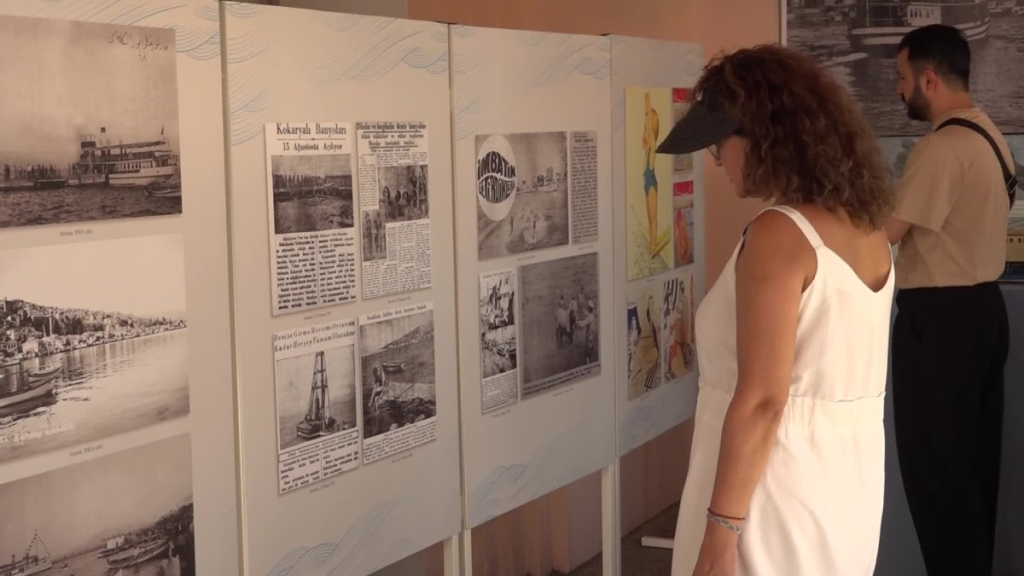

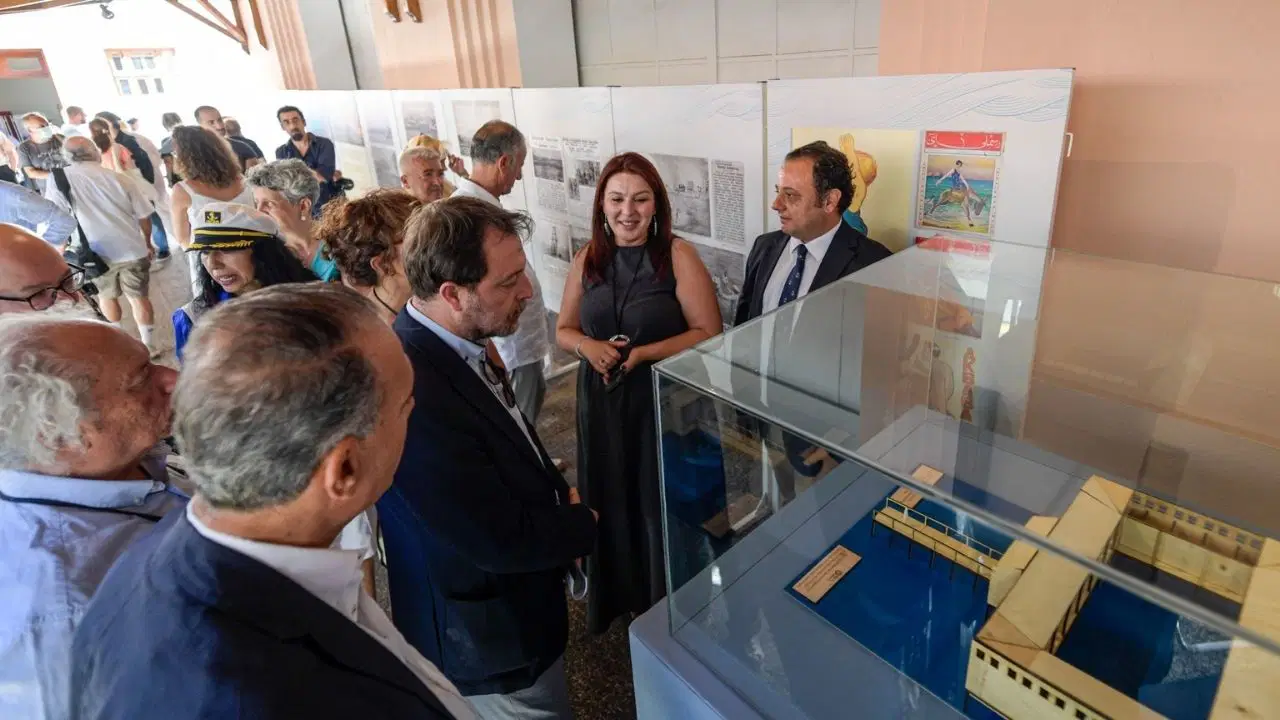
In İzmir, the deep connection between residents and the sea has been brought back to life through a new exhibition titled “An Old Summer in İzmir: From Sea Baths to the Beach”. Organized by the Ahmet Piriştina City Archive and Museum (APİKAM), the exhibition takes visitors on a historical journey from the mid-19th century to the mid-20th century, exploring how sea culture evolved from traditional enclosed baths to open beaches.
Through a combination of archival newspapers, memoirs, academic research, and rare visual materials, the exhibition highlights how swimming and seaside leisure became intertwined with health, privacy, entertainment, and modernization.
Among the featured moments is a nostalgic film clip from APİKAM’s İZFAŞ Albums collection, showing the İstanbul City Theatre actors who came to İzmir in 1936 to stage “Lüküs Hayat”. Their trip to İnciraltı, accompanied by İzmir Mayor Behçet Uz, where they swam in the seaside baths, along with 1937 footage of Karşıyaka’s coastline, provides visitors with an intimate look at a bygone era.
The First Exhibition Dedicated to Sea Baths
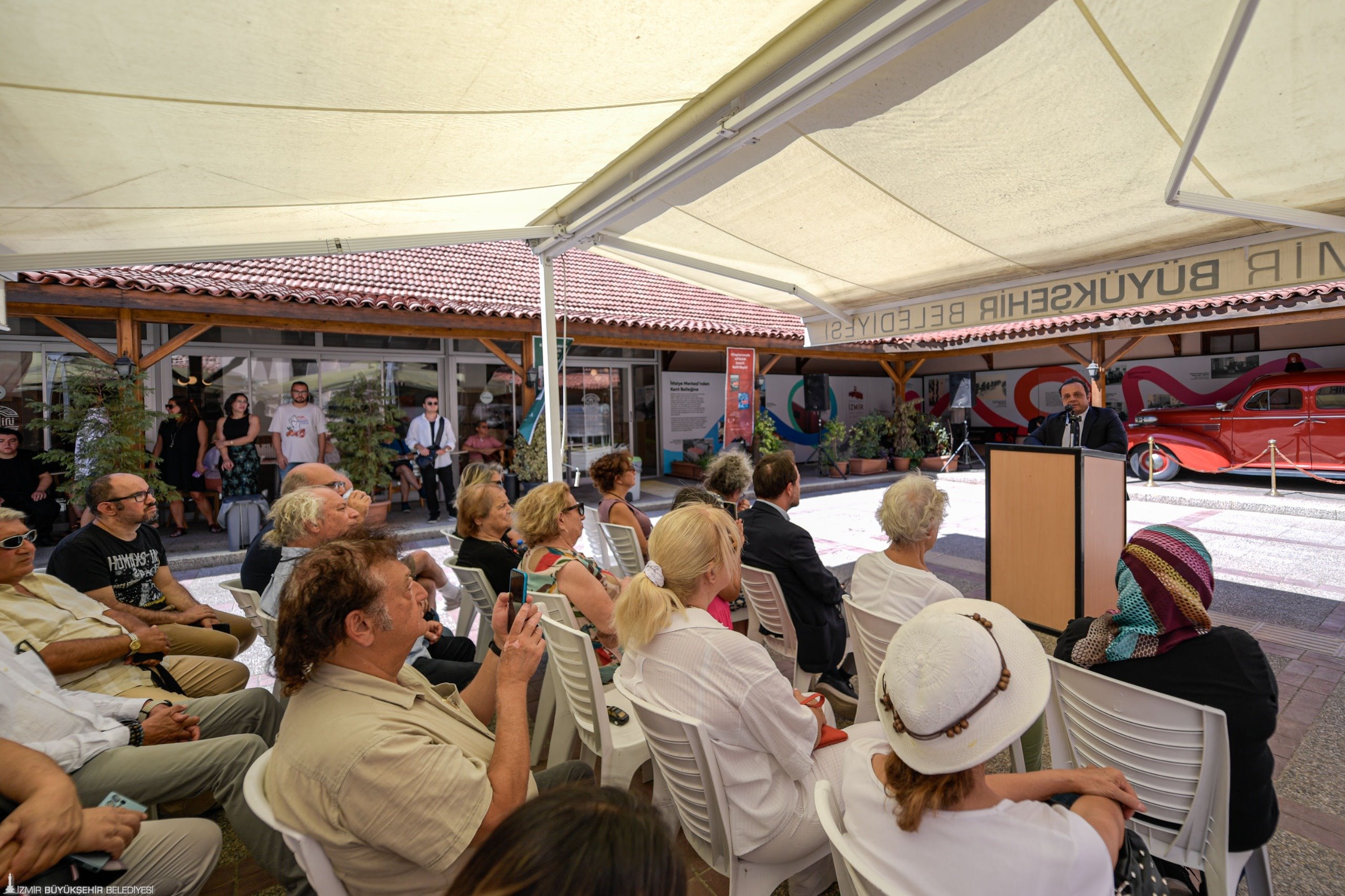
At the opening ceremony, Serhan Kemal Saygı, Head of the City Archive and Museums Department, emphasized the cultural weight of the project.
“Sea baths have left a strong mark on İzmir’s social memory, yet this subject has never been explored in detail before. With this exhibition, APİKAM sheds light on an overlooked aspect of İzmir’s identity. The sea is not only part of İzmir’s geography but also of its cultural identity. The practice of swimming, initially associated with privacy and health, later became linked to modernization and social transformation. This exhibition is the first in Türkiye dedicated specifically to the history of sea baths,” he noted.
A Symbol of İzmir’s Modernization
Saygı added that extensive archival and literature research revealed the gradual integration of sea baths into the city’s daily life starting in the late Ottoman period. By the late 19th century, sea baths had emerged along İzmir’s coasts, transforming into architectural landmarks that were more than recreational structures.
“They became spaces for socialization, freedom, and modernization, reshaping urban public life,” Saygı explained. “They represent a striking turning point in İzmir’s modernization process, where issues of gender, privacy, and public visibility began to evolve—particularly with the Republic’s encouragement of women and men participating together in social life.”
Atatürk and the Florya Connection
The exhibition also links İzmir’s coastal culture with the broader story of Türkiye’s modernization under Mustafa Kemal Atatürk. Nihan Özdal, from APİKAM’s Museum and Exhibition Unit, highlighted the importance of this theme:
“When narrating the relationship between people and the sea, we could not overlook Atatürk’s connection to the Florya Sea Pavilion. His summers spent at Florya symbolized the Republic’s egalitarian and people-oriented spirit. The very act of men and women swimming together was a reflection of Atatürk’s vision of modern life and his determination to instill new social habits.”
By including this element, the exhibition situates İzmir’s seaside history within the broader cultural reforms of the early Republic.
Voices of Memory: Living Witnesses
The exhibition also incorporates personal testimonies from those who lived through the era of sea baths. Fatma Engür, now 88 years old, shared her childhood and teenage memories in Güzelyalı, where she frequently visited sea baths.
“In Güzelyalı, sea baths were divided into two sections. You went down into the water by a ladder. Women swam inside the enclosed area, while men swam outside behind a partition. I was around 15 at the time. Things are very different today compared to back then,” she recalled.
Such accounts bring a human dimension to the exhibition, bridging past and present through lived experience.
More Than Nostalgia: A Cultural Reawakening
While the exhibition has strong nostalgic elements, organizers stress that it is not simply about looking back. Rather, it is about understanding how the sea shaped İzmir’s cultural identity and how the evolution from sea baths to open beaches mirrored larger social changes.
From issues of health and hygiene to gender roles and public spaces, the exhibition highlights how leisure by the sea reflected—and sometimes drove—Türkiye’s modernization.
A Living Heritage
The exhibition is a reminder that İzmir’s relationship with the sea is not only historical but ongoing. From enclosed baths of the Ottoman era to the modern beaches of today, İzmir’s coastline has continuously been a stage where culture, identity, and daily life intersect.
For visitors, “An Old Summer in İzmir” offers not just a nostalgic journey but also a deeper reflection on how social life by the sea shaped the city’s identity. By presenting sea baths as both architectural structures and cultural symbols, APİKAM underscores their value as part of Türkiye’s intangible cultural heritage.