
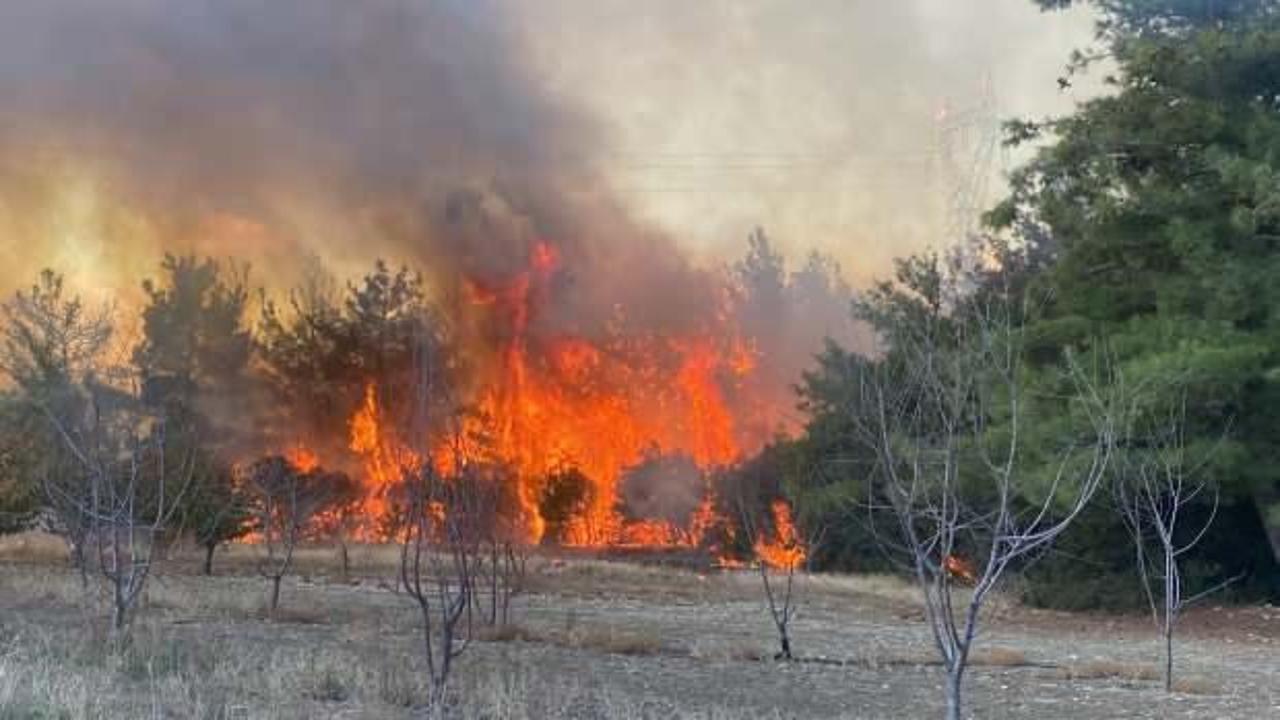
In a troubling incident that has reignited concerns over wildfire prevention and public safety in Türkiye, a massive forest fire that broke out in the Ayvacık district of Çanakkale on 15 July was confirmed to be deliberately started by two individuals diagnosed with mental instability. The fire raged for 21 hours, destroying homes, farmlands, machinery, and even threatening centuries-old cultural heritage sites.
While no casualties were reported, the scale of destruction and the legal aftermath have sparked significant public debate — particularly surrounding mental health protocols, fire response readiness, and the future protection of Türkiye’s increasingly vulnerable natural landscapes.
The Fire’s Origin and Rapid Spread
The fire began around 3:00 p.m. on July 15 in the Naldöken village area, located in Ayvacık — a region surrounded by dense forests and rural agricultural settlements. The initial flames, fueled by hot temperatures and strong winds, quickly escalated into a large-scale wildfire that threatened several villages.
As flames surged across multiple directions, emergency response units sprang into action with a massive mobilization of aerial and ground resources:
4 fire-fighting aircraft
6 helicopters
24 fire trucks (arazöz)
12 water supply vehicles
16 municipal firefighting units
3 rapid response units
6 bulldozers
5 trailers
11 support vehicles from external agencies
220 firefighting personnel
Despite the intensity of the blaze, responders were able to contain and control the fire after 21 hours, thanks to a coordinated effort between national fire authorities, local municipalities, and regional disaster management teams.
Villages Severely Affected
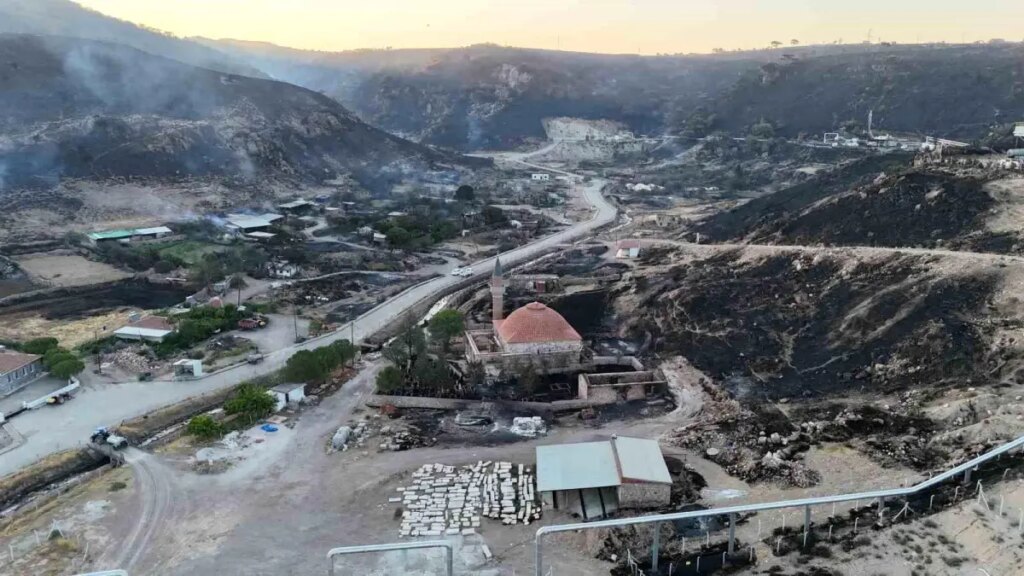
The fire left a significant impact on four villages: Naldöken, Tuzla, Taşağıl, and Çamköy. In these areas, dozens of structures were damaged or destroyed, including:
Agricultural barns
Greenhouses
Storage units
Abandoned houses
Tractors and irrigation tools
Extensive cultivated farmland
Local residents were forced to evacuate or defend their properties with limited resources before assistance arrived. For many, it was the worst fire in recent memory.
Historical Heritage Threatened
Beyond environmental and agricultural losses, the fire came dangerously close to destroying irreplaceable cultural heritage. In Tuzla village, the flames reached the garden area of the Murad Hüdavendigar Mosque, a 659-year-old Ottoman-era structure built during the reign of Sultan Murad I. The mosque, currently under restoration, houses several historic gravestones and tombs, some of which were partially scorched in the blaze.
Heritage preservation experts have since visited the site to assess the damage and initiate protective restoration measures. The incident highlights how wildfires are increasingly intersecting with cultural preservation challenges, especially in regions like the Aegean and Marmara that are rich in Ottoman and early Anatolian relics.
Environmental Toll: 1,400 Hectares Lost
Preliminary reports from forestry authorities confirmed that the fire consumed approximately 1,400 hectares (3,460 acres) in total — 400 hectares of which were forested areas.
The destruction of native pine trees, wildlife habitats, and ecological corridors raises serious long-term concerns about regional biodiversity. Experts warn that the area may take decades to fully regenerate, if left undisturbed.
Soil degradation, erosion risk, and the displacement of wildlife species are now top concerns for the Ministry of Agriculture and Forestry, which has already begun assessing recovery plans and reforestation strategies.
Cause and Legal Status: Suspects Diagnosed with Mental Illness
The investigation, led by Çanakkale Gendarmerie, identified M.Ö. (62) and R.Ö. (75) — two men known to live in the region — as the individuals responsible for starting the fire.
Authorities stated that both suspects were found to be mentally unfit, with documented histories of psychiatric conditions. Their names were not fully disclosed to the public in accordance with privacy laws. The two were detained and questioned, then released following legal procedures that confirmed their mental incapacity, pending further psychological evaluation.
This outcome has triggered public backlash and legal debate. Citizens and environmental groups have expressed frustration that individuals with known psychological disorders could be left unsupervised in high-risk areas, and called for stricter monitoring systems, particularly in rural communities where fire safety is paramount.
Legal experts note that under Turkish Penal Code, individuals deemed unfit to stand trial due to psychiatric conditions may not face imprisonment, but can be referred to mandatory treatment facilities. However, this depends on judicial discretion and the input of medical professionals.
Questions Raised About Mental Health Oversight in Rural Areas
The incident has exposed a critical gap in rural health and public safety infrastructure. While urban centers often have access to psychiatric institutions and social services, villages like those in Ayvacık often lack structured mental health monitoring systems. This allows potentially dangerous behaviors to go unchecked.
Local officials have called on the Ministry of Health and Ministry of Interior to introduce new policies that would:
Assign psychiatric caseworkers to rural communities
Establish early warning mechanisms for high-risk individuals
Improve public education on fire hazards and reporting protocols
Such reforms, they argue, are essential to prevent future incidents of this magnitude.
Community Response and Recovery
In the days following the fire, volunteers, civil society organizations, and local authorities have rallied to support affected residents. Relief efforts include:
Temporary shelter for displaced villagers
Emergency feed and water for livestock
Distribution of tools and equipment for salvaging agricultural operations
Psychological support teams dispatched to affected communities
Despite the swift response, financial loss remains high, and many families face a long road to recovery. Damage assessment teams are working to process compensation claims, but bureaucratic hurdles have delayed some payouts.
Policy Implications for Wildfire Risk Management
Türkiye, like many Mediterranean countries, has experienced a sharp increase in wildfires over the past decade — driven by climate change, land mismanagement, and human negligence. The Ayvacık fire adds to a growing list of disasters that illustrate the urgency of a national wildfire prevention strategy.
Experts are urging policymakers to adopt:
AI-powered fire risk detection systems
Controlled burn programs to reduce fuel accumulation in forests
Stronger zoning laws around agricultural-forest interfaces
Mental health coordination between local governance and law enforcement
The goal, they argue, must be to create integrated prevention networks that go beyond firefighting and address the root causes of wildfire ignition — whether environmental or behavioral.
The Ayvacık fire may be extinguished, but the embers it leaves behind continue to fuel discussions about accountability, resilience, and the balance between individual rights and public safety in the face of growing ecological threats.