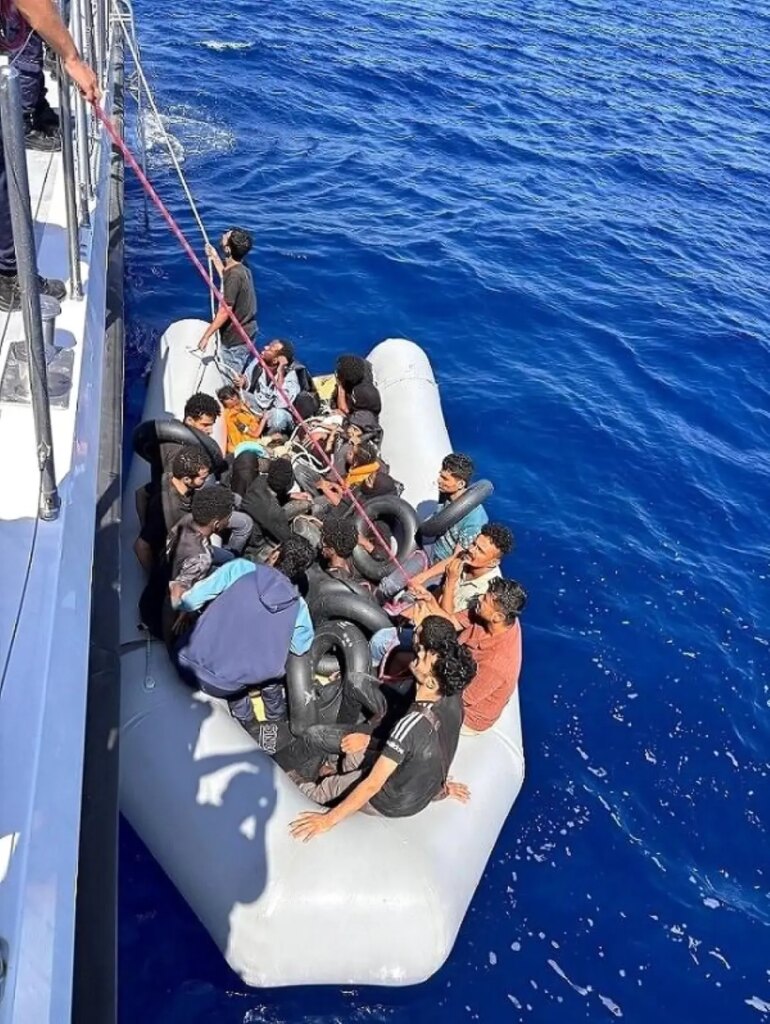

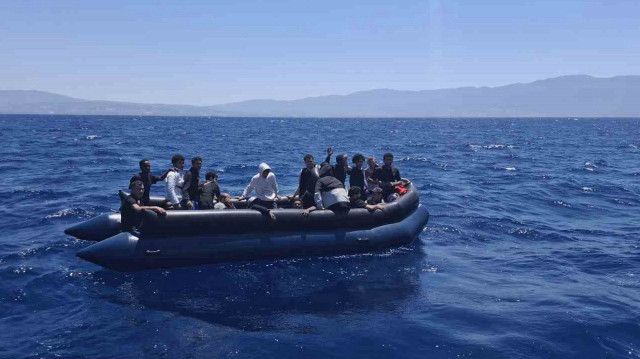
Off the coast of Türkiye’s picturesque Kuşadası district in Aydın province, a humanitarian drama unfolded as 22 irregular migrants, including 7 children, were rescued from a drifting inflatable boat in the Aegean Sea. The coordinated efforts of the Turkish Coast Guard once again turned a potentially fatal incident into a story of survival.
The rescued individuals were pushed back into Turkish territorial waters by Greek authorities before their boat was discovered and assistance was dispatched. The event highlights not only the ongoing challenges of irregular migration across the Aegean but also the crucial role Türkiye continues to play in ensuring the safety of lives at sea.
An Operation Driven by Urgency and Humanity
According to information provided by the Turkish Coast Guard Command, the distress call originated from an area off Kuşadası’s coastline. Responding swiftly, a Coast Guard vessel and a patrol boat were immediately dispatched to the scene.
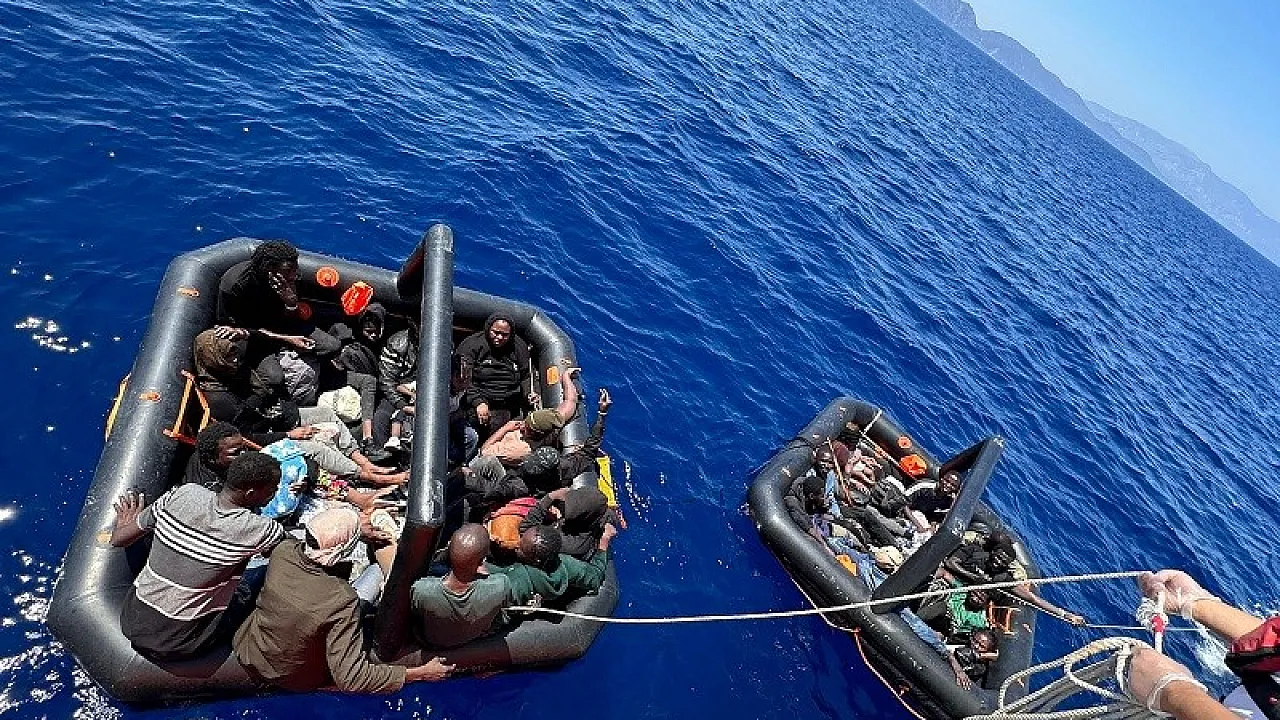
Upon arrival, officers encountered a crowded, unstable inflatable boat left adrift and vulnerable to the sea’s unpredictable currents. The presence of children onboard made the situation even more precarious. Despite rough waters, the rescue team carried out a smooth and efficient operation, retrieving all 22 individuals safely.
Initial medical assessments were carried out on-site. Fortunately, none of the rescued individuals suffered from serious injuries or exposure-related conditions. Their overall health was declared stable by emergency personnel.
Ongoing Struggles of Migrants in the Aegean Region
This incident is far from isolated. The Aegean Sea remains a critical and dangerous route for migrants attempting to cross into Europe from Türkiye. Despite ongoing international scrutiny, Greek pushbacks at sea have become a controversial and widely criticized tactic, reportedly placing vulnerable lives at grave risk.
In this case, the group of migrants had reportedly been intercepted by Greek coast guard forces and then forcibly pushed back into Turkish waters. This practice, which violates international law and human rights conventions, has become a recurring challenge in the eastern Mediterranean region.
Türkiye has frequently voiced its objections at international forums and continues to monitor and report these incidents through diplomatic channels and humanitarian appeals. The country emphasizes that migration must be managed through cooperative, lawful, and compassionate means.
Türkiye’s Commitment to Maritime Humanitarian Operations
The Turkish Coast Guard Command has built a reputation for its swift and effective responses to maritime emergencies involving migrants. Working around the clock, Turkish authorities have saved thousands of people from the dangers of the sea in recent years.
In the case of this latest operation, the rescued individuals were promptly taken ashore. After registration procedures and health check-ups, they were transferred to the Aydın Provincial Directorate of Migration Management. Legal and administrative processes are now underway, including the possibility of asylum applications, deportation procedures, or relocation support depending on each individual’s situation.
Türkiye’s migration policy places a strong emphasis on humanitarian principles. While the country maintains strict border controls, it has consistently treated rescued migrants with respect and provided necessary shelter, healthcare, and access to legal representation.
Children in Crisis and the Impact of Forced Migration
Among the most alarming aspects of this recent rescue was the presence of seven children. Children undertaking such perilous journeys often face the most devastating consequences, both physically and psychologically.
UN agencies and rights groups continue to stress that any approach to migration must prioritize the rights and welfare of minors. In the absence of safe migration pathways, many families feel compelled to embark on dangerous crossings in search of security and opportunity.
Children who survive such traumatic experiences frequently require psychological support and long-term rehabilitation services. Türkiye’s Directorate of Migration Management has increasingly partnered with civil society organizations and UN bodies to address the unique needs of child migrants.
International Law and Contested Maritime Boundaries
The latest incident raises once again the thorny issue of contested maritime zones and border enforcement in the Aegean Sea. Disputes between Türkiye and Greece regarding territorial waters and exclusive economic zones have long complicated bilateral relations.
While both countries are bound by the Geneva Convention and other international frameworks related to asylum seekers and refugees, the on-the-ground reality often deviates from established protocols. Pushbacks, abandonment at sea, and non-cooperation are unfortunately becoming normalized in what should be a legally regulated space.
International observers, including the European Union and humanitarian watchdogs, are being urged to hold all parties accountable and to ensure that border policies do not endanger human lives or violate basic human rights.
The Role of Public Awareness and Media in Migration Issues
Stories such as this one are critical not only for understanding the migration crisis but also for shaping public opinion. As global media outlets cover high-profile migration tragedies in the Mediterranean or the English Channel, incidents in the Aegean are sometimes overlooked.
Yet, the daily reality for many migrants in this region is one of uncertainty, hardship, and risk. By shedding light on such events, media platforms play an essential role in advocating for humane and lawful migration solutions.
Raising awareness also puts pressure on policymakers, both within Türkiye and across Europe, to reevaluate existing strategies and to invest in more comprehensive migration management frameworks.
Local Communities and Solidarity in Coastal Türkiye
One often overlooked aspect of the migration narrative is the response of local communities. In towns like Kuşadası, which are known for tourism and maritime culture, residents are increasingly aware of the humanitarian dimension of these rescues.
Many local aid organizations offer support, ranging from meals and clothing to translation and legal assistance. While public sentiment on migration varies, there remains a strong tradition of solidarity in Turkish coastal communities.
This spirit of humanity, deeply rooted in Türkiye’s cultural and social fabric, continues to guide local and national responses to one of the most pressing crises of our time.
A Persistent Challenge That Demands Lasting Solutions
The rescue near Kuşadası is a single chapter in a larger story. It reflects not only the bravery and professionalism of Türkiye’s maritime forces but also the unresolved complexities of regional migration.
Until more secure, lawful, and humane migration systems are established, such scenes will likely continue to unfold. Coastal nations like Türkiye remain on the frontline, balancing border security with moral responsibility.
The incident underscores the urgency of collective action, regional cooperation, and adherence to international norms. It also highlights the need for long-term strategies that go beyond crisis response and address the root causes of forced migration.