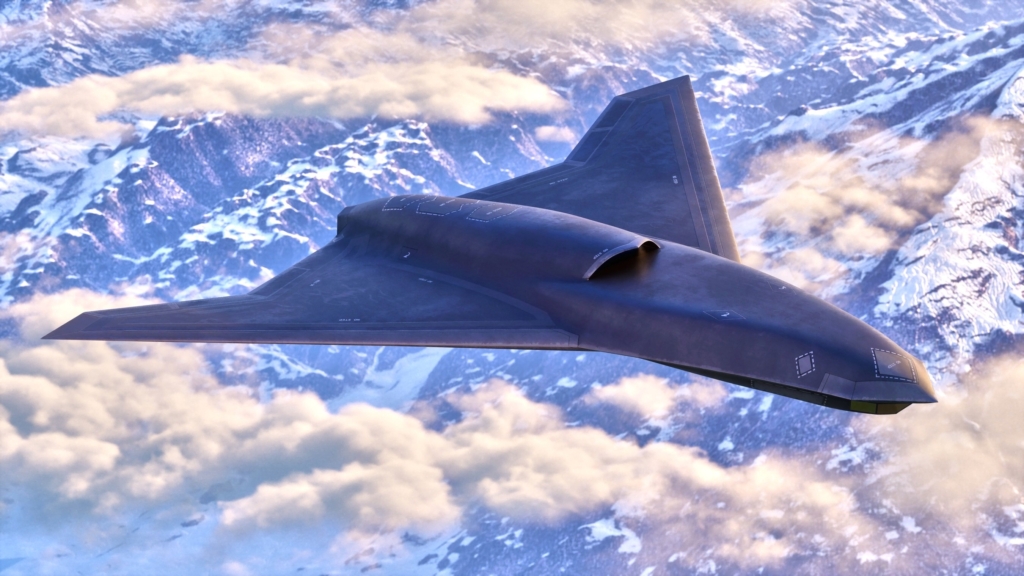

Skunk Works, the legendary advanced development division of Lockheed Martin, has once again captured global attention with its latest project known as Vectis. The unit, which has been behind the creation of iconic aircraft such as the P-80 Shooting Star, the F-104 Starfighter, the U-2 Dragon Lady, the SR-71 Blackbird, the F-117 Nighthawk and more recently the X-59 QueSST, is often described as the aviation world’s hidden vault of innovation. Every new announcement from Skunk Works sparks both excitement and speculation, as this highly secretive branch has a history of reshaping the future of air combat.
A new generation of air power
The Vectis platform is being designed as a multi-role unmanned aerial vehicle (UAV) that could redefine how modern militaries think about air superiority. According to early statements from Lockheed Martin, the aircraft will be capable of conducting precision strikes, intelligence gathering, surveillance, reconnaissance, electronic warfare and a combination of offensive and defensive air operations. Such versatility suggests that Vectis is not simply another drone but rather a central piece in the evolution of air dominance strategies.
What makes Vectis particularly noteworthy is its ability to operate either independently or in partnership with manned aircraft such as the F-35 Lightning II. This type of integration, often referred to as manned-unmanned teaming, is increasingly seen as the future of combat aviation. With militaries worldwide investing in systems that allow drones to extend the capabilities of fighter jets, Vectis is positioned at the heart of this trend.
Skunk Works vision for adaptability
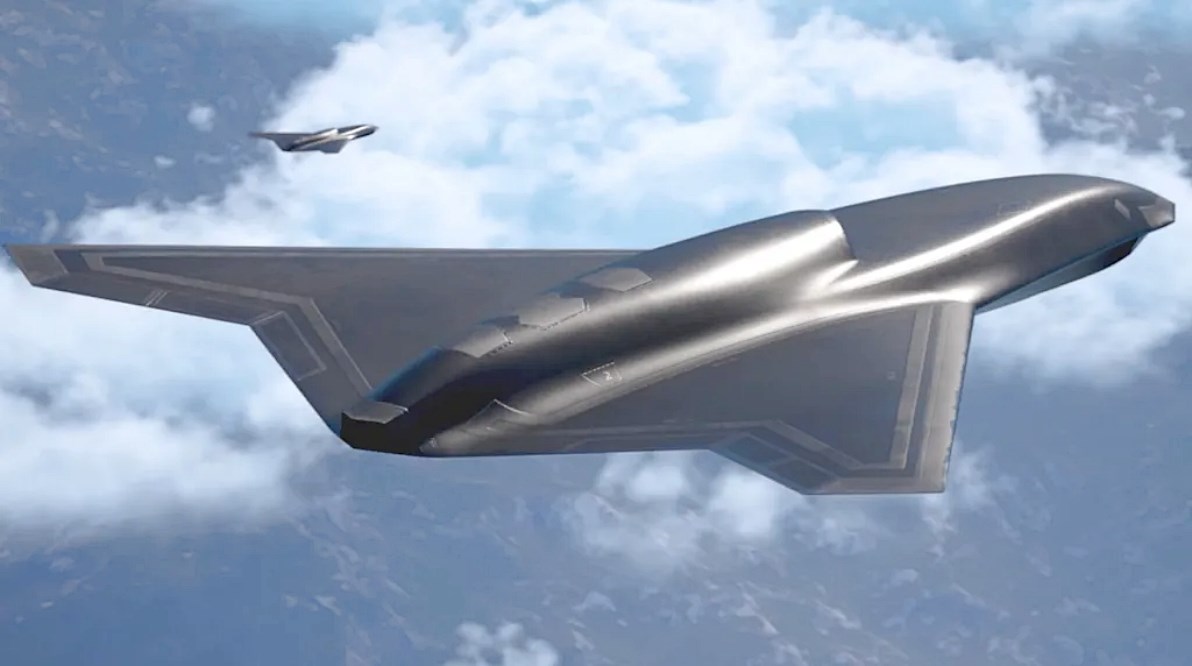 OJ Sanchez, Vice President of Skunk Works, emphasized that the program is not about creating just another flying machine. Instead, it represents an attempt to build a new paradigm of adaptable, resilient and cost-effective air power. This vision fits perfectly within the broader military landscape, where budgets are tightening while threats continue to evolve rapidly. Nations are seeking flexible platforms that can perform multiple roles, be deployed in diverse environments and remain affordable over time.
The adaptability factor is crucial. Unlike traditional fighter jets which require decades of development and carry massive costs, a UAV like Vectis can potentially be upgraded faster, adjusted for specific missions and produced in larger numbers. If successful, this could reduce dependency on a few expensive aircraft and instead create a scalable fleet of mission-ready platforms.
Technical expectations and mystery surrounding specifications
Although Lockheed Martin has been careful not to reveal too many details, some specifications can be inferred from the category in which Vectis belongs. Reports suggest that it falls within the class of UAVs that weigh more than 600 kilograms and are capable of operating above 5,500 meters. In terms of size, it is expected to be smaller than an F-16 Fighting Falcon yet larger than common medium-sized UAVs such as the CMMT type. Aircraft within this category typically measure between 2.4 and 15 meters in length.
This positions Vectis in a highly strategic range: compact enough to operate flexibly and remain difficult to detect, yet large enough to carry sophisticated payloads. The ambiguity of its exact dimensions and design is in line with Skunk Works’ tradition of secrecy. Historically, the division has only revealed critical details once programs are nearly operational, which keeps both allies and rivals guessing.
The evolution of unmanned warfare
The development of Vectis must also be viewed in the context of a broader global shift toward unmanned warfare. Over the past two decades, UAVs have moved from being supplementary tools for reconnaissance to central players in high-intensity combat operations. From the use of drones in counterterrorism campaigns to their deployment in regional conflicts, unmanned systems have demonstrated both their effectiveness and their limitations.
Countries such as the United States, China, Russia and Türkiye have all invested heavily in drone technologies, each aiming to secure strategic advantages in the next era of warfare. Türkiye in particular has become a major player, with platforms like Bayraktar TB2 achieving international recognition. In this competitive landscape, Vectis could represent the next stage of evolution, pushing beyond current UAV designs by combining stealth, versatility and integration with advanced fighter jets.
Strategic and economic implications
The introduction of a platform like Vectis has potential consequences that extend far beyond technology. Strategically, it could alter the balance of air power, giving operators the ability to conduct missions that would otherwise require multiple specialized aircraft. Economically, it could reshape procurement strategies, offering governments a way to maintain a high-tech air force without bearing the full cost of fifth or sixth-generation fighters.
If Vectis lives up to its promise, it may also strengthen Lockheed Martin’s position as the world’s leading defense contractor. With rising competition from drone-focused companies and international rivals, securing dominance in the next wave of unmanned systems is critical for the company’s future.
Lessons from Skunk Works history
Looking at the history of Skunk Works provides useful insight into what might be expected from Vectis. Every major platform developed by this division has introduced disruptive capabilities. The U-2 Dragon Lady opened the era of high-altitude reconnaissance, the SR-71 Blackbird redefined speed and stealth, the F-117 Nighthawk pioneered stealth combat operations, and the X-59 QueSST is pushing the boundaries of supersonic travel with minimized sonic booms.
If Vectis follows this tradition, it will not only fill a tactical need but also set a new benchmark for what UAVs can achieve. It would not be surprising if the aircraft introduces cutting-edge stealth technologies, artificial intelligence-based mission systems or advanced electronic warfare tools.
Broader context in global defense
The global defense environment today is marked by rapidly evolving threats, from cyber warfare to hypersonic weapons. Air power remains central to national security strategies, but the methods for achieving superiority are changing. Rather than relying solely on manned fighter jets, nations are embracing a hybrid model where unmanned systems complement, extend and sometimes even replace human pilots.
In this sense, Vectis represents not just another project but a symbol of the transition to a new era. For countries allied with the United States, the deployment of such systems could offer new capabilities for joint operations. For rivals, it introduces yet another challenge in an already complex arms race.
Looking at the road ahead
The fact that Lockheed Martin has already ordered parts and assembled a dedicated team indicates that Vectis is moving forward rapidly, though an official timeline remains undisclosed. As with most Skunk Works projects, the public may not see the final design until it is close to operational testing. This cloak of secrecy has historically allowed the division to innovate without external pressure, but it also fuels speculation across the defense community.
Observers will be watching closely to see whether Vectis appears first as a demonstrator, an experimental prototype or directly as a production-ready aircraft. Either way, the program reflects the ongoing evolution of air combat, where unmanned platforms no longer play a supporting role but instead define the strategic vision for the decades ahead.
In many ways, Vectis symbolizes the future of adaptable, cost-efficient and intelligent air systems. If Skunk Works once again delivers on its reputation, this project could become a milestone in military aviation history, reshaping how air power is projected and maintained in the twenty-first century.