

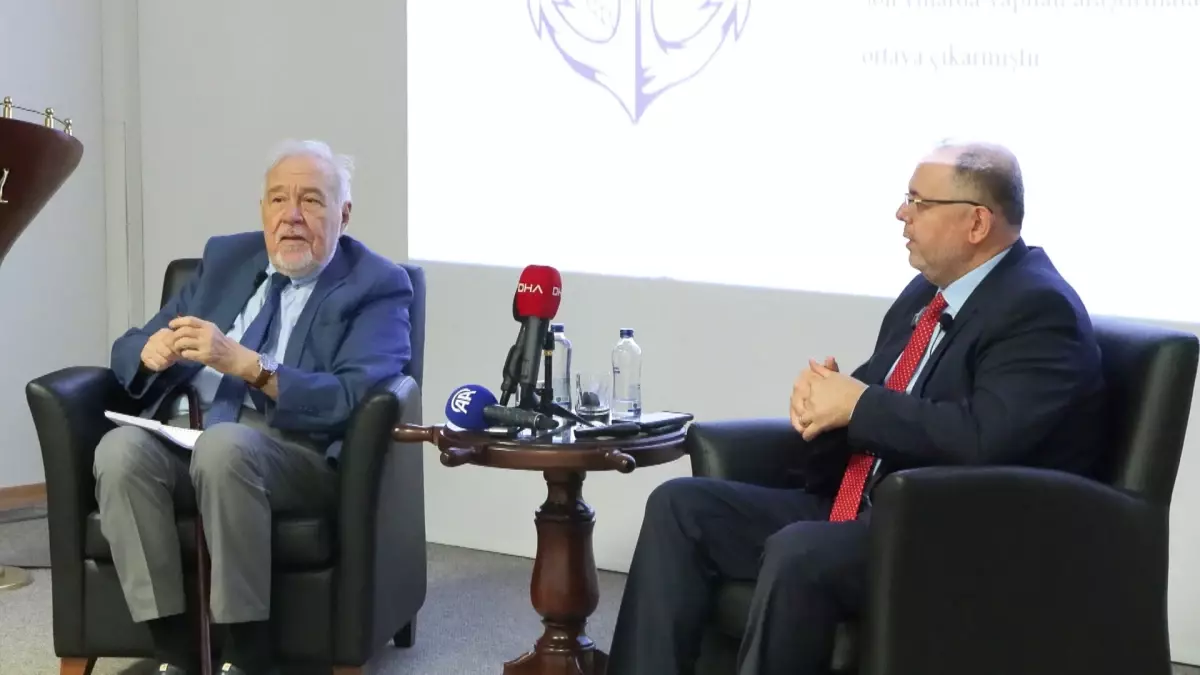
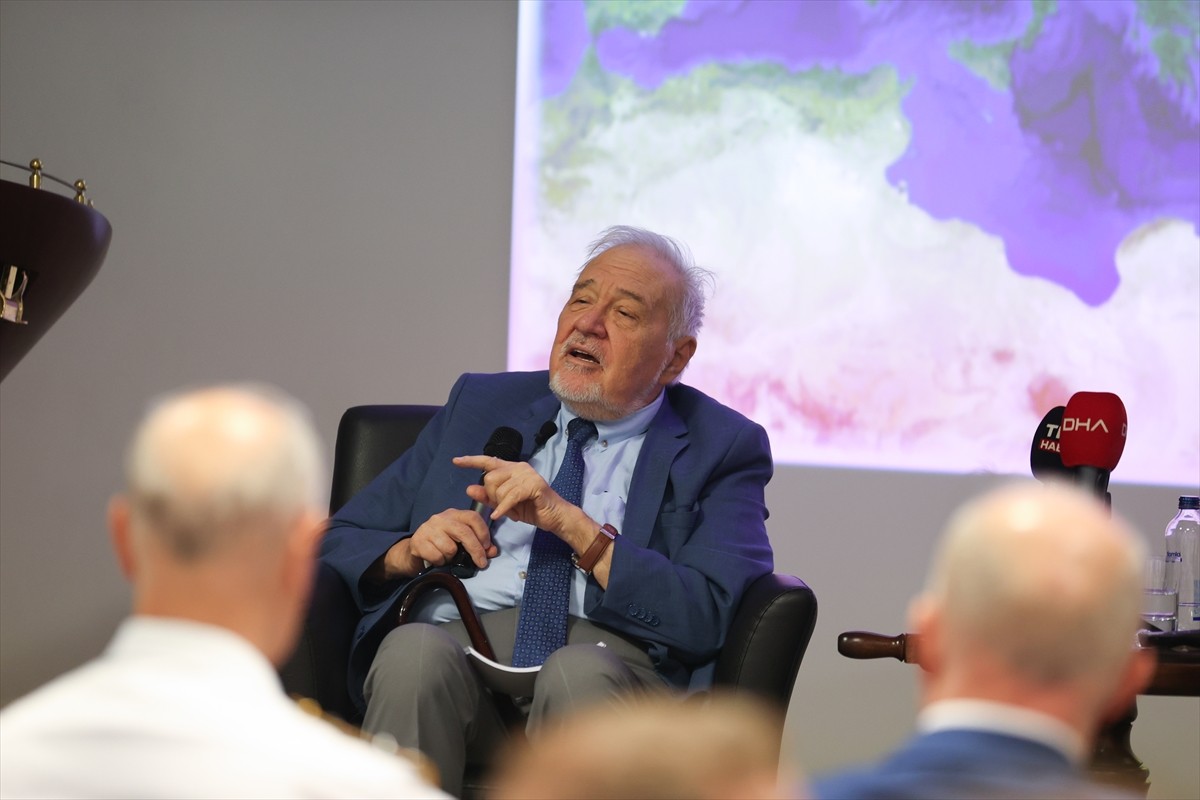
The maritime edition of TEKNOFEST 2025, taking place at the Istanbul Naval Shipyard Command, has not only been a showcase of Türkiye’s naval engineering prowess but also a platform for historical reflection. At the heart of the event was a deeply insightful session titled Mediterranean and Ottoman Naval Power, featuring renowned historian Prof. Dr. İlber Ortaylı and National Defense University Rector Prof. Dr. Erhan Afyoncu. Their remarks offered a powerful reminder that Türkiye’s naval legacy is not only technological—it’s historical, cultural, and strategic.
Naval Dominance as a Cornerstone of National Strength
In his address, İlber Ortaylı emphasized that Türkiye’s growing role as a formidable power is owed, in large part, to its naval capabilities. He remarked that the country is now rightly seen as a force to be reckoned with on the global stage—and this perception stems largely from its naval strength.
“This recognition is no accident,” he noted. “It is something we owe to our navy.”
According to Ortaylı, Türkiye’s advancements in defense and maritime technology have unique origins that set them apart from global trends. While naval power in many countries evolved organically from seafaring traditions, Türkiye’s military technology—especially in its early stages—grew from artillery and ballistics.
“This is a rare exception,” he explained. “Turkish military innovation did not originate from naval traditions as it did elsewhere. It came from artillery—an area in which we were pioneers.”
The Artillery Revolution of the 15th Century
Highlighting the strategic genius of Fatih Sultan Mehmet (Mehmed the Conqueror), Ortaylı praised the Sultan’s groundbreaking use of artillery during the 15th century. He described him as an engineer who revolutionized warfare by integrating conventional weaponry with tactical practice, ultimately leading to the fall of Constantinople.
“What we now refer to as the destruction of city walls—those historical sieges—that was a direct result of technological innovation,” he said. “This revolution did not end with that moment. Although it may not have continued in the same form within land forces, naval forces had to adapt and continue developing.”
This legacy, Ortaylı emphasized, continues to shape modern Türkiye’s defense strategy, especially in its push toward technological independence and high-caliber naval production.
From Fortress to Fleet: Türkiye’s Maritime Outlook from Past to Present
National Defense University Rector Prof. Dr. Erhan Afyoncu added depth to the historical narrative by spotlighting Fatih Sultan Mehmet’s early focus on the Dardanelles. He reminded the audience that one of the Sultan’s first actions was to fortify the region with castles at Sultaniye and Kilitbahir.
“Fatih understood long before many others that a threat to the empire would come from the Dardanelles,” Afyoncu noted. “This foresight came nearly 450 years before the 1915 Gallipoli Campaign.”
Afyoncu pointed out that as early as the reign of Sultan Murad II, Ottoman rulers began using titles such as Sultan of the Lands and the Seas, highlighting the rising strategic importance of naval dominance in imperial identity.
One of the more fascinating anecdotes from Afyoncu’s talk was the global context of moving ships over land—a feat famously attributed to the conquest of Constantinople. “Historically, there are only 18 recorded instances of naval forces moving ships over land,” he said. “Four of them belong to the Turks.”
The best-known of these was the operation during the 1453 siege of Constantinople, where ships were transported over land to bypass the Golden Horn defenses. Afyoncu revealed that this strategy was actually inspired by Gazi Umur Bey, a lesser-known naval pioneer who predates the Ottoman Empire.
An Interactive Experience for All Generations
As TEKNOFEST Mavi Vatan continues through the end of August, it offers more than historical lectures. The event features full-scale naval ships open to public viewing—including:
TCG Anadolu
TCG İstanbul
TCG Burgazada
TCG Oruçreis
TCG Nusret
TCG Sakarya
TCG Hızırreis
In addition to the real-life warships, attendees can explore virtual reality simulations, witness elite demonstrations by SAT and SAS commands, and walk through the Blue Homeland Time Tunnel, an interactive exhibit exploring Türkiye’s maritime evolution.
These immersive experiences aim to inspire future engineers, naval officers, and historians, instilling pride in a heritage that stretches from ancient maritime republics to modern defense technologies.
TEKNOFEST: Where Technology Meets Tradition
Organized in partnership with Türkiye Technology Team Foundation (T3 Vakfı), the Ministry of National Defense, and the Ministry of Industry and Technology, TEKNOFEST Mavi Vatan reflects a broader national vision. It merges historical consciousness with forward-looking technological ambitions.
While previous editions of TEKNOFEST focused heavily on aerospace and unmanned aerial vehicles, this year’s maritime edition emphasizes the sea as a domain of strategic and cultural depth. It reflects Türkiye’s growing efforts to secure sovereignty not only in the skies but also across the seas.
Building the Future on the Foundations of the Past
Prof. Dr. Ortaylı and Prof. Dr. Afyoncu’s joint presence at the event exemplified a crucial point: Türkiye’s current military strength is not a coincidence, nor is it solely the result of modern policy. It is the product of centuries of strategic thinking, innovation, and a deep understanding of geography, geopolitics, and history.
As Ortaylı aptly summarized, “The legacy of our maritime strength was born not just out of necessity, but from a bold and conscious technological pursuit. And it remains just as vital today.”
TEKNOFEST Mavi Vatan stands as a living, breathing bridge between that past and the future Türkiye envisions—one where history informs innovation, and legacy inspires leadership.