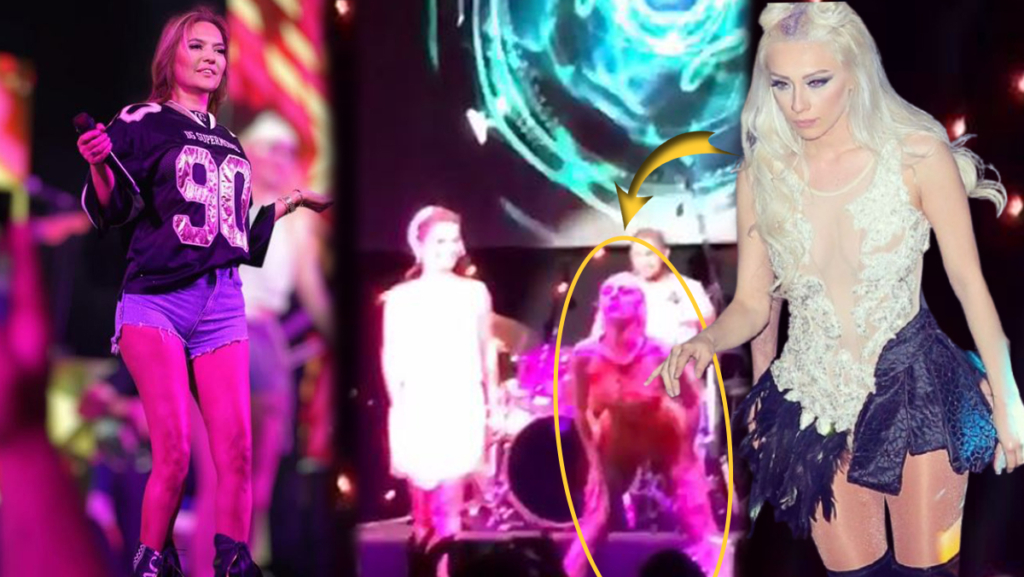

Turkish pop star Demet Akalın is facing serious legal scrutiny after her former dancer, Merve Atalar, filed a lawsuit alleging labor rights violations, underpayment, lack of social security contributions, and workplace harassment during her years of service. While a local court initially rejected the claims, the decision was overturned by a higher court, setting the stage for a renewed legal battle that could shed light on hidden labor practices in Türkiye’s entertainment industry.

Claims of Informal Employment and Withheld Benefits
According to reports by journalist Elif Altın, the lawsuit was submitted to the Labor Court by Atalar’s attorney, Fulya Büyükyörük. The legal filing outlines multiple alleged breaches of labor regulations by Demet Akalın, asserting that Atalar worked without a formal contract between December 16, 2011, and March 4, 2019.
The claims include:
Lack of Social Security Coverage: Atalar was allegedly employed without any official registration with Türkiye’s Social Security Institution (SGK), meaning she was not entitled to health insurance, retirement benefits, or other protections.
Cash Payments and Underpaid Wages: Her salary was reportedly paid in cash and in amounts lower than what had been agreed upon.
Unpaid Leaves: The suit also alleges that Atalar was denied both annual leave and weekly rest days throughout her employment.
Mobbing and Physical Assault: Perhaps the most alarming part of the complaint is the claim that Atalar endured long-term psychological abuse—commonly referred to as “mobbing”—and was ultimately physically assaulted by Akalın’s personal bodyguard in December 2018.
Atalar seeks formal recognition of her employment period, compensation for unpaid benefits, and payment of the social security premiums that were allegedly withheld during her employment under Demet Akalın.
Demet Akalın Denies Employment Relationship
In response to the allegations, Demet Akalın, through her legal team, submitted a defense claiming that no formal employer-employee relationship existed. According to her statement, Atalar was not a salaried employee but instead received performance-based payments for specific engagements, including concerts and music videos.
The pop star’s attorneys requested a dismissal of the case, asserting that no labor law had been violated because Atalar functioned as a freelance performer rather than a contracted worker.
Initial Rejection and Higher Court Reversal
The Anadolu 29th Labor Court initially ruled in Akalın’s favor, dismissing Atalar’s claims. However, the case took a dramatic turn when it was appealed to the İstanbul Regional Court of Justice (34th Civil Chamber). The higher court found that the local court had failed to collect and review critical evidence that could validate the existence of an ongoing working relationship and financial dependency.
The appellate decision cited procedural shortcomings and ordered the case to be reexamined, effectively breathing new life into the dancer’s legal pursuit.

Potential Precedent for the Entertainment Industry
The case is particularly significant given the ongoing conversation around labor rights in Türkiye’s entertainment sector. Freelancers and performers often work under informal agreements without social security, insurance, or consistent pay—a system that leaves them vulnerable to exploitation.
Legal experts note that if the court ultimately rules in Atalar’s favor, the outcome could set a precedent, encouraging others in similar positions to challenge the status quo and demand fair labor practices.
Beyond the Lawsuit: Spotlight on Demet Akalın
Demet Akalın, born in 1972 in Gölcük, Kocaeli, is one of Türkiye’s most prominent pop figures. Starting her career as a model in the 1990s, she transitioned to music with her debut album Sebebim in 1996. Her major breakthrough came with Banane in 2004, and subsequent albums like Kusursuz 19, Pırlanta, and Giderli 16 solidified her place in the pop scene.
Known for her commanding stage presence and outspoken personality, Akalın is also active on television and social media. Her private life frequently draws media attention, particularly her marriage to Okan Kurt and their daughter, Hira. Despite a temporary separation in 2018, the couple reconciled shortly after.
Akalan is also recognized for her participation in charity and social responsibility initiatives, making the current legal accusations all the more high-profile.
Industry Reaction and Public Discourse
The legal conflict has sparked mixed reactions on social media and within entertainment circles. Supporters of Demet Akalın question the timing and motivations behind the lawsuit, while labor rights advocates argue that the case is a stark reminder of the systemic vulnerabilities faced by behind-the-scenes workers in the music and performance industry.
Public interest in the case continues to grow, especially given the court’s decision to reexamine previously overlooked evidence. With new testimonies and documents likely to surface, both the media and the legal world are watching closely.
What Comes Next?
The case now returns to the local labor court, which will be required to conduct a more comprehensive examination of the evidence. This could include reviewing contracts, payment records, communication logs, and testimonies from other dancers or staff who may have worked alongside Atalar.
The final ruling will hinge on whether a continuous and dependent working relationship can be proven under Türkiye’s labor law definitions. If confirmed, Demet Akalın could face financial penalties, back payments, and reputational damage.
Regardless of the outcome, the case is serving as a catalyst for broader discussions about the need for formalized labor protections in the creative industries, where informal and short-term arrangements are still widespread.