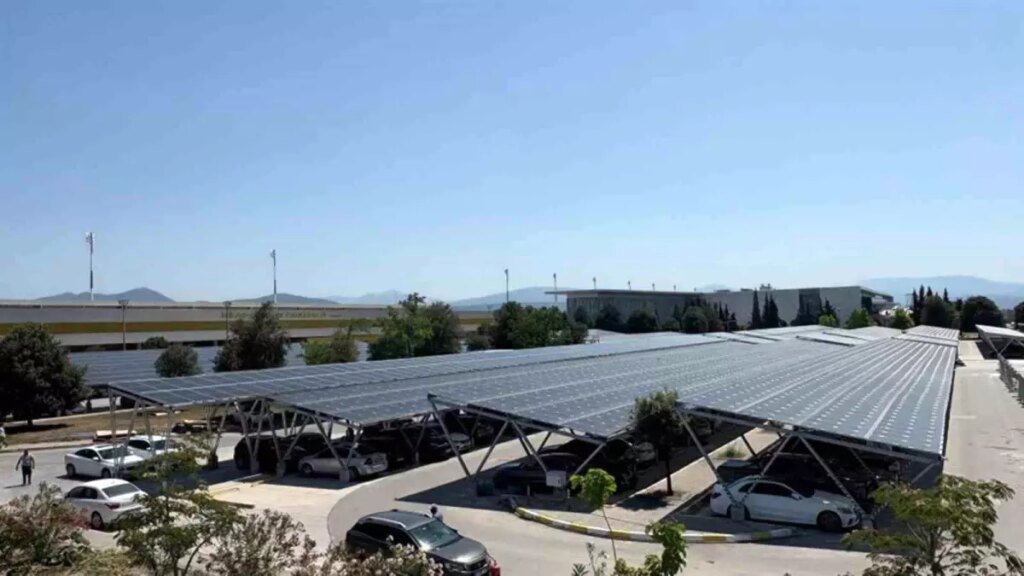

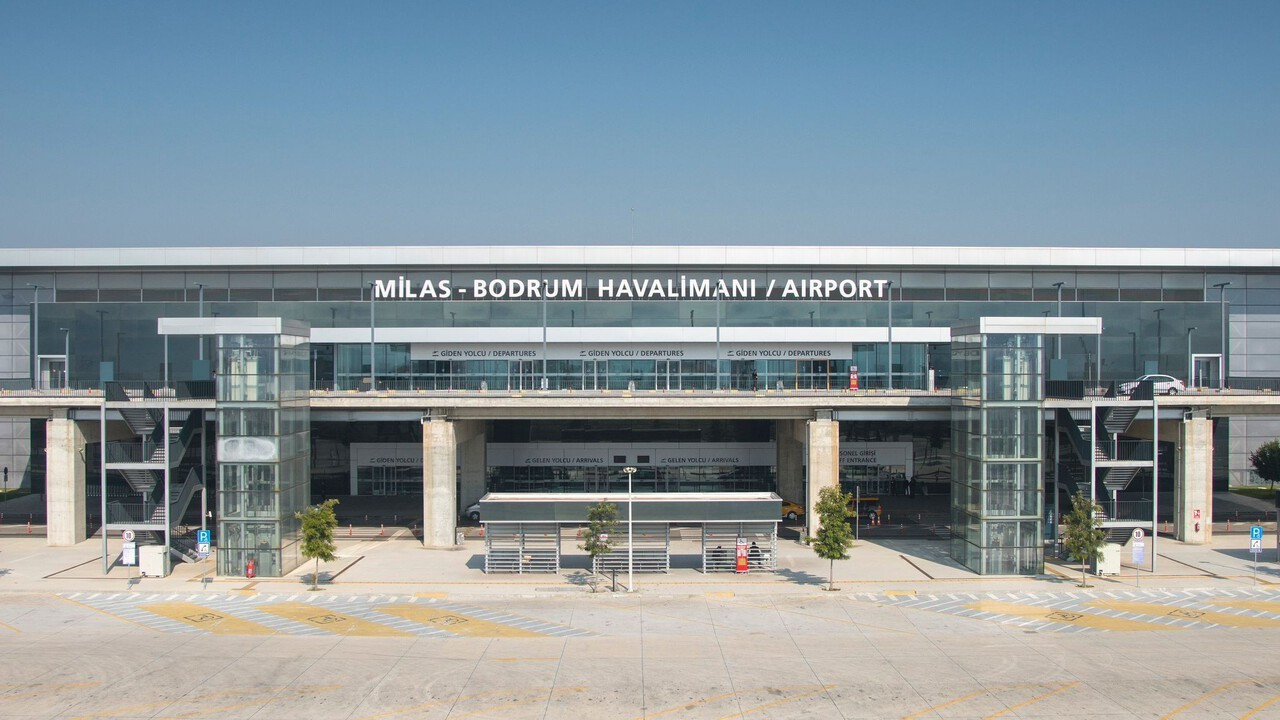
TAV Airports, Türkiye’s globally recognized aviation operator, has officially completed the construction of a large-scale solar power plant (GES) at Milas-Bodrum Airport. With an installed capacity of 6.65 megawatts, the plant is expected to generate approximately 10 million kilowatt-hours of electricity annually—enough to supply the energy needs of nearly 3,000 households.
This ambitious renewable energy project, integrated directly into the airport’s parking infrastructure, marks a significant milestone not just for TAV, but for Türkiye’s broader transition toward sustainable aviation practices.
A Solar Energy Milestone in Türkiye’s Aviation Sector
The solar energy system at Milas-Bodrum Airport leverages advanced Topcon photovoltaic technology, featuring 11,252 solar panels installed across the airport’s parking facility. As a result of this infrastructure, the airport will offset an estimated 4,138 tons of carbon emissions each year—equivalent to the carbon sequestration capacity of approximately 200,000 trees.
With this initiative, Milas-Bodrum Airport is now home to Türkiye’s largest solar-powered parking structure, combining environmental benefits with innovative energy architecture.
Strategic Environmental Goals with a Vision for 2050
Speaking about the project, Milas-Bodrum Airport General Manager İclal Kayaoğlu emphasized TAV’s long-term commitment to environmental responsibility. “At TAV Airports, we are following a long-term strategy aimed at minimizing the environmental impacts of our operations,” she noted. “We aim to make all of our airports carbon-neutral by 2030 and reach net-zero emissions by 2050 at the latest.”
The newly installed solar energy system contributes directly to this roadmap. It also supports the Airport Carbon Accreditation (ACA) program run by the Airports Council International Europe (ACI EUROPE), under which Milas-Bodrum Airport is currently certified.
This strategic move not only accelerates the group’s sustainability agenda but also demonstrates how renewable energy can be effectively incorporated into airport ecosystems.
Enhancing Passenger Experience through Smart Infrastructure
The solar project also brought with it a series of complementary infrastructure enhancements designed to improve the overall passenger experience. As part of the installation:
Lighting and surveillance camera systems were integrated underneath the solar panels to enhance safety
Walkways and directional signage were improved for better navigation
Accessibility was increased through dedicated spaces and ramps for disabled passengers
These user-centric improvements demonstrate that sustainability and passenger comfort can go hand-in-hand in modern airport design.
Renewable Energy as a Catalyst for Sectoral Transformation
TAV’s investment aligns with the growing global momentum toward integrating clean energy solutions within aviation operations. The aviation sector, historically one of the most emission-intensive industries, is under increasing pressure to innovate in the face of climate change.
By investing in on-site renewable energy production, TAV not only reduces its carbon footprint but also sets a precedent for how airport operators across the region can approach sustainability.
The choice to implement solar energy within a non-disruptive structure like a parking area illustrates how underutilized airport surfaces can be transformed into high-impact assets.
TAV Airports: Leading by Example in Environmental Innovation
TAV’s recent developments are part of a broader portfolio of green initiatives, including energy-efficient terminal designs, waste reduction strategies, and electrification of ground support equipment. The group’s environmental policy is aligned with international standards and continuously audited to ensure measurable progress.
The implementation at Milas-Bodrum also serves as a blueprint for future solar expansions at other airports operated by TAV. With international passenger traffic rebounding post-pandemic, sustainable growth strategies such as this become increasingly relevant.
Türkiye’s Role in Global Aviation Sustainability
Türkiye’s aviation industry, driven by major players like TAV and supported by governmental policy, is emerging as a critical player in the global push for decarbonization. Strategic initiatives such as this solar installation position Türkiye not just as a regional transport hub but as a leader in climate-conscious infrastructure.
As more airports in Türkiye move toward carbon neutrality, the country reinforces its commitment to international climate agreements and EU-aligned green transition goals.
Why Solar Integration Matters for Airports
Airports operate vast tracts of open, sunlit space—rooftops, parking lots, and terminals—that are ideally suited for solar energy generation. Utilizing these areas for photovoltaic panels provides several key advantages:
Reduces dependency on grid-based energy
Stabilizes long-term energy costs
Enhances energy security and resilience
Minimizes environmental impact without compromising operations
In the case of Milas-Bodrum, solar energy isn’t just powering infrastructure—it’s powering transformation.
A Roadmap to Net-Zero Emissions in Aviation
As global regulators tighten carbon policies and eco-conscious travelers demand accountability, projects like the Milas-Bodrum solar installation will become essential. TAV’s goal to reach net-zero emissions by 2050 isn’t just aspirational—it’s necessary.
Achieving that goal will require consistent investment, innovation, and collaboration between public and private stakeholders. Initiatives like this one not only prove that progress is possible but also demonstrate that it can be profitable, scalable, and replicable.
Milas-Bodrum Airport’s transition into a solar-powered operation sets the tone for the future of air travel—cleaner, smarter, and more responsible.