
Turkish Airlines (THY), one of Türkiye’s most prominent global brands, has taken a major step forward in transforming its pilot recruitment and evaluation processes with the launch of PACE (Psychometric and Assessment Center Applications). This cutting-edge system marks a new era in cognitive assessment, focusing on quality, precision, and self-sufficiency while emphasizing Türkiye’s growing leadership in aviation and technological innovation.
Redefining Pilot Evaluation with PACE
Developed in collaboration with Istanbul University and THY’s Human Resources Division, PACE is Türkiye’s first fully national, computer-based cognitive testing platform specifically designed for aviation needs. Its primary function is to evaluate pilot candidates through scientifically validated methods that assess memory, psychomotor coordination, spatial perception, and multitasking abilities—skills that are essential for aviation safety and performance.
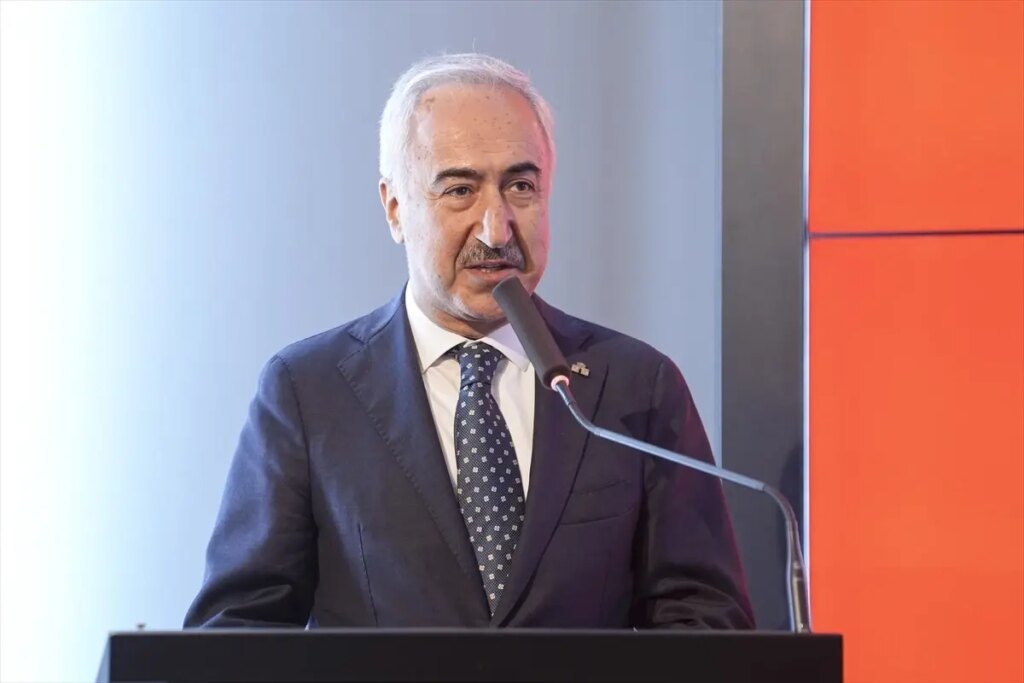
The program was officially introduced at a ceremony held at THY’s headquarters in Yeşilköy, Istanbul. During the event, THY Chairman of the Board and Executive Committee, Prof. Dr. Ahmet Bolat, emphasized the significance of the project not just as a testing tool, but as a visionary symbol of the airline’s long-term strategy.
According to Bolat, THY is moving decisively toward its 2033 goals, and PACE is a reflection of the company’s commitment to excellence in human resource development.
A Technological and Strategic Leap Forward
Prof. Bolat stated that the PACE project was designed entirely with local expertise and resources, eliminating the need for expensive and dependency-creating international assessment systems. “PACE is more than a tool—it’s an expression of our vision for the future. It will greatly enhance flight safety by accurately identifying and nurturing the capabilities of our pilot candidates,” he said.
Bolat also highlighted the long-standing partnership between Turkish Airlines and Istanbul University, which he believes will pave the way for more ambitious collaborations in the future.
THY’s ambition is not confined to digital transformation. The airline currently operates with over 7,000 pilots and is preparing to expand its fleet to 500 aircraft by October 2025. Bolat revealed that THY’s contribution to Türkiye’s economy reached 54 billion USD last year and is projected to rise to 144 billion USD when the fleet expands to 810 aircraft—an amount equivalent to the GDP of an entire North African nation.
Scientific Foundation and National Impact
Istanbul University Rector, Prof. Dr. Osman Bülent Zülfikar, shed light on the scientific dimension of the PACE project. Developed by the university’s Aviation Psychology Research Institute in cooperation with THY, the project officially commenced in 2020, gained momentum in 2023, and began implementation in July 2024. As of February 18, 2025, PACE has become the sole cognitive evaluation tool used in the second stage of THY’s pilot selection process.
“PACE is a national milestone. It replaces imported systems with a domestic solution, strengthening Türkiye’s scientific autonomy and technological capacity,” Zülfikar stated. He emphasized that all data collected through the tests are stored and processed within Türkiye, ensuring full data sovereignty.
Zülfikar added that PACE aligns with the university’s “Open Science – Open Door” principle and the “Perspective 2053” vision, aimed at fostering innovation through national expertise and resources.
The Structure of PACE Testing
The PACE system is built on rigorous scientific methods, ensuring that each candidate is evaluated under the same standardized and objective conditions. It includes several test modules, such as:
Memory Evaluation: Assessing short-term and working memory capacity essential for handling high-stress in-flight situations.
Spatial Awareness: Gauging a candidate’s ability to interpret and react to dynamic three-dimensional environments.
Psychomotor Coordination: Measuring reflexes, hand-eye coordination, and motor control—all critical for operating aircraft.
Multitasking Efficiency: Testing how well candidates can handle simultaneous inputs and tasks, a daily reality in the cockpit.
STEM Competency Testing: Assessing basic physics and mathematics knowledge that supports aviation decision-making.
These components are integrated into the PACE-A (Aptitude) phase, which is designed to be a national alternative to cognitive testing systems previously sourced from abroad.
Strategic Value for Aviation and Beyond
The development of PACE carries strategic importance far beyond Turkish Airlines. As a scalable and scientifically robust testing system, PACE is poised to influence multiple sectors that rely on high-stakes personnel assessments.
Its modular, computer-based design allows for easy integration into other industries, such as defense, transportation, and energy, where cognitive performance is crucial. The academic-industry partnership model used to develop PACE could also serve as a blueprint for similar collaborations in the future.
By bringing together the expertise of Türkiye’s leading university and its flagship airline, the project not only addresses immediate operational needs but also contributes to the country’s technological independence.
THY’s Broader Vision for Aviation Leadership
THY continues to implement innovative programs to solidify its global leadership in aviation. PACE is the latest in a series of ambitious projects aimed at improving operational excellence, safety, and sustainability.
With over 100,000 employees and 19 subsidiaries, THY is more than an airline—it is a vital pillar of Türkiye’s economy and a global ambassador of its technological potential.
By localizing pilot assessment tools and reducing dependency on foreign systems, THY is aligning itself with Türkiye’s broader national strategy for digital transformation and self-reliance in key sectors.
PACE not only enhances reliability and fairness in pilot recruitment but also ensures that each candidate’s potential is measured accurately, transparently, and consistently.
Building a Future-Ready Workforce
The implementation of PACE will have long-term implications for workforce development in Türkiye. With accurate data collected through this system, Turkish Airlines can tailor training programs to address the specific needs of candidates, optimize human capital allocation, and ensure continuous professional development.
This also aligns with global trends in workforce analytics, where data-driven approaches are increasingly used to match talent with role requirements. THY’s investment in cognitive testing demonstrates a proactive stance in preparing for the challenges of the next decades in aviation.
The initiative supports Türkiye’s ambition to be at the forefront of global aviation, not just through fleet size or destinations served, but through the quality of its people and processes.
A Blueprint for National Innovation
PACE represents a significant leap forward in aligning science, technology, and industry under a unified national vision. As Türkiye continues to invest in its knowledge economy, projects like PACE will play a vital role in proving that innovation can be homegrown, sustainable, and globally competitive.
The program is more than a solution for pilot assessments; it’s a declaration of Türkiye’s confidence in its scientific community, its workforce, and its capacity to lead in high-tech sectors.
In the coming years, the data, experience, and knowledge gained through PACE are expected to inspire a new generation of projects aimed at elevating national capabilities across sectors. Turkish Airlines, by adopting and championing this innovation, has positioned itself as both a beneficiary and a driver of Türkiye’s technological renaissance.