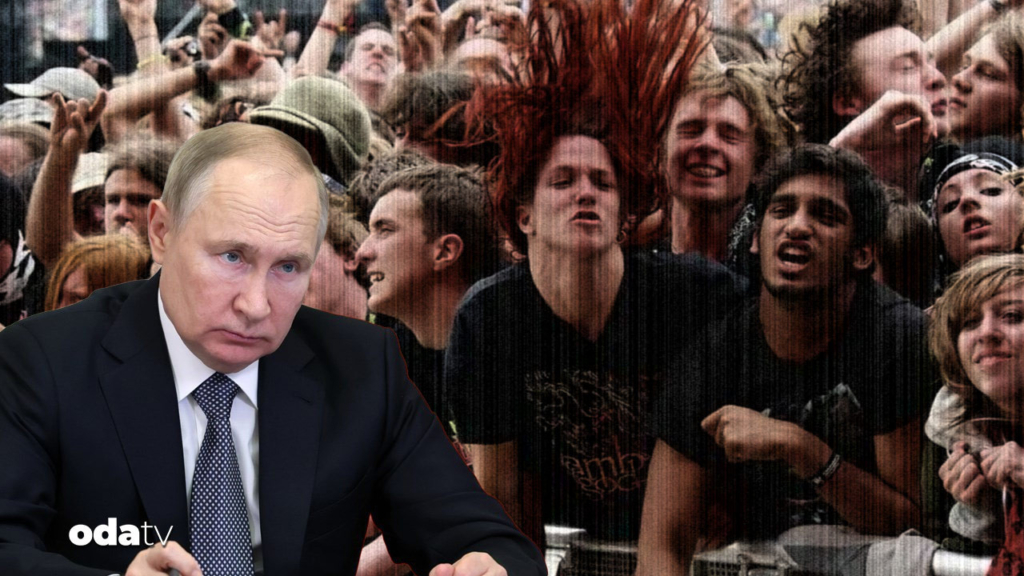

In a controversial legal move that has sparked international concern, Russia’s Constitutional Court has officially declared the so-called “International Satanism Movement” an extremist and terrorist organization. The decision, reportedly influenced by pressure from both the Kremlin and the Russian Orthodox Church, could have widespread ramifications for youth subcultures, particularly those connected to heavy metal, gothic, and industrial music scenes.
Under this ruling, individuals accused of affiliating with groups perceived to promote satanic themes could face up to eight years in prison. Critics argue that this vague and ideologically charged classification opens the door for state surveillance, arbitrary arrests, and renewed cultural repression reminiscent of the Soviet era.
Subcultures in the Crosshairs
According to a report by The Times, young Russians who engage with music genres such as black metal or gothic rock may now find themselves under scrutiny, not for their actions, but for their aesthetic and musical preferences. These genres often incorporate dark imagery, provocative lyrics, and themes that challenge religious or societal norms—features now being conflated with criminal intent.
Civil liberties advocates warn that the Russian government’s framing of satanism as a national security threat provides legal justification for targeting dissident youth, artists, and musicians. The concern is that this decision is less about real threats and more about tightening cultural control.
Türkiye’s Own History with ‘Satanic Panic’
While Russia’s new policy is drawing headlines today, Türkiye experienced its own wave of “satanic panic” in the late 1990s and early 2000s. This period was marked by sensationalized media coverage, police raids, and public fear surrounding youth who listened to rock and metal music.
In one of the earliest and most shocking incidents, two students from the prestigious German High School in İstanbul—14-year-old Alp Cenan Y. and 17-year-old Aslı Y.—jumped from the 14th floor of an apartment building in Ataköy in June 1998. The media quickly speculated that the teenagers had been involved in satanic rituals, and rumors circulated about abandoned buildings—referred to as “Baruthane”—where such ceremonies were said to take place.
These abandoned warehouses, previously paint factories or workshops, became the epicenter of urban myths about black masses, blood rituals, and “satanic gatherings.” The buildings were later repurposed into cultural and arts centers, but the stigma lingered for years.
Türkiye’s First Recorded ‘Satanic Murder’
The public panic reached a grim peak in September 1999 when 19-year-old Şehriban Coşkunfırat was murdered by three individuals—Engin Arslan, Ömer Çelik, and Zinnur Gülşah Dinçer—near Ortaköy Cemetery in İstanbul. The suspects claimed that they killed her as a “sacrifice to Satan.” Her body was found half-buried and the media dubbed it Türkiye’s first satanic murder.
The murder sparked an outcry across the country, with religious leaders, politicians, and commentators demanding action. Police launched a series of investigations and media outlets began profiling teenagers based on the music they listened to or the clothes they wore.
Akmar Passage and the Media’s Role in Moral Panic
Akmar Pasajı, a small shopping arcade in İstanbul’s Kadıköy district, became ground zero for Türkiye’s “satanism scare.” Known for its rock and metal music stores, the passage was frequented by alternative youth who traded CDs, wore band T-shirts, and discussed underground music.
Following the Ortaköy murder, mainstream media portrayed Akmar Pasajı as a recruitment center for satanists. Several police raids were conducted, leading to the detention of minors and the confiscation of band merchandise, black clothing, and personal notebooks—none of which constituted criminal evidence.
The witch hunt-like atmosphere spread to schools and universities. Students who wore black or carried metal band logos were often stigmatized. Parents were advised through newspaper columns and television programs to monitor their children closely, heightening intergenerational distrust.
Freedom of Expression at Risk
Both Türkiye’s past and Russia’s current actions raise profound questions about freedom of expression, youth culture, and the limits of state intervention. Music has long been a medium through which young people explore identity, rebellion, and emotional complexity. Conflating artistic exploration with terrorism not only misrepresents these subcultures but can also cause lasting psychological and social harm.
International human rights groups have voiced concern that Russia’s broad and ambiguous designation of “satanism” could criminalize lawful expression. While the Kremlin insists the policy is necessary for national security, observers suggest it may be a pretext to suppress dissent and enforce ideological conformity.
A Broader Trend of Cultural Control
Russia’s stance fits into a broader pattern of increasing authoritarianism under President Vladimir Putin’s administration. From restricting LGBTQ+ expression to censoring music and literature deemed offensive, the Russian state has shown a consistent desire to police morality and culture.
In this context, the labeling of subcultures as satanic or dangerous serves as a tool for narrative control. It also aligns with the Russian Orthodox Church’s effort to reassert spiritual authority in public life, particularly among youth seen as drifting away from traditional values.
The International Fallout
These developments have implications beyond Russia’s borders. Cultural and musical communities that span continents are watching closely, worried about the chilling effect this may have on artistic freedom. Artists, record labels, and fans who tour or collaborate across borders may now face heightened risks when engaging with Russian audiences.
Meanwhile, Türkiye’s own historical experience with satanic panic serves as a cautionary tale about the dangers of moral hysteria. What began as concern for public safety morphed into a campaign of fear, scapegoating, and repression. In the years that followed, many of the allegations made during that period were discredited, but the damage to individual lives and reputations had already been done.
Where Do We Go From Here?
In today’s interconnected world, the repression of youth culture in one country can reverberate globally. As digital platforms allow for the exchange of music, ideas, and identities, national borders can no longer contain cultural trends.
Governments must recognize that criminalizing aesthetic choices or music preferences undermines the social trust necessary for a free society. Whether in Russia, Türkiye, or elsewhere, the demonization of subcultures only deepens generational divides and fuels alienation.
Conclusion
Russia’s declaration of the so-called International Satanism Movement as a terrorist organization may appear to be a legal maneuver, but its social and cultural consequences are far-reaching. As Türkiye’s own experience in the late 1990s demonstrates, moral panics fueled by media sensationalism and political motives can have devastating impacts on young lives.
While the world watches how this policy unfolds, it serves as a sobering reminder of the importance of protecting freedom of expression, resisting cultural scapegoating, and ensuring that fear does not override reason.