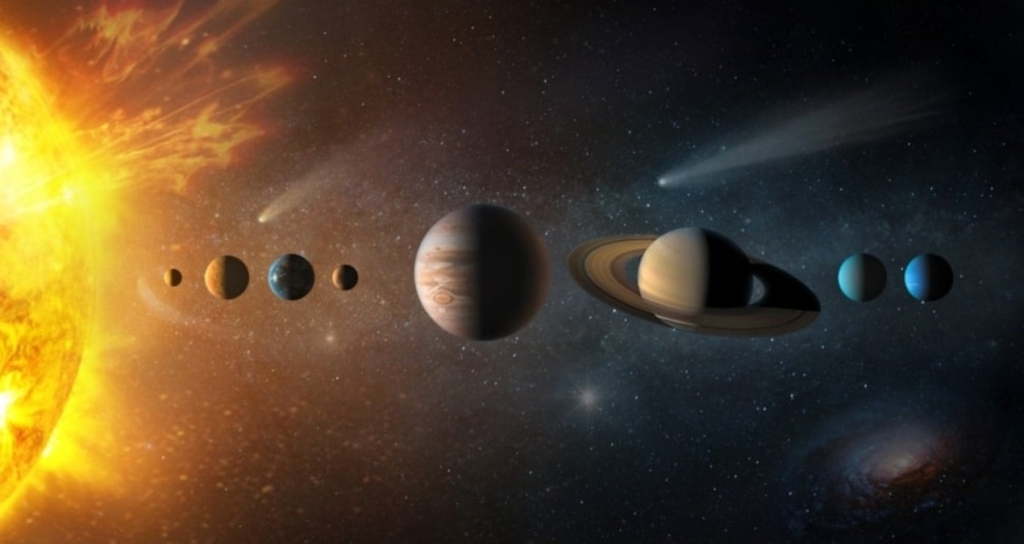

Sky enthusiasts across the Northern Hemisphere are preparing for a celestial event that will bring together six planets in a rare planetary alignment. The phenomenon, often described by astronomers as a “planet parade,” occurs when multiple planets appear to line up along a similar arc in the sky. For stargazers, this event represents not only a spectacular sight but also a scientific reminder of the elegant order of our solar system.
Carolyn Sumners of the Houston Museum of Natural Science explains, “A planetary alignment happens when a group of planets can be seen at once in the same general region of the sky.” This month, observers will be able to spot Venus, Jupiter, and Saturn with the naked eye, while Uranus and Neptune will require binoculars or a telescope. In just a few days, Mercury will also join the lineup, completing the spectacle.
Why Planetary Alignments Are So Special
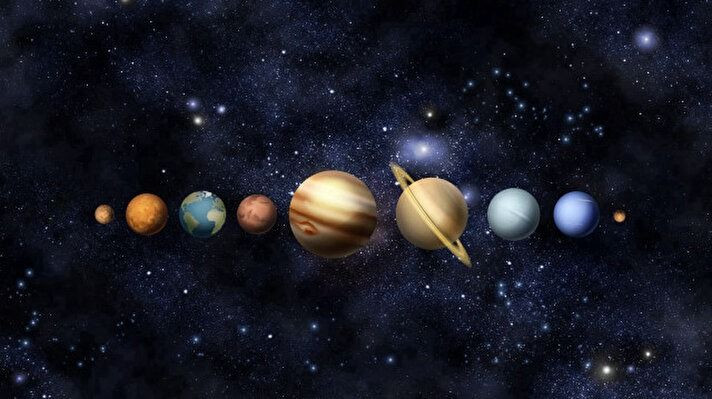
Although planets in our solar system all orbit the Sun on nearly the same flat plane, seeing several of them clustered together in the sky is far from ordinary. NASA notes that the chance to view multiple planets simultaneously without equipment is a relatively rare opportunity.
For the planets to be visible, they must rise high enough above the horizon. According to NASA, casual observers should look for planets at least a few degrees above the horizon, ideally around 10 degrees, to clearly view them.
This month, the alignment will be visible just before sunrise for most of the Northern Hemisphere. Experts caution that timing is crucial. “Think about an hour before sunrise,” they explain. “Any earlier and the planets won’t be high enough to see clearly, but if you wait too long, the Sun’s glare will wash them out.”
Mercury’s Elusive Appearance
Of all the visible planets, Mercury is perhaps the trickiest to spot. Known as a fleeting target because of its proximity to the Sun, Mercury often hides in the solar glare. According to astronomers, beginning on August 17, there will be a short window of opportunity to catch a glimpse of this elusive world just before dawn.
Sumners describes Mercury’s challenge: “It moves away from the Sun for only a few nights, when we can see it just after sunset or before sunrise. Then it swings back behind the Sun, disappearing again.” For a brief period, however, Mercury will separate enough from the Sun to complete the six-planet sequence in the pre-dawn sky.
A Celestial Show with the Moon
As the month draws to a close, the lineup will gain an additional companion. A thin crescent Moon will join the planetary gathering, making the view even more striking. While planetary alignments themselves are not exceedingly rare, this one stands out because it marks the last such event of 2025.
For many skywatchers, this will be the final chance in the year to witness such a grand display of celestial order. The alignment creates an arc of light across the sky that showcases the solar system’s most prominent worlds, each with its unique brightness and color.
How to View the Planet Parade
For the best experience, experts recommend finding a dark location away from urban light pollution. A clear eastern horizon will be essential since the alignment takes place shortly before sunrise. Binoculars can greatly enhance the view, especially for Uranus and Neptune, which are too faint for the naked eye.
Amateur astronomers suggest keeping a star chart or astronomy app handy to identify the planets. Venus typically appears as the brightest, often called the “morning star,” while Jupiter and Saturn shine with steady light. Mercury, when visible, will appear close to the horizon as a small but distinct dot.
Cultural and Scientific Significance
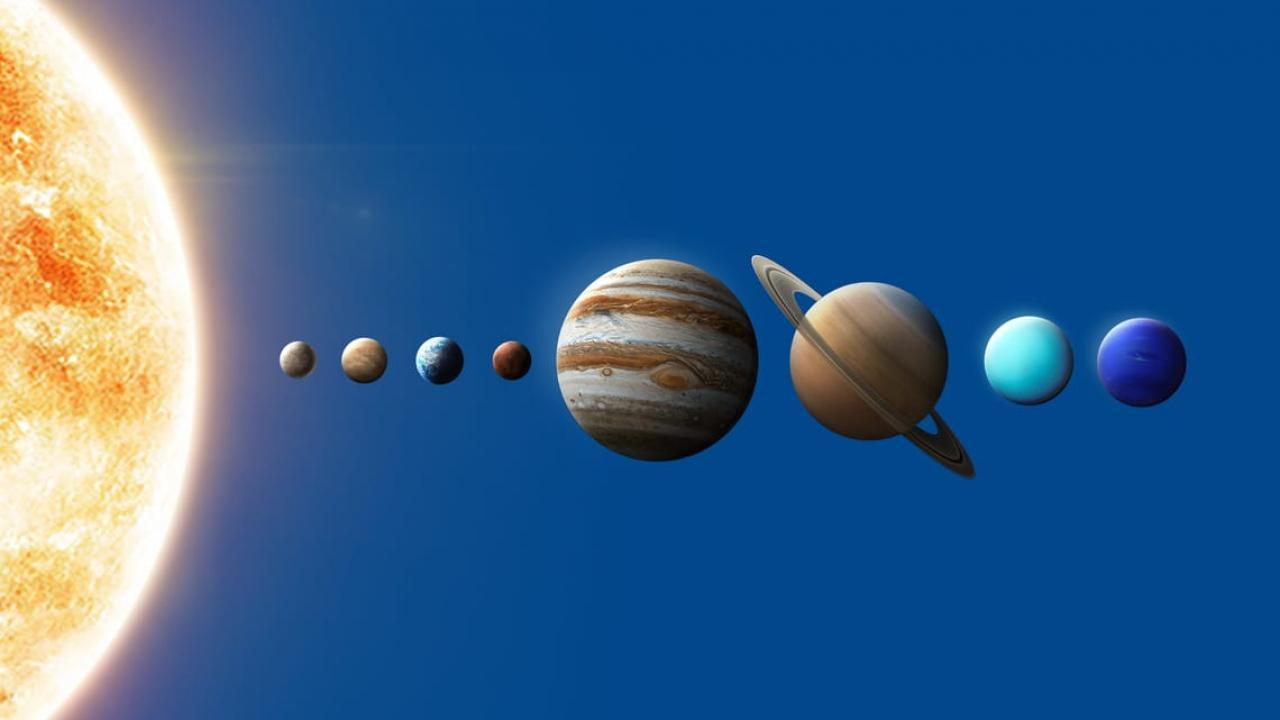
Throughout history, planetary alignments have fascinated civilizations, often seen as omens or signs from the heavens. While modern science provides clear explanations for these events, the sense of wonder remains unchanged. Seeing multiple planets in one glance offers a humbling reminder of Earth’s place in a much larger cosmic dance.
From a scientific perspective, alignments help observers understand orbital mechanics. They are powerful educational moments, especially for students and young astronomers, who can see firsthand the predictable paths of planets around the Sun. These events also inspire broader public interest in astronomy, encouraging more people to look up at the sky.
Looking Beyond the Event
While this alignment is the final one of 2025, similar gatherings will occur in the coming years, though with different combinations of planets. Each alignment is unique, influenced by the planets’ varying orbital speeds and positions relative to Earth.
For many stargazers, the event is more than just a visual delight. It is a chance to connect with the rhythms of the solar system, to step outside the routine of daily life and witness a rare cosmic performance. Families, educators, and astronomy clubs are expected to organize viewing events, turning the skies into a shared classroom for young and old alike.
Editor’s Note: Observing the night sky has always been a blend of science and wonder. The upcoming planetary alignment reminds us that extraordinary beauty exists in predictable celestial patterns. For those willing to wake early, this spectacle will not only inspire awe but also provide a rare glimpse into the harmony of our solar system.