
In an extraordinary medical achievement that has drawn global attention, a healthy baby was born in the United States from an embryo that had been cryopreserved for 31 years. The event, described by fertility experts as a “historic milestone,” now holds the record for the longest-frozen embryo to result in a successful birth.
The baby, delivered on July 26, 2025, in the state of Ohio, marks a significant moment in the field of reproductive medicine and raises new questions about the potential of long-term embryo storage for future generations.
A Journey That Began in 1994
The embryo’s origins trace back to 1994, when an anonymous couple undergoing in-vitro fertilization (IVF) created four embryos as part of their fertility treatment. One embryo was implanted immediately, resulting in the birth of a healthy child. That child is now 30 years old and has a child of their own.
At the time, the couple decided they only wanted one child and opted to freeze the remaining three embryos. Cryopreservation, though less common in the 1990s, was gaining traction as a way to preserve fertility for future use.
The embryos were placed into long-term storage in a fertility laboratory in the United States, where they remained untouched for more than three decades — until one was adopted by another family.
Hope After Years of Waiting
Lindsey and Tim Pierce, a couple from Ohio, had been trying to conceive for seven years without success. After exhausting traditional fertility treatments, they learned about the embryo adoption program — a relatively unknown but growing option for families facing infertility.
The program allows individuals or couples to adopt unused embryos donated by other families. The Pierces enrolled and were matched with one of the three embryos created back in 1994. While embryo adoption is still rare, it provides a unique solution for both donor families and those seeking to grow their families.
“The only thing we ever wanted was to become parents,” said Lindsey Pierce. “We weren’t trying to make headlines. We just hoped for a chance.”
The Odds Were Not in Their Favor
Cryopreserved embryos are often categorized based on quality, age, and likelihood of successful implantation. The embryo selected for the Pierces was considered a “low-probability” case due to its age. Embryos stored for long periods can undergo changes that affect their viability, depending on freezing methods, storage conditions, and biological integrity.
Nonetheless, doctors proceeded with caution. The embryo was thawed, carefully assessed, and then implanted in Lindsey’s uterus. Against the odds, it successfully implanted and began developing normally.
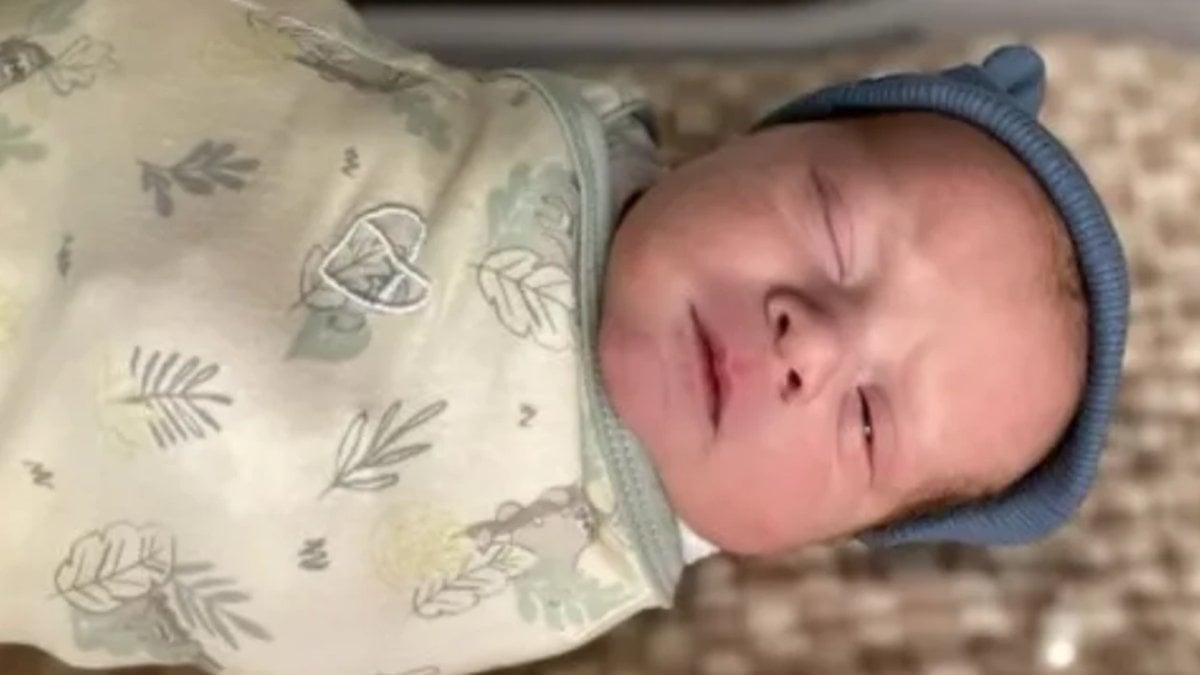
On July 26, 2025, the baby was born after a challenging but successful pregnancy. Both mother and child are reportedly in good health.
Medical Experts Hail a Milestone
Reproductive specialists have celebrated the birth as a groundbreaking moment in assisted reproductive technology (ART). While previously the record for embryo longevity stood at 27 years, this new birth extends the boundaries of what is medically possible.
“From a scientific perspective, this proves that with proper freezing and storage, embryos can remain viable for far longer than previously imagined,” said Dr. Elaine Hodges, a fertility researcher not involved in the case. “This opens new possibilities for fertility preservation, donor programs, and even intergenerational family planning.”
The success also underscores the critical importance of advanced cryopreservation techniques. The embryo used in this case had been frozen using early vitrification methods, which are now considered standard in modern IVF clinics.
Ethical and Legal Considerations Resurface
The birth also renews ethical debates surrounding embryo adoption, the concept of “embryo age,” and the long-term implications of storing human embryos for decades.
Critics question the psychological and legal complexities that may arise when a child is born from genetic material created years — or even generations — earlier. Others raise concerns about informed consent, particularly when the original donors are unreachable or deceased.
Still, supporters of embryo adoption highlight its potential to offer life where it might otherwise be discarded. In the U.S., hundreds of thousands of frozen embryos remain in storage, with many families unsure of what to do with them. Adoption provides an alternative that gives meaning and purpose to unused embryos.
A Personal Story Beyond the Headlines
Despite global media attention, the Pierces emphasize that their story is one of family and resilience — not fame. “It was a hard journey,” Lindsey Pierce admitted. “But when I held my baby for the first time, none of that mattered.”
She described the pregnancy as emotionally intense, filled with uncertainty but also with hope. The couple is now adjusting to life as new parents, grateful for the medical advances and donor generosity that made their dream possible.
Tim Pierce echoed his wife’s sentiments. “Science gave us a miracle. But more than anything, we just feel blessed.”
The Future of Embryo Preservation
This record-setting birth may be a sign of what lies ahead in the world of reproductive medicine. As technologies improve and ethical frameworks evolve, the ability to preserve life across decades could reshape how society views fertility, family, and parenthood.
Some experts suggest that long-term embryo banking may become more common, particularly as people choose to delay parenthood due to career, education, or personal circumstances. Others envision a future where embryos are preserved and passed down across generations, creating entirely new timelines for life and lineage.
However, the implications — both scientific and emotional — will require careful thought. While the birth of this baby is undoubtedly a success, it also serves as a reminder of the weighty responsibility that comes with medical progress.
Community Response and Global Fascination
News of the birth has sparked widespread interest, not only in the medical community but also among the general public. Social media users have called the baby “a miracle of science” and “the oldest baby ever born.” Some have even jokingly referred to the child as being older than their parents in embryo years.
Beyond humor, though, the story has touched a deeper emotional chord. It is a tale of persistence, hope, and the power of science to defy expectations. In a world often marked by uncertainty, the birth serves as a symbol of how far medicine has come — and how much more it can achieve.
A Record That Redefines Possibility
As the baby settles into life with their loving parents, their journey reminds us that life can begin under the most extraordinary circumstances. From a frozen cell preserved three decades ago to a thriving newborn in 2025, the story challenges what we think we know about time, biology, and family.
Whether or not the record will one day be broken again, the significance of this birth will not be forgotten. It stands as proof that when science meets compassion, even the most improbable dreams can come true.