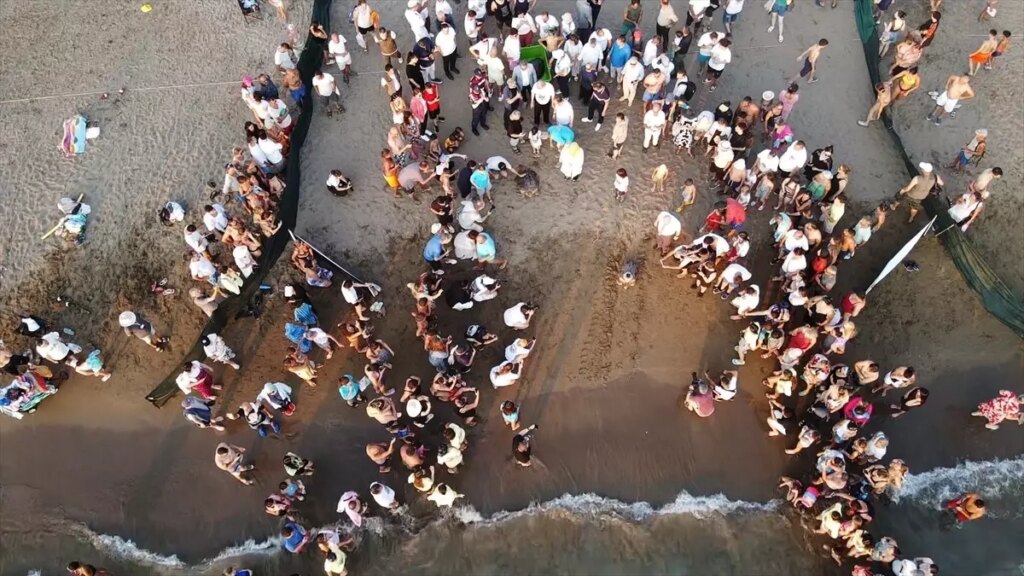

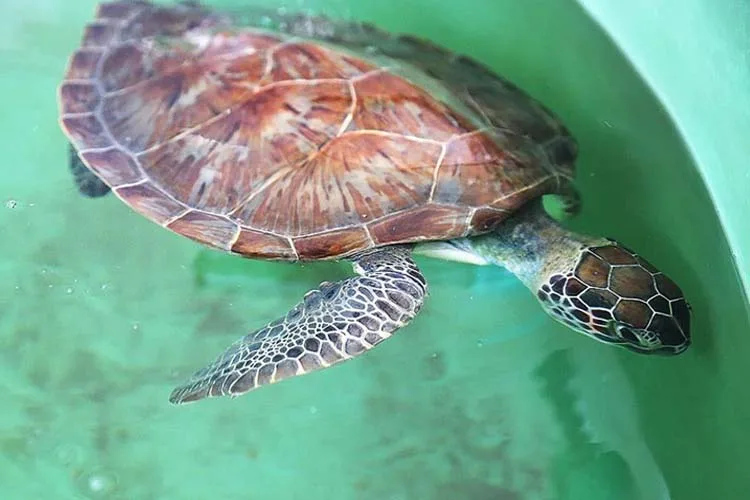
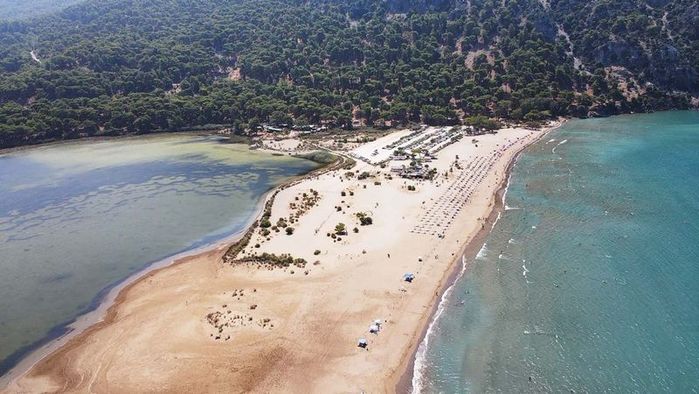
A remarkable wildlife conservation event took place on Muğla’s famous İztuzu Beach as “Tuba,” a loggerhead sea turtle (Caretta caretta) first released in 2019 with a satellite tracking device, returned to the shore where her journey began. This time, she was fitted with another tracking device and sent back to the sea for her second global migration.
The Deniz Kaplumbağası Araştırma Kurtarma Rehabilitasyon Merkezi (DEKAMER) — Türkiye’s only dedicated sea turtle rescue and rehabilitation center — organized the release of Tuba along with six other rehabilitated turtles and 20 hatchlings. The initiative not only highlights the importance of marine species protection but also marks a milestone in the use of locally developed satellite tracking technology.
A Record-Breaking Journey
Tuba’s story is one of endurance and scientific significance. After being injured and rehabilitated at DEKAMER, she was first released on August 28, 2019, equipped with a satellite tracking device. Over the following months, she traveled an extraordinary 25,000 kilometers — becoming the first sea turtle from Türkiye tracked all the way to the Adriatic Sea.
Her journey began with two months in the waters off Marmaris before heading to Greece within a month. From there, she passed through Malta, Italy, Bosnia and Herzegovina, Albania, Montenegro, and Croatia, covering vast stretches of the Mediterranean. This journey provided valuable data on migration routes, feeding grounds, and marine ecosystems.
Now, as she returns to İztuzu Beach for nesting, scientists have seized the opportunity to track her once again, hoping to gather unprecedented long-term data on the behavior of rehabilitated adult turtles.
Scientific and Ecological Importance
Professor Yakup Kaska, DEKAMER Director and faculty member at Pamukkale University’s Department of Biology, emphasized the ecological importance of saving adult turtles. He explained that only about one in 1,000 hatchlings survive to adulthood, making the survival of each rehabilitated adult critical for population stability.
“Releasing an adult back into the wild provides a direct boost to the breeding population,” Kaska noted. “With Tuba, we have the rare opportunity to study how rehabilitated adults adapt to their natural habitat over the years. She set a world record by being tracked for four years, and now she will embark on her second world tour.”
The data collected will help researchers better understand turtle navigation, including how they respond to Earth’s magnetic fields, ocean currents, and seasonal changes.
Breakthrough in Local Tracking Technology
This release was also a landmark for Türkiye’s technological independence. The new tracking device fitted on Tuba was developed by Plan-S, a domestic satellite and space technology company. Until now, imported devices — each costing around $5,000 — were the only option for such research.
Dr. Umut Yıldız, Deputy General Manager for Scientific Studies at Plan-S, explained that the new device, named “Cosmos,” is Türkiye’s first homegrown satellite tracker designed specifically for sea turtles. “We had our first tests a month ago, refined the design, and now it is ready for field use. This is the first time a loggerhead turtle has been fitted with a fully domestic and national satellite tracking system,” he said.
The data gathered from Cosmos will be shared with DEKAMER to monitor migration patterns, feeding grounds, and overwintering areas, contributing to both marine biology research and conservation strategies.
Public Awareness and Participation
The release event attracted a large audience, including Muğla Governor İdris Akbıyık, local officials, university rectors, environmental agency representatives, and both local and foreign tourists. Attendees watched as the turtles, cleaned and prepared for their journey, made their way across the sand into the Mediterranean.
Governor Akbıyık praised DEKAMER’s work, calling İztuzu Beach a unique and vital center for sea turtle conservation in Türkiye. He noted that the center’s rehabilitation success stories, like Tuba’s, inspire public interest in environmental protection.
University leaders, including those from Muğla Sıtkı Koçman University, Pamukkale University, and Dokuz Eylül University, also highlighted the role of academic research in wildlife preservation, stressing that such collaborations between science and conservation organizations are essential for long-term ecological health.
Why Tuba’s Second Journey Matters
Beyond the symbolism of her return, Tuba’s second release represents a rare chance to compare migration data from the same turtle across different life stages and environmental conditions. This can shed light on changes in sea routes, feeding behaviors, and adaptation strategies — insights that could prove vital in the face of climate change and shifting marine ecosystems.
In addition, the introduction of domestic tracking technology means future studies can be expanded without the high costs of imported devices, enabling more turtles to be monitored simultaneously. This could greatly enhance conservation programs not only in Türkiye but also in other regions that adopt the technology.
Protecting the Future of Caretta Caretta
Loggerhead turtles are listed as vulnerable globally due to threats such as habitat loss, fishing gear entanglement, marine pollution, and climate change. Türkiye’s Mediterranean coastline, particularly İztuzu Beach, is one of the most important nesting sites for these turtles. Conservation efforts like those led by DEKAMER play a critical role in ensuring their survival.
Public engagement is also key. By witnessing turtle releases, citizens and tourists alike become more aware of marine conservation challenges. Initiatives like beach cleanups, sustainable fishing practices, and responsible tourism all contribute to a healthier environment for marine life.
Looking Ahead
Tuba is now navigating the vast Mediterranean once more, her movements monitored in real-time by scientists eager to uncover more about these mysterious travelers of the sea. Each data point she sends back adds another piece to the puzzle of sea turtle ecology — knowledge that can guide protective measures for decades to come.
As she disappears beneath the waves, Tuba carries not only a tracking device but also the hopes of scientists, conservationists, and the countless people who cheered her return. Her journey stands as a reminder that with dedication, science, and community support, even the most vulnerable creatures can be given a second chance at life.