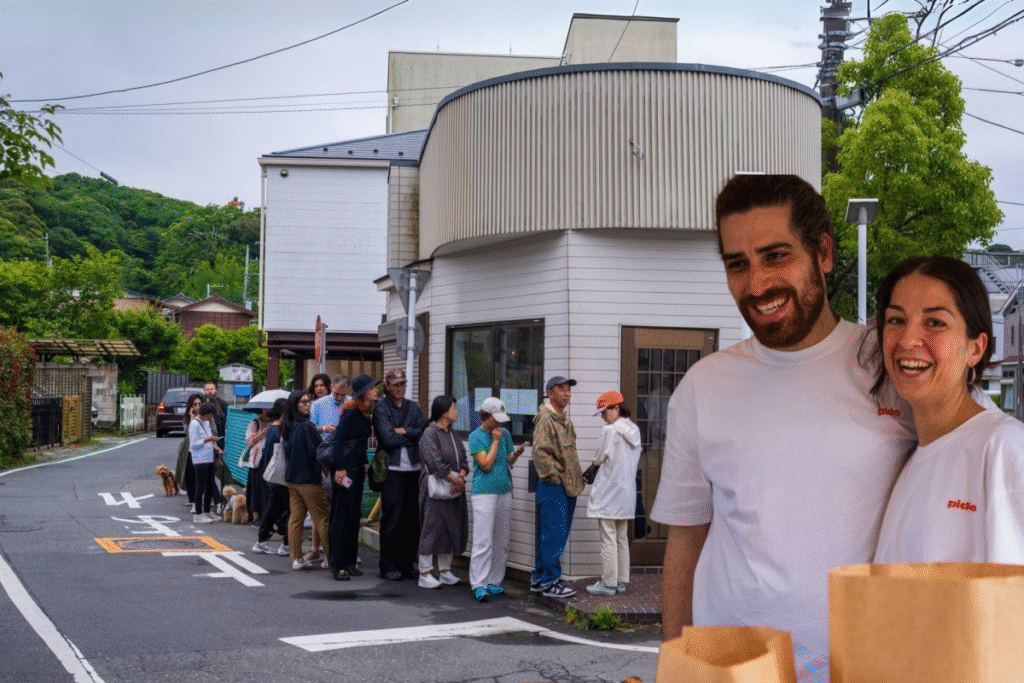

In a quiet corner of Kamakura, a historic seaside town just south of Tokyo, something extraordinary is unfolding. What once was a humble police booth at a street intersection in the Omachi district has transformed into one of the city’s most talked-about culinary destinations. The name is simple—Pide. But what lies behind this unassuming storefront is a remarkable story of heritage, passion, and a fusion of cultures, capturing the attention of Japan’s media and its food-loving citizens alike.
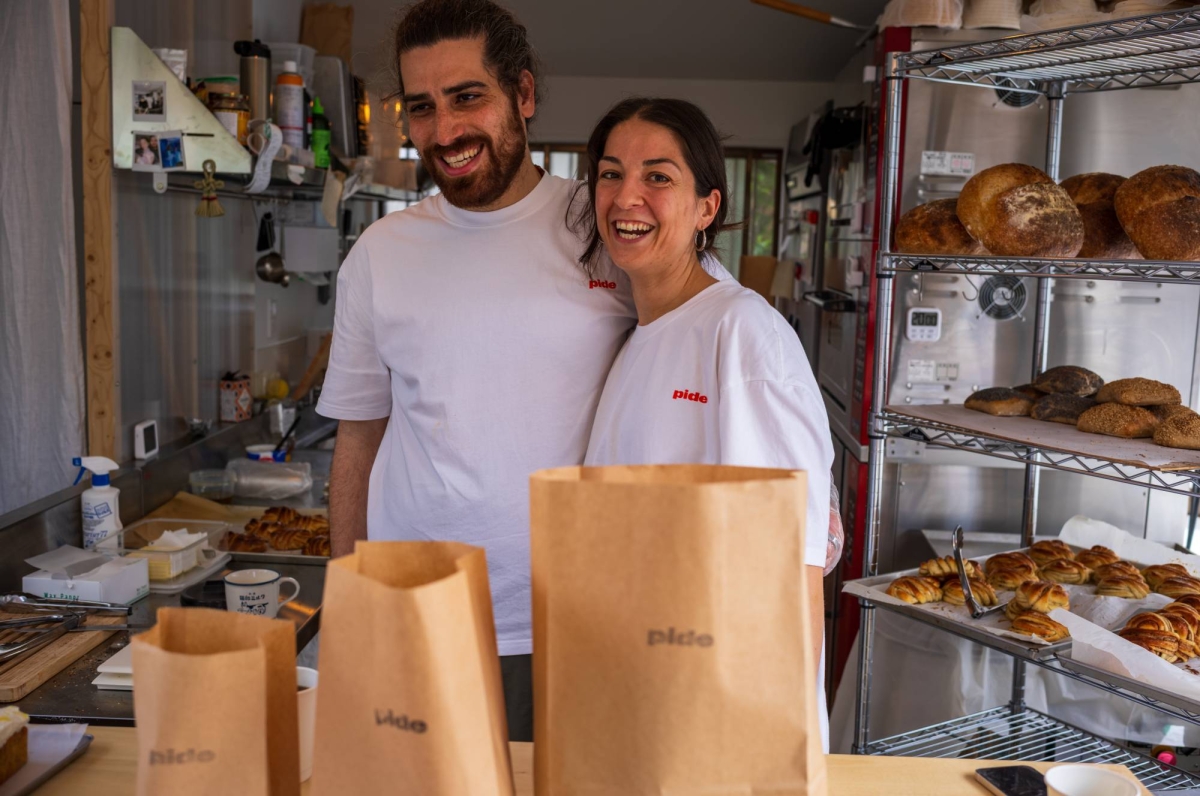
From Karadeniz to Kamakura: The Journey of Burcu and Aziz
Pide is the creation of 34-year-old baker Burcu Alkurt and her husband and business partner, 36-year-old Aziz Fırat. Originally from Türkiye’s Black Sea region, Alkurt carries a legacy deeply rooted in baking—her father was a traditional baker in Lahey, Netherlands, where she spent part of her childhood. The name Pide is a heartfelt homage to the flatbread her father used to bring home, a reminder of warmth, tradition, and family.
“Calling the shop Pide was an emotional decision,” says Alkurt. “It connects me to my roots. It’s a memory that shaped my love for baking.”
What started as a personal tribute has now become a symbol of cultural resonance, drawing locals and tourists alike to experience a slice of Anatolian flavor crafted with Japanese precision.
Baking Without Borders: Fusing Turkish Roots with Japanese Taste
What sets Pide apart is its commitment to artisan bread. The bakery specializes in naturally leavened sourdough loaves, often shaped into familiar forms like the Japanese shokupan (milk bread loaf) and the French pain de campagne (rustic country bread). Each loaf is a product of meticulous care, fermented for optimal flavor and texture—offering a blend of Turkish warmth, European technique, and Japanese refinement.
The success of Pide also highlights an evolving culinary trend in Japan. While döner shops and kebab stands have long dotted the streets of Tokyo and Osaka, there’s a growing appetite for Turkish staples like simit, pide, and mantı. In this landscape, Pide’s sourdough creations fill a unique niche that transcends novelty—combining quality, authenticity, and cultural storytelling.
Lines Around the Block: How Pide Became a Daily Ritual
Pide officially opened its doors in January 2025. But even before the ovens are fired each morning, a line begins to form outside its nondescript entrance. There are no neon signs, no digital menus—just the scent of baking bread and the buzz of anticipation.
Local residents queue patiently, hoping to grab a fresh simit or loaf before the stock runs out. Japan Times, one of the country’s oldest and most respected English-language newspapers, recently featured Pide in a detailed profile, praising its authenticity and cultural significance.
In Türkiye, lines for fresh pide are common—especially during Ramadan. But in Kamakura, this phenomenon has become a year-round occurrence. “When we saw people lining up before we even arrived at the store, we thought—this is something else,” Alkurt recalls.
Why Japan Fell in Love with Turkish Bread
At first glance, it might seem surprising that a traditional Turkish bakery would become such a hit in Japan. But the connection runs deeper than just the product. Japanese culture places a high value on craftsmanship, consistency, and narrative. Pide delivers on all three fronts.
Burcu and Aziz treat their craft not merely as a business, but as a lifestyle. Every detail—from the fermentation process to the paper used to wrap each loaf—reflects care and intentionality. Their story resonates with a Japanese audience that respects culinary discipline and honors artisans who dedicate themselves to their craft.
Moreover, there’s a growing curiosity in Japan toward global cuisines that emphasize natural ingredients, traditional preparation methods, and emotional connections. Pide offers all that, wrapped in the comforting aroma of freshly baked bread.
A Turkish Success Story Making Global Headlines
Fadıl Taşgın’s recent rise as CEO of Pernod Ricard Korea made waves as a Turkish executive leading a multinational in Asia. In a similar vein, Pide tells another kind of Turkish success story—not in boardrooms, but in bakeries.
It’s about the soft power of food, and how the smell of simit or the texture of a crusty loaf can tell a story of home, migration, memory, and resilience. Pide’s daily operations may be small in scale, but its cultural impact is monumental.
Expanding Beyond Borders—But Keeping the Spirit Local
Although Burcu and Aziz have not announced expansion plans, the buzz surrounding Pide has already sparked interest from other regions in Japan. Still, the couple remains focused on preserving the soul of their craft.
“We’re not in a rush,” says Fırat. “This isn’t just a bakery. It’s our story, and we want to grow it carefully.”
The approach is refreshingly grounded in an era where most successful businesses are quickly swallowed by franchising or corporate partnerships. Pide remains, for now, a singular destination—one that rewards patience, curiosity, and an open mind.
A Model for Cross-Cultural Entrepreneurship
Pide also serves as a case study in how immigrants and expats can thrive by staying true to their cultural identity while adapting to local tastes. Instead of compromising authenticity for mass appeal, Burcu and Aziz have elevated Turkish baking within a Japanese framework.
Their success challenges stereotypes and offers an inspiring template for anyone looking to build something meaningful abroad. In a world where cultural boundaries are increasingly blurred, Pide is a reminder that our differences can be the source of our greatest strengths.
Whether you’re in Tokyo, Istanbul, or Amsterdam, the message is the same: good bread—and good stories—can travel far. And sometimes, what starts as a personal memory can become a national sensation.