
As artificial intelligence becomes increasingly embedded in daily digital platforms, Türkiye is witnessing a significant uptick in internet usage across the country. According to the newly published Household Information Technologies Use Survey, 90.9% of individuals in the country now use the internet—marking a substantial rise from the previous year.
This trend not only highlights the country’s swift adaptation to digital life but also underlines the expanding impact of AI-driven technologies on personal habits, government services, and online commerce.
Accelerating Digital Engagement in Türkiye
The surge in internet use reflects a broader shift in how people in Türkiye engage with technology in both their personal and professional lives. Last year, the internet usage rate among individuals aged 16 to 74 stood at 88.8%. This year, the figure climbed to 90.9%, revealing an increasingly connected society.
The gender breakdown provides more insight into this digital transformation. Men in Türkiye reported a 93.6% internet usage rate, while women followed closely at 88.2%. Although the gender gap is narrowing, it still indicates areas where digital inclusion efforts can be intensified.
E-Government Services Continue to Grow
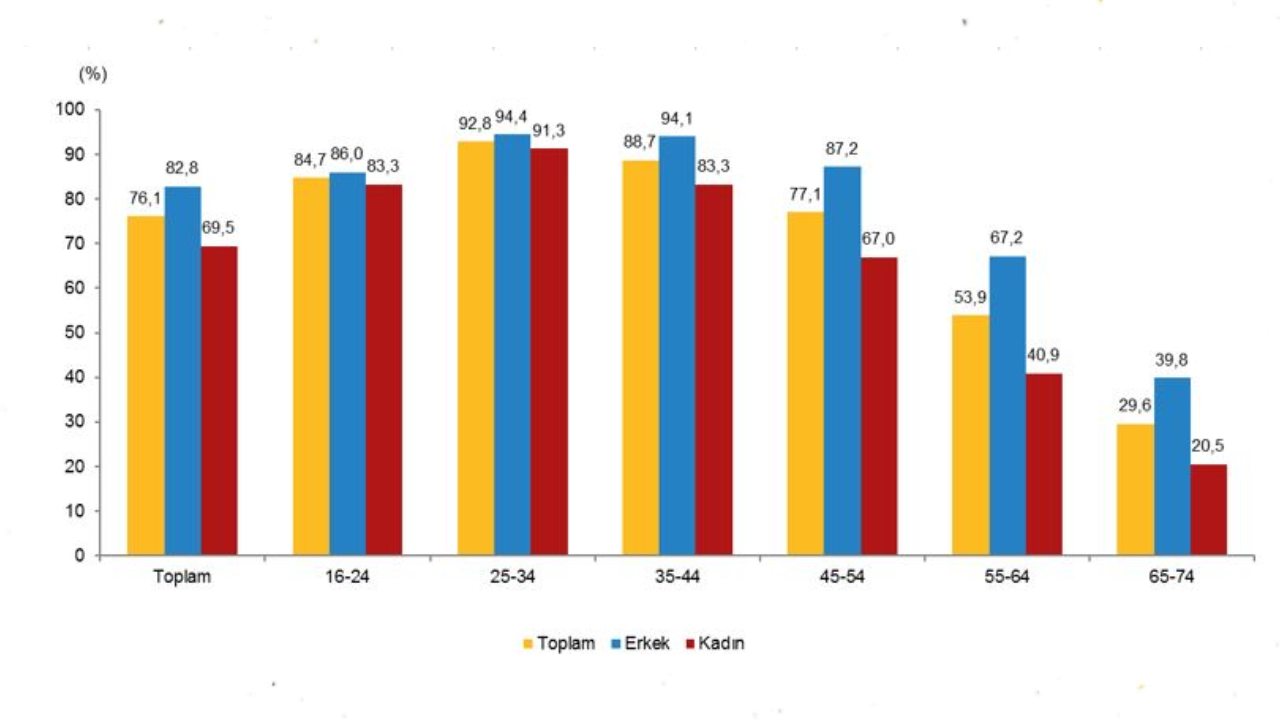
One of the clearest indicators of Türkiye’s digital maturity is the widespread use of e-Government (e-Devlet) services. The survey shows that 76.1% of individuals accessed these services in the past year. This is a noteworthy achievement, signaling increased trust in digital governance and streamlined public service delivery.
However, the usage rates vary significantly by gender and age. While 82.8% of men reported using e-Devlet, the rate was 69.5% for women. Age-wise, the 25–34 demographic leads the charge with a remarkable 92.8% usage rate. Conversely, the numbers fall sharply among older citizens—only 29.6% of individuals aged 65–74 used e-Government services, highlighting a digital divide that still persists in older generations.
AI and Internet Usage: A Symbiotic Relationship
The recent acceleration in internet usage is closely tied to the rise of artificial intelligence applications. AI tools—from automated customer service bots to personalized content feeds—are reshaping the user experience, making digital interactions more seamless and efficient. As people grow more comfortable with AI, they also spend more time online, creating a feedback loop of deeper digital immersion.
Educational platforms, e-commerce sites, and mobile apps that leverage AI are seeing higher engagement. AI’s presence is not only improving content relevance but also transforming how individuals interact with data, services, and each other.
E-Commerce Thrives, Yet Digital Learning Still Lags
The survey also explored trends in online consumption and education. A notable 55.7% of internet users reported purchasing goods or services online, reaffirming the steady growth of e-commerce in Türkiye. This figure reflects rising consumer confidence in digital marketplaces and the convenience of online shopping.
Despite this, digital learning remains an underutilized opportunity. Only 17.7% of users engaged in online educational activities. This figure suggests that while connectivity is improving, the use of the internet for personal development and lifelong learning has yet to reach its full potential.
Stakeholders in the education sector, especially policymakers and edtech developers, can leverage these insights to better position digital learning tools for wider adoption. Addressing barriers such as lack of awareness, usability, and access could significantly boost this number in future surveys.

Top Digital Platforms in Türkiye: WhatsApp Dominates
TÜİK’s survey also reveals the dominant platforms in Türkiye’s digital ecosystem. Unsurprisingly, WhatsApp remains the most popular app, used by 88.6% of respondents. Its simplicity, accessibility, and end-to-end encryption make it the top choice for both casual and business communication.
YouTube follows with a usage rate of 72.9%, reflecting its dual role as a source of entertainment and education. Meanwhile, Instagram, used by 68.1% of internet users, maintains its stronghold as the preferred social media platform for visual content.
These statistics not only demonstrate user preferences but also guide marketers, content creators, and tech companies in shaping their digital strategies for Türkiye’s audience.
Digital Inclusion and the Age Gap
While overall internet usage is high, age-related gaps remain a concern. Older adults are still trailing in adopting many online services, especially digital government platforms and educational resources. The disparity underscores the importance of targeted digital literacy programs aimed at senior citizens.
Bridging this gap would not only improve quality of life for older users but also reduce their dependence on younger family members for online tasks such as paying bills, accessing health records, or booking appointments.
Community centers, municipalities, and NGOs could play a pivotal role by offering basic training sessions and one-on-one support to help older individuals navigate the online world more confidently.
Internet as a Cornerstone of Türkiye’s Economic Strategy
Türkiye’s increased internet usage aligns with national goals to digitize the economy, improve efficiency, and foster innovation. As more people connect and interact online, businesses and public institutions alike must evolve to meet the growing demand for fast, secure, and intelligent digital services.
This rise in connectivity paves the way for more robust e-commerce platforms, AI-driven customer experiences, and widespread digital payments—all of which are critical pillars in the country’s digital economy roadmap.
Moreover, widespread connectivity supports remote work, online education, and digital health services, contributing to economic resilience, especially in challenging times such as pandemics or economic shifts.
Opportunities Ahead: Investing in Digital Ecosystems
With over 90% of the population now online, Türkiye has a solid base to explore more advanced digital technologies, from AI to blockchain, from virtual reality to quantum computing. The next wave of innovation will depend not just on access, but also on how people use the internet to solve problems, learn, create, and collaborate.
Government initiatives, private sector investments, and international partnerships must now focus on building a digital ecosystem that encourages innovation, protects users, and promotes digital equity across all demographics.
Final Thoughts Framed by Human Perspective
The data tells a powerful story—one of progress, challenges, and immense potential. As Türkiye deepens its digital footprint, the focus must now shift from mere access to meaningful use. Whether it’s empowering the elderly, encouraging digital learning, or boosting AI literacy, the future depends on inclusive and thoughtful strategies.
This journey is not just about statistics or technology—it’s about people and their ability to grow, connect, and thrive in an increasingly digital world. With strong leadership, inclusive policies, and public-private cooperation, Türkiye is well-positioned to shape a future where digital transformation benefits everyone.