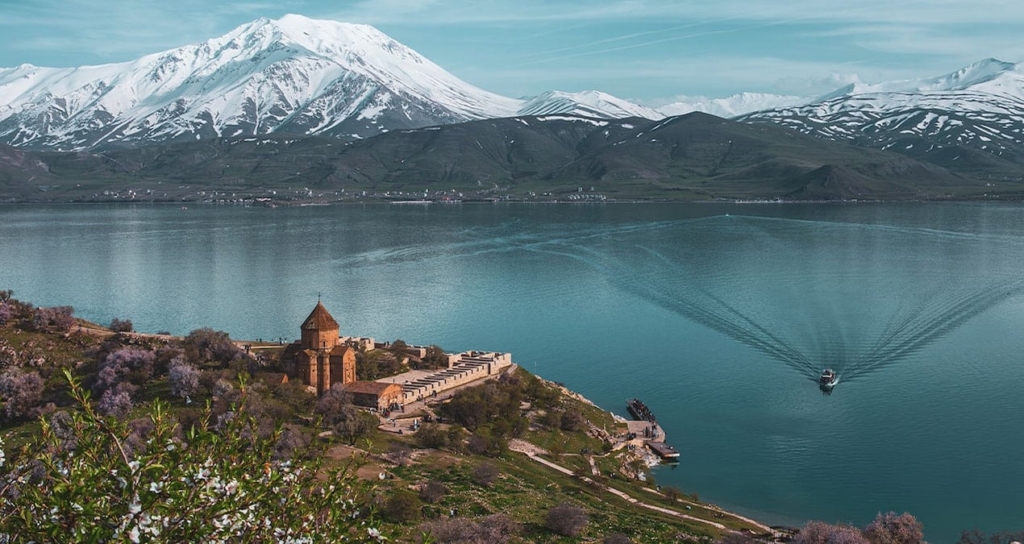

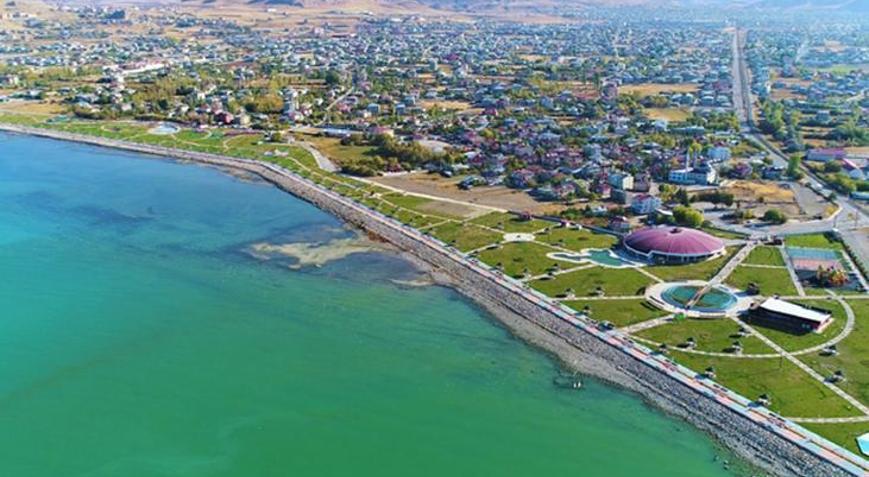
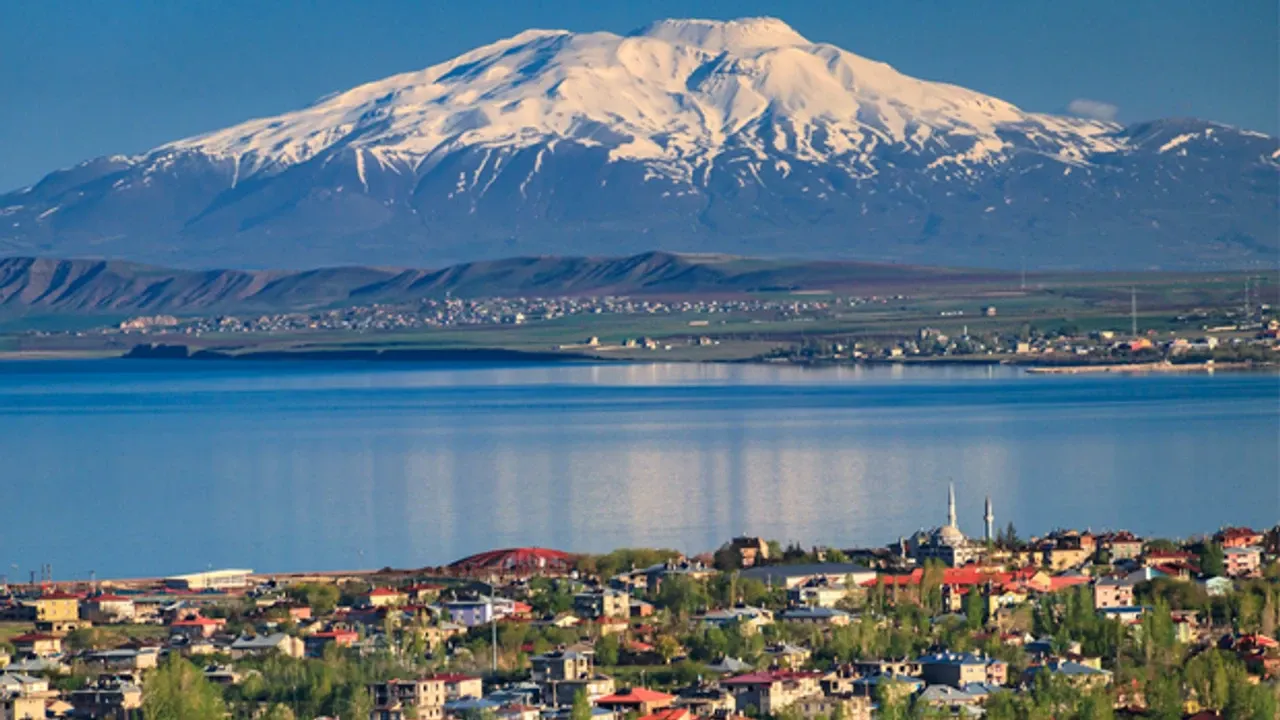
The depths of Van Gölü in eastern Türkiye have recently unveiled a discovery that could transform the way we understand human civilization’s origins. Submerged approximately 26 meters beneath the lake’s surface, near the Gevaş region, lies an expansive archaeological site. Covering an area of nearly 800 meters in width, the ruins exhibit remarkably intricate stonework, massive temple structures, and potentially global cultural links that have stunned researchers worldwide.
A Fortress Below the Waters
At the heart of the submerged complex, scientists have identified the remnants of a large stone fortress. Surrounding this central structure are circular temples, perfectly cut stone blocks, and sacred symbols etched into the walls. These architectural elements suggest the existence of a once-thriving settlement, now resting beneath the calm waters of Türkiye’s largest lake.
What sets this find apart from other submerged structures is not only its size and preservation but also its architectural sophistication. The stonework displays precision that rivals that of renowned megalithic sites such as those in Peru and Bolivia.
An Ancient Symbol Found Across Continents
Among the many carvings within the underwater site, one symbol has captivated researchers more than any other—the “Six-Armed Flower of Life.” This emblem, engraved into one of the temple walls, has been found in far-flung ancient sites in Peru and Bolivia. The similarity of this motif across such distant regions has led to a wave of new hypotheses regarding prehistoric human connectivity.
Could ancient civilizations have been more interconnected than previously believed? The repeating presence of such sacred symbols lends credence to the idea of a shared symbolic language or even a once-unified culture with a global footprint.
Dating Back to a Time of Chaos
According to coverage in the Daily Mail, some independent researchers believe the ruins may date back to the Younger Dryas period—an era marked by sudden climate shifts approximately 12,000 to 14,500 years ago. This would place the submerged city far older than known ancient civilizations such as Sumer or Egypt.
If confirmed, this could position Van Gölü’s underwater ruins as some of the oldest man-made structures ever discovered, predating even Göbekli Tepe, often regarded as the world’s first temple.
The Global Flood Connection
One prevailing theory ties the city’s submergence to a cataclysmic flood event, possibly triggered by the eruption of Mount Nemrut. The eruption could have caused the blockage of the Mirat River, resulting in large-scale flooding and the eventual submersion of the region.
This local catastrophe may have served as the origin for Mesopotamian flood legends that later evolved into the biblical story of Noah, the Qur’an’s account of Nuh, and earlier narratives such as the Sumerian tale of Ziusudra and the Akkadian Utnapištim. Remarkably, excavations at the ancient city of Shuruppak in Iraq also revealed thick layers of flood-related sediment, supporting the historical basis for these stories.
Advanced Stone Masonry Echoing the Andes
Archaeologists studying the site emphasize the advanced construction techniques visible in the submerged structures. Like the Andean temples of Sacsayhuamán and Ollantaytambo, the Van Gölü structures appear to be built without mortar, using interlocking stones that have remained intact for millennia.
The geometric precision of triangle joints and the polished surfaces suggest the work of an advanced civilization that had mastered stone technology to a degree not commonly associated with prehistoric Anatolia.
A Proximity That Raises Eyebrows
Interestingly, the location of the ruins is only about 240 kilometers from Mount Ağrı (Mount Ararat), traditionally believed to be the resting place of Noah’s Ark. This proximity has led some researchers to suggest that the tale of the Ark may have originated not from the broader Mesopotamian region but specifically from events surrounding Van Gölü.
While this claim remains speculative, it adds another layer of intrigue to an already enigmatic site.
Uncovering the Forgotten City
Despite being initially spotted in 1997, the ruins were not subject to detailed research for many years. Only recently has international interest surged, prompting the involvement of scientists, archaeologists, and divers equipped with cutting-edge scanning and imaging technology.
Matt LaCroix, a researcher who has gained recognition for his alternative historical theories, suggests that the similarities between the Van Gölü symbols and those found in South America, the Middle East, and Asia could indicate the presence of a forgotten, globally connected civilization.
His upcoming expedition, scheduled for September 2025, aims to gather organic samples for radiocarbon dating and to create a comprehensive digital map of the underwater city. If his team can accurately date the ruins and confirm their connection to distant cultures, it would constitute one of the most revolutionary discoveries in modern archaeology.
Rethinking the Origins of Civilizations
For decades, human history has followed a relatively linear timeline: hunter-gatherers evolved into sedentary farmers, who eventually formed city-states and civilizations. The Van Gölü ruins challenge this narrative, potentially pointing to a time when highly organized societies existed far earlier than acknowledged by mainstream scholarship.
Could these submerged ruins represent a lost chapter of human history—one wiped out by natural disaster and buried beneath the water, only to reemerge thousands of years later?
A Universal Flood Myth Reexamined
The recurring presence of flood myths across cultures—from the Gilgamesh Epic to the biblical and Qur’anic stories—has long been regarded as symbolic rather than historical. But findings like those in Van Gölü are breathing new life into these legends, hinting that they may stem from collective human memory of a real and devastating global event.
If this hypothesis proves accurate, it would not only validate age-old stories but also underscore the shared heritage of humanity—reminding us that we may be more connected than we realize, not just in the present, but across time.
A Lake That Holds the Secrets of the Past
Van Gölü, with its stunning natural beauty and now a mysterious underwater city, has become a focal point for both scientists and spiritual seekers. As exploration continues, the world watches with anticipation. What secrets lie beneath the surface? What forgotten truths might emerge?
The answers, it seems, rest in the silence of the stones, patiently waiting to be rediscovered.