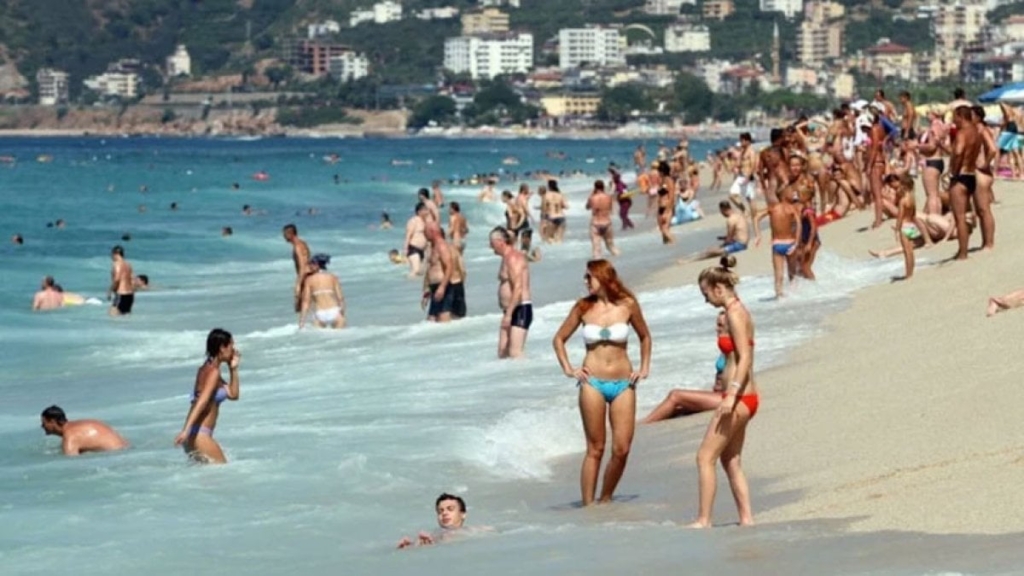

Türkiye’s tourism industry is entering a challenging phase as recent data shows a noticeable decline in travel interest from German holidaymakers. According to figures released by Travel Data + Analytics, a Germany-based travel research firm, summer reservations from Germany to Türkiye’s southern coastal destinations have dropped by 10 percent compared to last year. This development is ringing alarm bells for regions such as Antalya and Muğla, which rely heavily on seasonal tourism revenue.

Tourism Slowdown Supported by Rising Local Prices
Additional confirmation comes from Türkiye’s national statistical agency TÜİK. Data from June 2025 indicates that prices for hotel accommodation, dining, and similar services have risen by approximately 36 percent compared to the same month in the previous year. These price hikes are not confined to coastal cities but are also evident in major metropolitan areas like Istanbul.
The price surge, in a country once seen as an affordable holiday destination for Europeans, is now emerging as a critical factor in declining demand.
Tourism Sector Feeds the Broader Economy
The effects of a shrinking tourism market go far beyond empty hotel rooms. According to Katrin Pasvantis, a foreign trade expert at Germany Trade & Invest (GTAI), tourism plays a pivotal role in Türkiye’s economic ecosystem. She emphasizes that tourism not only brings in foreign currency but also fuels activity in multiple sectors such as food and beverage, transportation, and retail.
A decline in tourist arrivals therefore directly impacts employment, local business sustainability, and foreign exchange reserves.
Currency Devaluation No Longer an Advantage
Over the past few years, the depreciation of the Turkish Lira against the Euro had made Türkiye an attractive destination for European tourists. However, this trend appears to have reversed. President Recep Tayyip Erdoğan’s long-standing low interest rate policies led to runaway inflation, which in turn forced Türkiye’s Central Bank to raise interest rates to 46 percent in an attempt to stabilize the economy.
While the official inflation rate in June was reported at 35 percent, the independent research group ENAG claims the actual rate is nearly double. As a result, many hotels and service providers have started pegging their prices directly to the Euro. This means that the weakened Lira no longer equates to cheaper vacations for international visitors.

Investors Wait as Political Risks Increase
Beyond economic turbulence, political events are also influencing perception. The arrest of Istanbul Mayor and presidential opposition candidate Ekrem İmamoğlu has created additional concern in both domestic and international markets. Currency strategist Antje Praefcke of Commerzbank noted that Türkiye’s Central Bank has been using foreign reserves to protect the Lira, but questions persist about the sustainability and sufficiency of those reserves.
This uncertainty is having a ripple effect on investor confidence. Many German firms considering expansion or investment in Türkiye are now adopting a wait-and-see approach.
According to GTAI’s Pasvantis, businesses value predictability. With Türkiye facing heightened political and economic volatility, decision-makers are cautious about committing capital. While Türkiye continues to offer strong long-term investment potential, the short-term environment remains difficult to navigate.
Regional Geopolitical Tensions Add Pressure
Geopolitical developments in the wider Middle East region are also casting a shadow over Türkiye’s tourism outlook. The instability in neighboring countries, combined with Türkiye’s own internal dynamics, has contributed to a risk-averse stance among international travelers and investors alike.
As regional uncertainty persists, the number of incoming tourists from Germany and other major markets may continue to decline. Analysts suggest that even a modest escalation in regional tensions could be enough to cause a broader pullback in travel activity.
Implications for Antalya, Muğla, and Beyond
The tourism slowdown is being felt most acutely in Türkiye’s south, particularly in Antalya and Muğla. These regions have long been top choices for German holidaymakers due to their favorable climate, affordability, and hospitality infrastructure. Local businesses—from beach resorts to family-run restaurants—are bracing for a difficult season.
Hoteliers in the region have reported lower occupancy rates than expected. Some have reduced staff or delayed planned renovations. Others are attempting to pivot toward alternative markets such as Russia, the Gulf states, or domestic travelers. However, the absence of consistent German tourism flows leaves a significant gap that is difficult to fill in the short term.
Türkiye’s Balancing Act Between Price and Value
The rising operational costs in Türkiye’s hospitality sector are forcing businesses to make difficult choices. Many are grappling with how to remain competitive internationally without sacrificing service quality. While Türkiye still offers rich cultural experiences and natural beauty, pricing is becoming a deterrent for middle-class European tourists.
Tourism experts warn that the country may be losing its value proposition. If the perception shifts from affordable luxury to overpriced mediocrity, the long-term damage to Türkiye’s brand could be significant.
Government Responses and Strategic Shifts
Türkiye’s government is aware of the importance of tourism as a pillar of the economy. In response to recent trends, some regional governments and tourism boards are ramping up marketing efforts in European markets. Special travel packages, targeted advertising, and increased participation in international tourism fairs are being used to attract foreign visitors.
There is also growing discussion within policy circles about the need for more stable macroeconomic policies and clearer legal protections for investors. These measures could help restore confidence in both tourism and foreign direct investment.
Long-Term Outlook Remains Uncertain
While Türkiye remains one of the most beautiful and culturally rich destinations in the world, its tourism sector is entering a phase of transition. Market conditions are shifting, traveler expectations are evolving, and the global economy is becoming more sensitive to both price and risk.
For now, the country finds itself at a crossroads. Rebuilding trust, ensuring affordability, and delivering consistent quality will be key to regaining momentum. Whether Türkiye can navigate this complex landscape and reassert itself as a top European holiday destination remains to be seen.