
Across the vast landscapes of Anatolia, every corner carries traces of civilizations that once thrived. Over thousands of years, the region has served as a cradle for countless cultures, leaving behind monuments, settlements and artifacts that still shape Turkey’s identity today. Yet not all of these treasures remain visible. Some, through natural disasters, river floods or human-driven projects, have sunk beneath the waters—either partially or entirely.
While certain sites have been preserved through protective measures or relocated via rescue excavations, others are lost forever, existing only in memories, records and submerged ruins. Among the most striking examples are Kekova in Antalya, Halfeti in Şanlıurfa and Hasankeyf in Batman—three cities where history lingers both above and below the waterline.
Kekova: Sunken City of the Mediterranean
Located along the southern coast of Antalya, Kekova is famed for its partially submerged ancient settlements. Earthquakes and changes in sea level left staircases, harbor remains and stone structures underwater or perched on the shoreline, particularly around Simena (modern-day Kaleköy) and Teimiussa.
Visitors sailing along Kekova’s turquoise waters can clearly see walls, foundations and old streets beneath the surface—a living museum where antiquity and nature coexist.
What makes Kekova exceptional is its dual character: not only a site of cultural heritage but also an area of stunning natural beauty. This combination earned it a place on UNESCO’s World Heritage Tentative List. Today, Kekova represents one of the rare examples where cultural history and environmental preservation are safeguarded together, offering tourists an unforgettable journey through time.
Halfeti: The Partially Sunken Jewel of the Euphrates
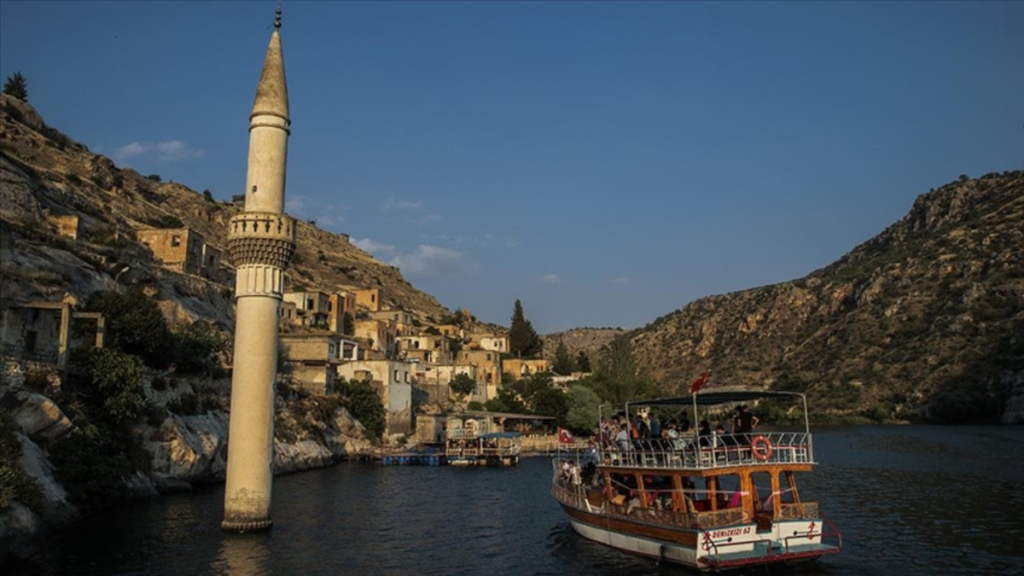
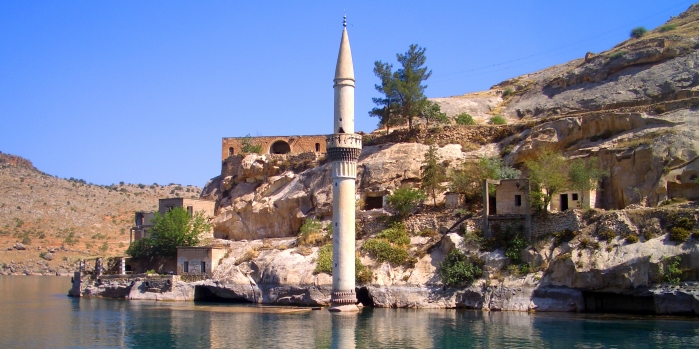
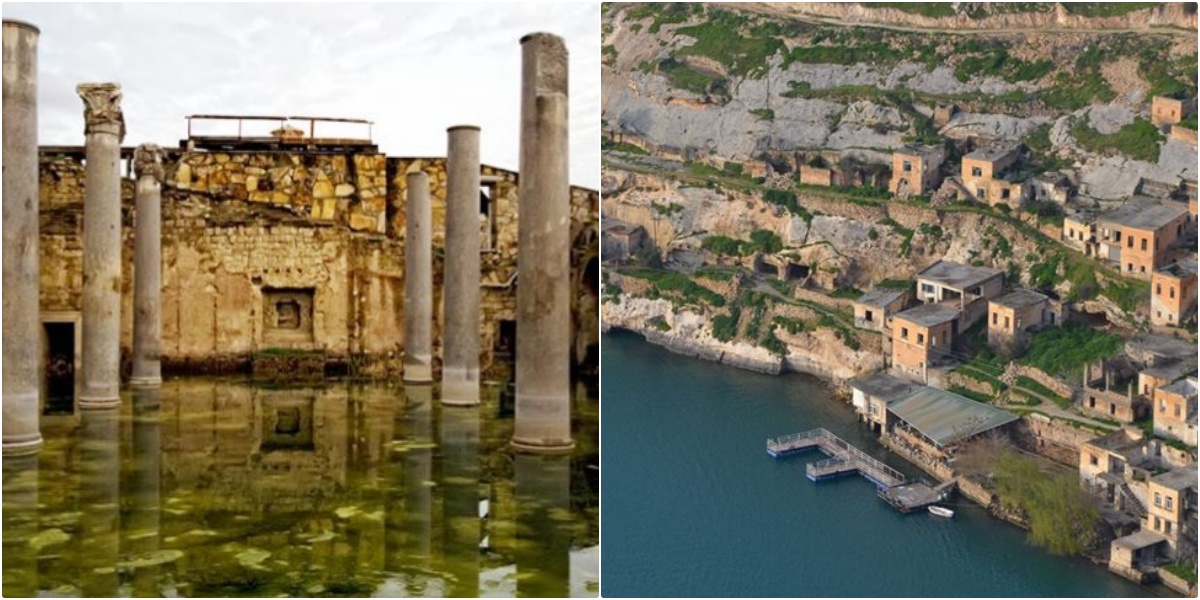
Halfeti, once a riverside town on the banks of the Euphrates, now exists in two forms—one above water, one below. Following the construction of the Birecik Dam, parts of Old Halfeti were submerged, leaving behind an iconic sight: the minaret of a mosque rising from the lake, surrounded by stone house ruins visible above the surface.
Far from being forgotten, Halfeti has transformed into a major tourist attraction. Boat tours glide past submerged structures, photographers capture its haunting beauty, and visitors are drawn not only by its history but also by its natural features. The town is famously associated with the rare black roses that grow only in this unique microclimate, adding further allure.
Halfeti embodies resilience. Even though parts of the old settlement now lie underwater, its cultural spirit persists through tourism and local traditions.
Hasankeyf: Ancient Mesopotamian Capital Lost to the Waters
Perhaps the most dramatic example is Hasankeyf in Batman province, an ancient city on the banks of the Tigris. With a history stretching back thousands of years, Hasankeyf was one of the oldest continuous settlements in Mesopotamia. Its caves, rock-carved dwellings, and monumental architecture stood as a living archive of human civilization.
Yet much of Hasankeyf has now been submerged following the Ilısu Dam project. While efforts were made to relocate some historic monuments—including the famous Zeynel Bey Tomb and several mosques—to a new cultural park, countless other structures and natural formations could not be saved. The loss sparked widespread debate about heritage preservation versus modern development.
For locals and historians, Hasankeyf’s partial disappearance under water represents not just the end of a settlement but the silencing of a chapter in human history. Still, its relocated monuments and the stories attached to them ensure its legacy endures, even if much of it rests beneath the Tigris.
Editorial Note
Kekova, Halfeti and Hasankeyf illustrate the fragile relationship between human heritage and the forces of nature and modernization. Each tells a different story: Kekova’s ruins whisper of seismic upheavals, Halfeti balances loss with renewed life through tourism, and Hasankeyf stands as a bittersweet reminder of heritage sacrificed for progress.
Together, they remind us that history is not always found in museums or preserved ruins—it can also lie beneath the water, hidden yet enduring. Protecting what remains above ground while respecting what has been lost is a responsibility for future generations, ensuring that these submerged cities continue to live on in memory, culture and identity.