
A significant archaeological discovery has been made in the historic region of Bergama, located in Türkiye’s western İzmir province. Excavations in the ancient city of Pergamon have revealed a remarkably well-preserved bronze cauldron believed to date back approximately 1,400 years to the Roman period. This find adds yet another layer of historical richness to one of Türkiye’s most iconic UNESCO World Heritage Sites.
The discovery was announced by the Pergamon Excavation Committee, which operates under the direction of Professor Dr. Yusuf Sezgin. The excavation is being carried out as part of the “Legacy to the Future” project, a comprehensive initiative aimed at preserving and studying the historical and cultural wealth of Pergamon.
Found Near the Red Basilica in the Mozaikli Ev Complex
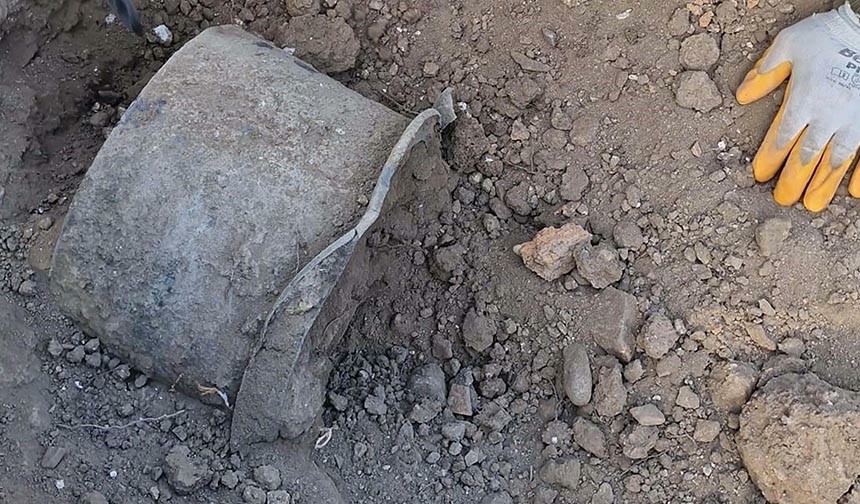
The bronze cauldron was discovered near the famed Red Basilica, in an area known as the “Mozaikli Ev” or “House of Mosaics.” This specific site includes a pool structure, which appears to have served a domestic or ritual function during the late Roman era. The cauldron was found within this pool zone, remarkably intact despite the passage of more than a millennium.
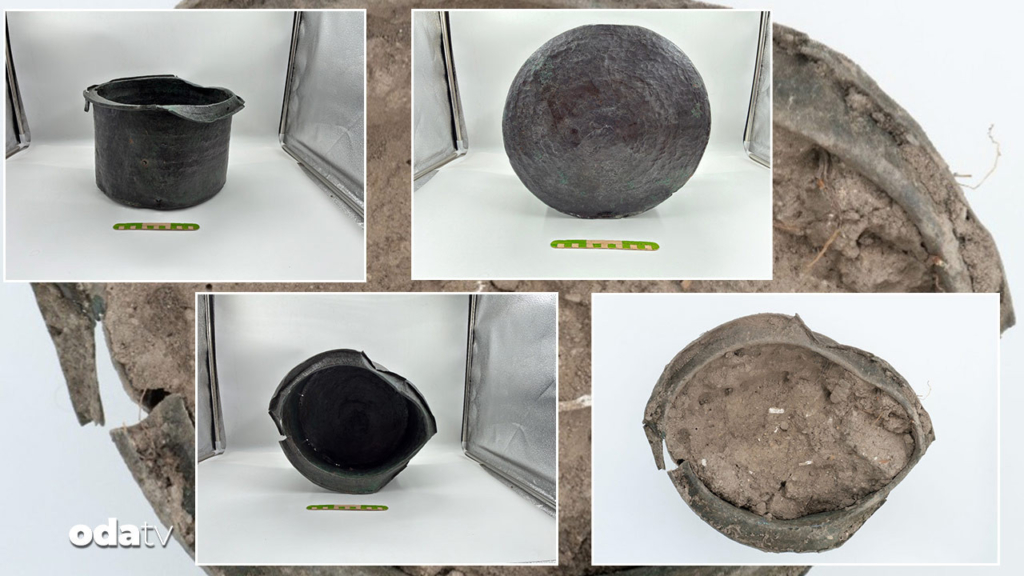
According to the excavation team’s statement, the artifact measures 23 centimeters in height, 28 centimeters in width, and 21 centimeters in depth. Its entire body is made from bronze and was shaped using advanced hammering techniques—evidence of metallurgical skill and craftsmanship typical of Roman artisans.
Preservation and Craftsmanship Evident After Conservation
The bronze cauldron underwent a thorough conservation and cleaning process following its discovery. Experts reported that the artifact was in an excellent state of preservation. Remarkably, even the original hammer marks used during its manufacture are clearly visible on its surface. These impressions offer insights not only into the artifact’s construction but also into the techniques and tools used during the Roman era in Anatolia.
One of the most visually striking features of the cauldron is the linear decorative motifs etched into its upper portion. These stylistic elements are consistent with artistic conventions from the late Roman Empire, providing further validation for its estimated age of around 1,400 years.
A Glimpse Into Roman Domestic or Ritual Life
While the cauldron’s exact purpose remains a topic for ongoing scholarly research, its context within a pool area suggests it may have had ceremonial or practical applications. In Roman domestic architecture, cauldrons were commonly used for cooking, water heating, or even ritual purification practices. The fact that this cauldron was found in situ, in an architectural space associated with water, adds weight to theories about its possible ritual significance.
Archaeologists and historians are now examining the artifact in relation to other domestic tools and architectural features found within the Mozaikli Ev complex. The area itself is already known for its rich mosaic floors and detailed wall structures, providing a vibrant backdrop for understanding Roman urban life in Anatolia.
Pergamon’s Importance in Roman and Hellenistic Eras
Pergamon, known in ancient Greek as Pergamos, was one of the most important cities in the ancient world. It played a crucial role in both Hellenistic and Roman history, serving as a political, cultural, and medical center. Home to the famous Library of Pergamon, rivaled only by Alexandria in its time, the city also boasted architectural marvels such as the Altar of Zeus and vast theater terraces.
The discovery of the bronze cauldron adds to Pergamon’s significance as an archaeological treasure trove. Each new find contributes to a deeper understanding of daily life, religious practices, and artistic expression in antiquity.
Soon to Be Displayed in Bergama Museum
Following its successful conservation, the cauldron is expected to be put on public display at the Bergama Museum. Museum officials have expressed enthusiasm about adding the artifact to the collection, noting its potential to attract international attention and deepen appreciation for the local cultural heritage.
Visitors to the museum will be able to observe not only the preserved form of the cauldron but also the fine details of its craftsmanship—especially the linear motifs and hammer marks that connect modern viewers with artisans of the past.
Part of a Larger Cultural Preservation Initiative
The “Legacy to the Future” project under which this excavation is taking place aims to protect and promote Türkiye’s ancient cities and archaeological heritage. Funded through a combination of public support and institutional partnerships, the project seeks to not only uncover new historical artifacts but also to create sustainable frameworks for heritage tourism and educational outreach.
Professor Dr. Yusuf Sezgin, the lead archaeologist on the site, emphasized the importance of interdisciplinary collaboration in uncovering such finds. He pointed out that this discovery was made possible by careful mapping, stratigraphic analysis, and meticulous excavation methods developed through decades of research at Pergamon.
Boosting Cultural Tourism and Academic Collaboration
Discoveries like this bronze cauldron are key drivers of cultural tourism, which has become an important pillar of Türkiye’s economy. With the country’s rich history spanning Hittite, Greek, Roman, Byzantine, and Ottoman civilizations, ancient cities like Pergamon offer unparalleled educational and experiential opportunities for tourists and scholars alike.
International universities and research institutions have already expressed interest in collaborating on the study of the artifact and its historical context. The find may serve as the focal point for future exhibitions, academic conferences, and cultural exchange programs.
Conclusion
The unearthing of a 1,400-year-old bronze cauldron in the ancient city of Pergamon is a profound reminder of Türkiye’s role as a guardian of world heritage. Not only does the artifact offer a window into Roman life and craftsmanship, but it also highlights the value of sustained archaeological research and cultural preservation.
As the bronze cauldron makes its way to the Bergama Museum, it will serve not only as an object of aesthetic and historical interest but also as a symbol of the enduring legacy of human creativity, ritual, and resilience.
For locals and international visitors alike, the story of this artifact is a compelling invitation to explore the rich layers of Anatolia’s ancient civilizations—one discovery at a time.