
In a remarkable economic milestone, Türkiye has set a new record in tourism revenue during the first half of 2025, achieving an unprecedented income of 25.74 billion dollars. This historic figure reflects a broader trend of resilience and adaptability within Türkiye’s tourism sector, which has continued to thrive despite global conflicts, natural disasters, and climate-related anomalies.
According to the Turkish Statistical Institute (TÜİK), the tourism revenue from the last six months of 2024 stood at 37.13 billion dollars. Combining this with the most recent figures, Türkiye’s tourism income for the past 12 months has reached a staggering 62.87 billion dollars. The country is now steadily advancing toward its ambitious year-end goal of 64 billion dollars.

Growth Driven by Higher Spending and Quality of Service
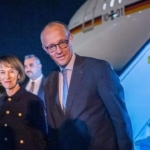
Culture and Tourism Minister Mehmet Nuri Ersoy unveiled the impressive statistics during a press conference held in Istanbul titled “2025 First Half Tourism Data Review and An Anatolian Festival Promotion Meeting.” The data confirms that the January–June 2025 period marks the highest revenue generation in Türkiye’s tourism history for any six-month span.
While the number of foreign visitors to Türkiye increased by a modest 1 percent year-on-year, a much more significant development was observed in tourist spending. From accommodation and food services to transportation and shopping, visitor expenditures have risen notably. Experts attribute this surge to improved service quality, upgraded infrastructure, and a strong performance during the peak tourism season.
The average nightly expenditure by tourists increased by 8 percent in the first half of the year, signaling a shift toward premium travel experiences. This trend underscores a broader movement among international travelers who are seeking meaningful, immersive, and high-value journeys rather than traditional budget travel.
Encouraging Signs for the Remainder of the Year
Minister Ersoy expressed optimism for the remainder of the tourism season, especially for September, October, and November, when reservations are expected to surpass seasonal averages. The second quarter alone brought in 16.28 billion dollars in revenue, contributing significantly to the half-year total. With more than 26.3 million tourists visiting in just six months, Türkiye is on track to achieve its annual targets.
Navigating Through Turbulent Waters
Despite the positive financial outcomes, the tourism industry in Türkiye has not been immune to global adversities. Minister Ersoy highlighted that the past six months were riddled with difficulties, including regional conflicts, natural disasters, and climatic disruptions.
A significant earthquake in Istanbul on April 23 coincided with the Easter period, traditionally a time of heightened travel activity across Europe. This natural disaster triggered a wave of cancellations and affected traveler sentiment. Just a day later, rising tensions between India and Pakistan added another layer of uncertainty to global travel dynamics.
Moreover, Türkiye has been grappling with the broader implications of climate change. As observed, summer temperatures arrived much later than expected, with warm weather not settling in until mid-June. This seasonal shift is seen as part of a global climate pattern affecting travel behavior and planning. The Ministry of Culture and Tourism, along with the Ministry of Transport, has initiated collaborative efforts to formulate sustainable responses to these evolving challenges, with concrete actions expected to be announced within weeks.
Another factor influencing traveler confidence was the 12-day conflict between Israel and Iran in June. Concerns about nuclear escalation and fallout deeply impacted both existing bookings and future reservations, particularly from cautious markets.
Spending Trends Among Tourists and Expats
Data from the Ministry reveals that average nightly spending for all visitors reached 106 dollars during the first half of 2025, with a projected year-end average of 101 dollars—up by 5 percent compared to the previous year. International tourists spent an average of 121 dollars per night, rising from 109 dollars in 2024 and 80 dollars in 2017. Meanwhile, expatriates (especially from Europe) remained more conservative in their spending, averaging 70 dollars per night—a 5 percent increase from the prior year.
The most substantial influx of tourists came from Russia, with 2.6 million visitors, followed by Germany with 2.4 million and the United Kingdom with over 1.7 million travelers. These figures indicate that despite geopolitical risks, key source markets for Türkiye continue to show strong loyalty and travel intent.
Finance Ministry Acknowledges Sectoral Strength
Treasury and Finance Minister Mehmet Şimşek echoed similar sentiments in his statement on social media. Referring to tourism data for April to June 2025, he noted that tourism revenue has surged to an annualized level of 62.9 billion dollars, while total visitor numbers reached 62.7 million.
Despite regional instability, tourism has maintained its strong momentum, he stated, emphasizing that the sector plays a pivotal role in achieving a sustainable current account balance and strengthening the national economy.
Anatolian Festivals as a Cultural Investment
Minister Ersoy also announced an upcoming series of cultural initiatives under the banner of “An Anatolian Festival,” aimed at promoting sustainable and inclusive tourism in Türkiye’s eastern and southeastern regions. The festival is part of the government’s broader effort to diversify tourism geographically and seasonally, with a focus on harnessing the unique cultural heritage of the Anatolian heartland.
These events will feature concerts, performances, and exhibitions, curated by the Ministry of Culture and Tourism to elevate cultural engagement in areas previously underrepresented in the tourism landscape. The festival will debut in Hakkari from August 22 to September 4 and continue in Tunceli (September 5–11), Şırnak (September 12–18), Bingöl (September 19–25), and Bitlis (September 22–28).
Changing Traveler Habits: Shorter Stays, Bigger Spending
Although revenue and visitor numbers are rising, data indicates a slight decline in the average length of stay. Tourists are increasingly opting for shorter but more experience-rich holidays, a shift attributed to rising costs and evolving consumer preferences.
This change is reflected in the average overnight stay duration, which decreased by 0.9 percent year-on-year. From an average of 10.2 nights in 2017 to 10.1 in 2024, the 2025 figure currently stands at 10 nights. Experts suggest this may mark a broader trend toward high-impact, short-duration travel, where tourists are inclined to spend more in a condensed period.
The year-end target for average length of stay has been revised to 10.3 nights, reflecting a projected 3.5 percent decline compared to the previous year. Nonetheless, the increased per capita and per night spending effectively compensates for the reduced stay durations, reinforcing the sector’s economic viability.
Looking Ahead
Türkiye’s tourism sector continues to demonstrate a robust capacity for adaptation and growth in the face of multifaceted global threats. By investing in quality services, cultural promotion, and sustainable strategies, the country is poised not only to achieve its revenue goals but also to emerge as a leader in next-generation tourism development.
As geopolitical tensions, climate fluctuations, and shifting traveler expectations redefine global tourism, Türkiye’s holistic and responsive approach stands as a case study in resilience and innovation.