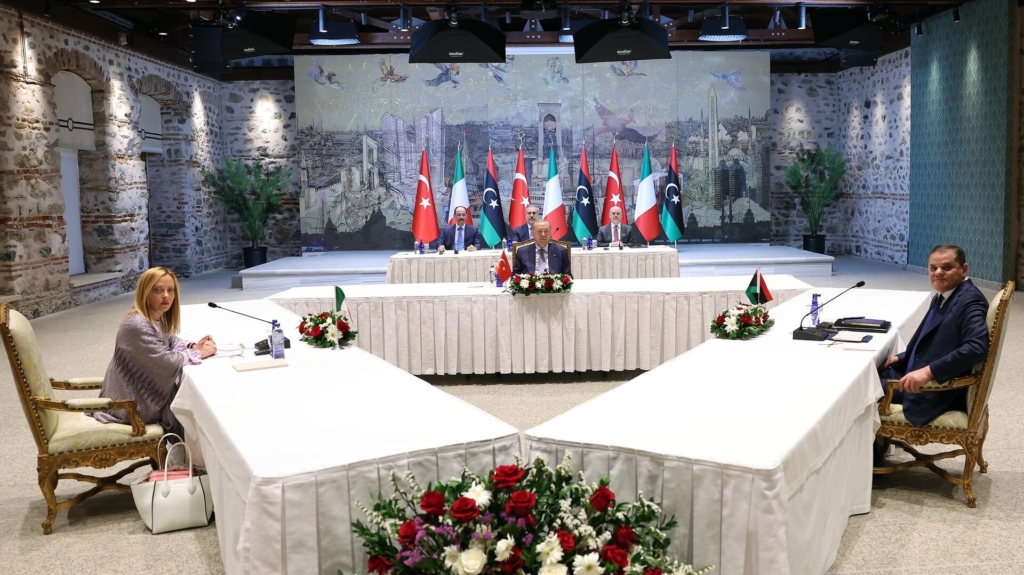

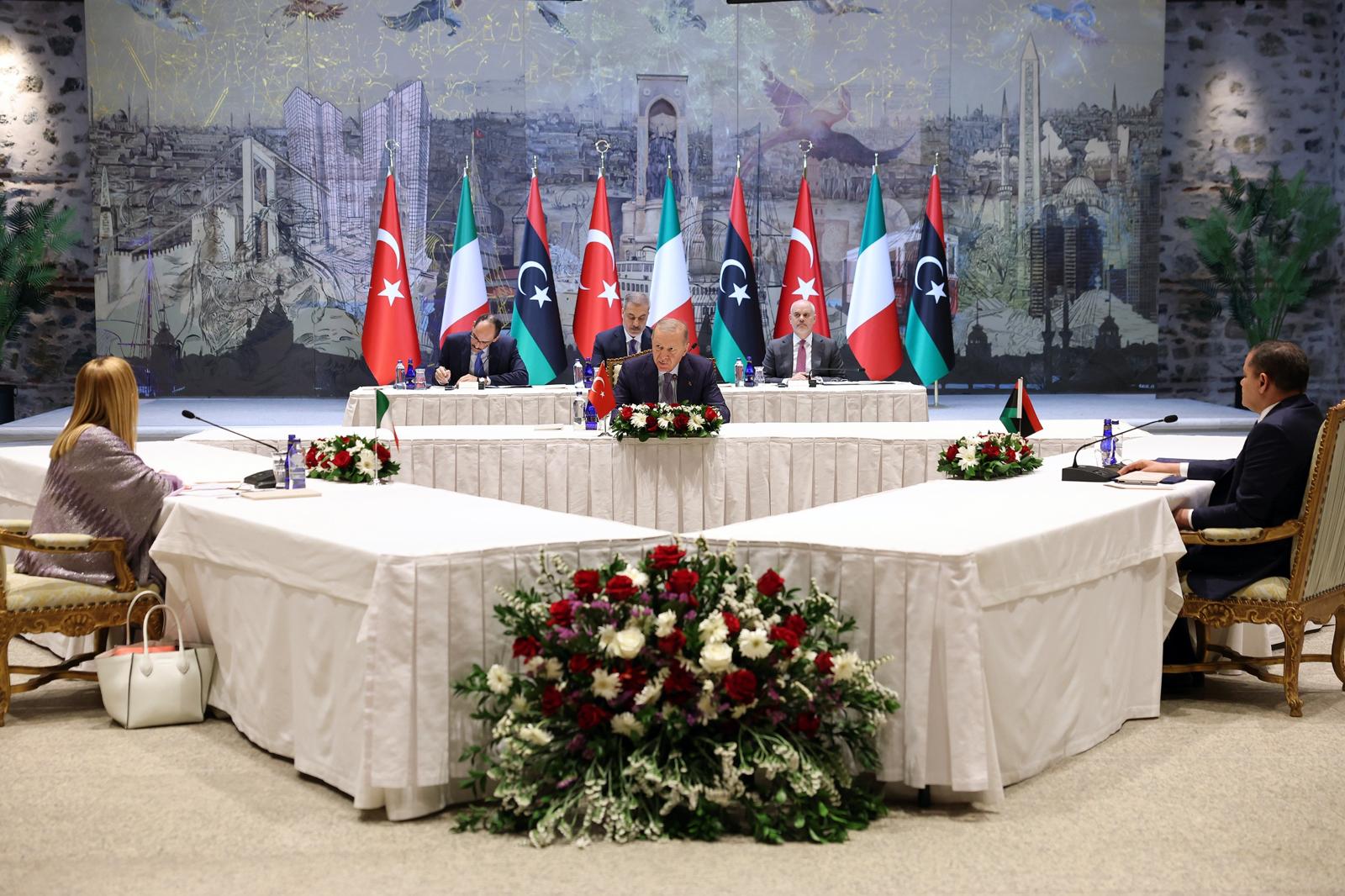
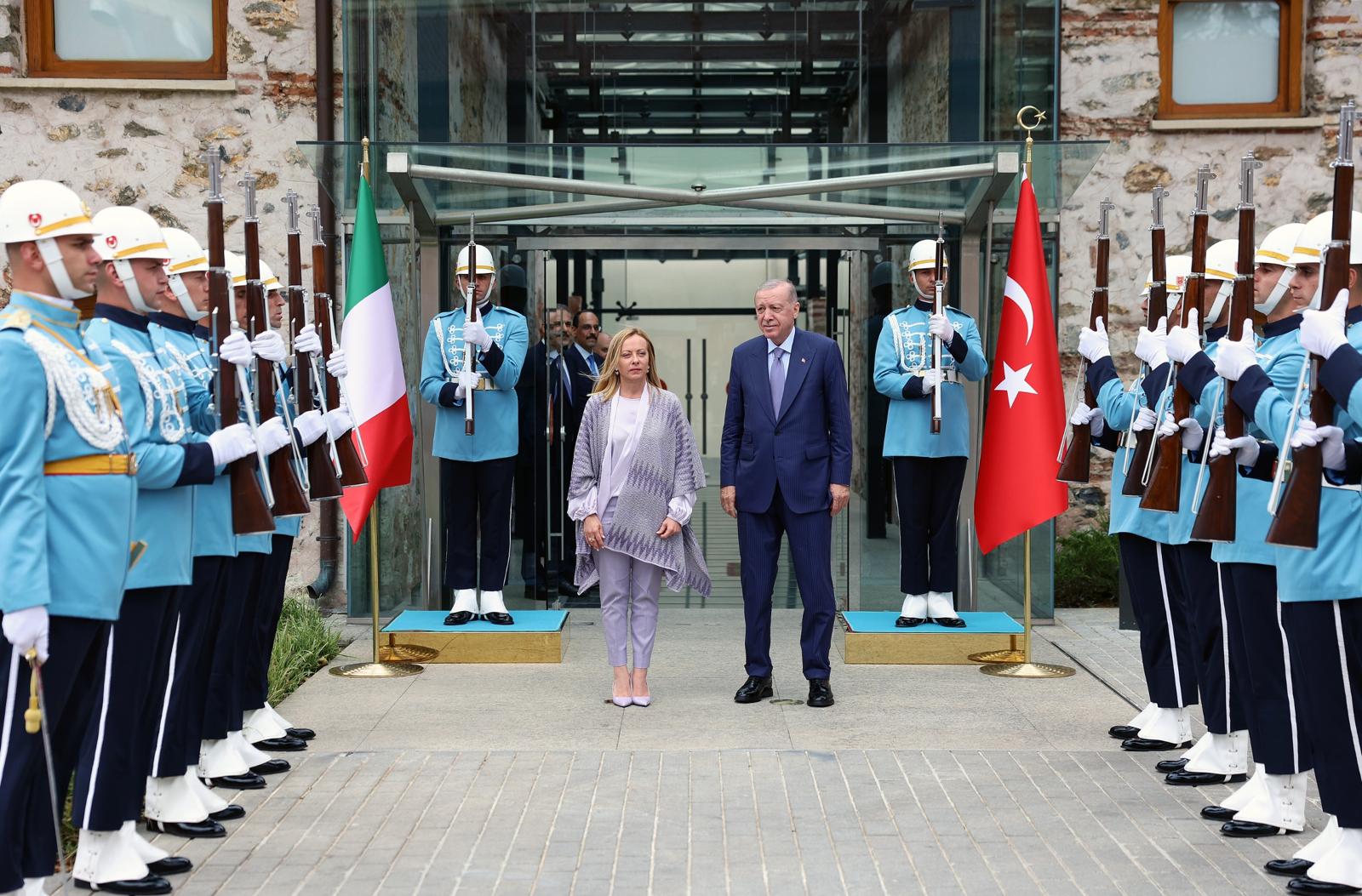
In a significant diplomatic development, Türkiye convened a trilateral summit in İstanbul with Italian Prime Minister Giorgia Meloni and Libyan Prime Minister Abdul Hamid Dbeibeh. The high-level meeting, held behind closed doors, focused on deepening cooperation between the three Mediterranean nations in key areas including irregular migration, regional security threats, and economic collaboration.
President Recep Tayyip Erdoğan welcomed both leaders to Türkiye for what has been described as a pivotal conversation about shared challenges and strategic opportunities across the Mediterranean basin. The summit lasted approximately two hours and concluded with a formal statement from the Turkish Presidency’s Directorate of Communications.
Strategic Dialogue Amid Growing Regional Challenges
The closed-door discussions were attended by senior Turkish officials, including Foreign Minister Hakan Fidan, National Intelligence Organization (MİT) Director İbrahim Kalın, and Presidential Chief Advisor on Foreign Policy and Security Akif Çağatay Kılıç. Their presence underscored the multifaceted nature of the discussions, ranging from security intelligence coordination to long-term diplomatic strategy.
According to the official statement, the three leaders explored pressing issues such as irregular migration flows across the Mediterranean, the growing complexity of regional security threats, and untapped opportunities for trilateral economic cooperation.
Joint Approach to Irregular Migration
President Erdoğan emphasized that irregular migration remains a top priority for Türkiye, Italy, and Libya. With migration routes increasingly exploited by human traffickers and criminal networks, the need for a coordinated and robust response has become urgent.
Erdoğan underlined that only by acting together could the three nations hope to curb the humanitarian crisis and associated security risks. “Combatting irregular migration effectively requires addressing its root causes,” he stated. “This demands long-term, sustainable solutions that can only be achieved through multilateral coordination.”
Türkiye’s strategic geographic location has made it a transit country for many migrants heading to Europe. Similarly, Libya’s instability has allowed traffickers to use its coastline as a launch point, while Italy remains a primary entry route into the European Union. The summit sought to harmonize policies that balance border control with humanitarian obligations.
Reinforcing Security Collaboration in the Mediterranean
The leaders also addressed rising security threats across the Mediterranean, including arms smuggling, terrorism, and destabilizing conflicts. As Türkiye, Italy, and Libya each occupy critical geographic and political positions in the region, their joint efforts could serve as a cornerstone for regional stability.
President Erdoğan stressed the importance of information sharing, coordinated patrols, and intelligence-based operations to disrupt illicit networks. He called for the establishment of a regional security task force under trilateral cooperation, aimed at proactively preventing threats before they reach a crisis level.
Focus on Economic Growth and Infrastructure Development
In addition to security, the summit highlighted the potential for greater economic synergy among the three countries. Libya’s reconstruction efforts, Türkiye’s infrastructure capabilities, and Italy’s technological expertise create a unique formula for mutual benefit.
The leaders discussed launching joint ventures in energy, transportation, and trade, with a focus on rebuilding Libya’s war-damaged infrastructure while creating new investment channels for Turkish and Italian companies. The development of logistics corridors and port modernization projects was also mentioned as a key step toward bolstering regional trade networks.
Türkiye Calls for Global Action on Gaza Crisis
In a pointed addition to the summit agenda, President Erdoğan drew attention to the ongoing humanitarian catastrophe in Gaza. He condemned the continuing Israeli attacks and called on the international community to assume greater responsibility in pushing for an immediate ceasefire and unimpeded humanitarian access.
“Peace in Gaza will only be achieved through the establishment of a sovereign Palestinian State with East Jerusalem as its capital, based on the 1967 borders,” Erdoğan asserted. His comments echoed Türkiye’s longstanding diplomatic stance on the issue, while urging allied nations to align their policies with international law and human rights norms.
The inclusion of Gaza in the summit discussions emphasized Türkiye’s intention to link regional diplomacy in the Mediterranean with wider humanitarian and geopolitical priorities.
Institutionalizing Trilateral Mechanisms
One of the summit’s concrete outcomes was the agreement to form and regularly convene trilateral cooperation committees. These bodies will monitor progress in agreed-upon areas, propose actionable policies, and report directly to the heads of state and government.
By institutionalizing these dialogues, Türkiye, Italy, and Libya have committed to a continuous engagement model that prioritizes both immediate crisis management and long-term policy alignment.
A Renewed Commitment to Shared Interests
At the conclusion of the summit, all three nations reaffirmed their dedication to deepening ties based on mutual interests and shared regional responsibilities. The statement released emphasized the critical importance of maintaining Mediterranean stability and advancing collaborative development initiatives.
President Erdoğan noted that the summit was not only a diplomatic event but a strategic turning point in Türkiye’s regional outreach. “We are determined to build a Mediterranean region characterized by peace, stability, and prosperity,” he said.
Broader Implications for Mediterranean Diplomacy
Observers noted that the trilateral summit signals a shift in regional power dynamics, particularly as Türkiye seeks to diversify its alliances and expand its influence through pragmatic diplomacy. The inclusion of Libya — still emerging from years of civil conflict — highlights Ankara’s efforts to play a stabilizing role in North Africa.
Italy’s participation, meanwhile, reflects growing European concern over migration and energy security. For Rome, deepening cooperation with Türkiye and Libya offers a pathway to manage southern border risks while accessing new markets.
Building Regional Trust in a Fragmented World
In an era marked by fractured alliances and uncertain global leadership, the Türkiye-Italy-Libya summit serves as a model for pragmatic and interest-driven diplomacy. Rather than relying on broader international forums that often lack decisiveness, these three nations are taking matters into their own hands — a trend that may grow as global institutions struggle to respond to emerging crises.
From migration to energy, from security to reconstruction, the issues tackled at this summit are ones that will shape the future of the region. By building trust and operational mechanisms today, Türkiye and its partners are investing in a more stable and self-reliant Mediterranean tomorrow.