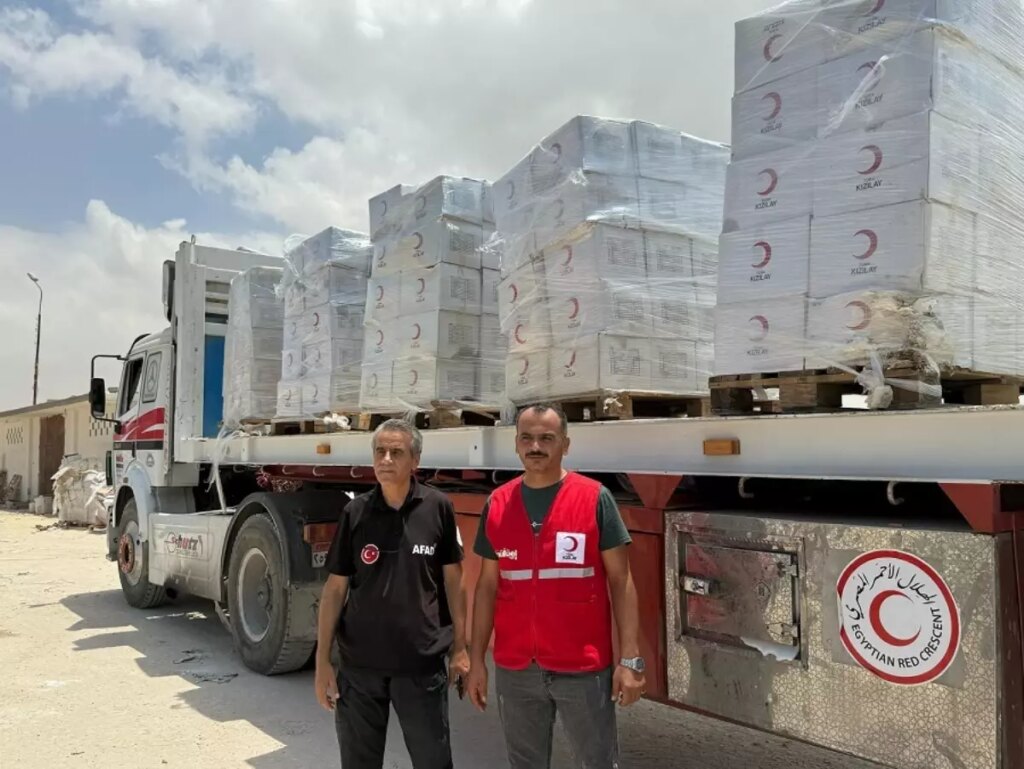

In a critical step toward easing the worsening humanitarian disaster in Gaza, the Turkish Red Crescent (Türk Kızılay) has announced that 165 humanitarian aid trucks carrying 3,000 tons of food have begun entering the region through the Rafah Border Crossing, in cooperation with the Egyptian Red Crescent. The convoy, capable of feeding 50,000 people for one month, marks one of the largest single deliveries of aid into Gaza in recent months.
As the siege tightens and food scarcity worsens, international aid organizations continue to struggle with restricted access and mounting civilian casualties. This latest delivery offers a rare lifeline — but also underscores the severe limitations on humanitarian operations inside the embattled enclave.
A Humanitarian Catastrophe Worsening by the Day
In a statement issued earlier this week, the Turkish Red Crescent painted a stark picture of Gaza’s humanitarian state: acute hunger, unlivable conditions, and rising child mortality.
“Gaza has been experiencing a deepening humanitarian disaster for nearly two years,” the organization said. “With Israel’s restrictions on food and essential supplies, even basic nutritional needs are not being met. To date, 175 people, including 93 children, have died due to malnutrition and starvation-related complications.”
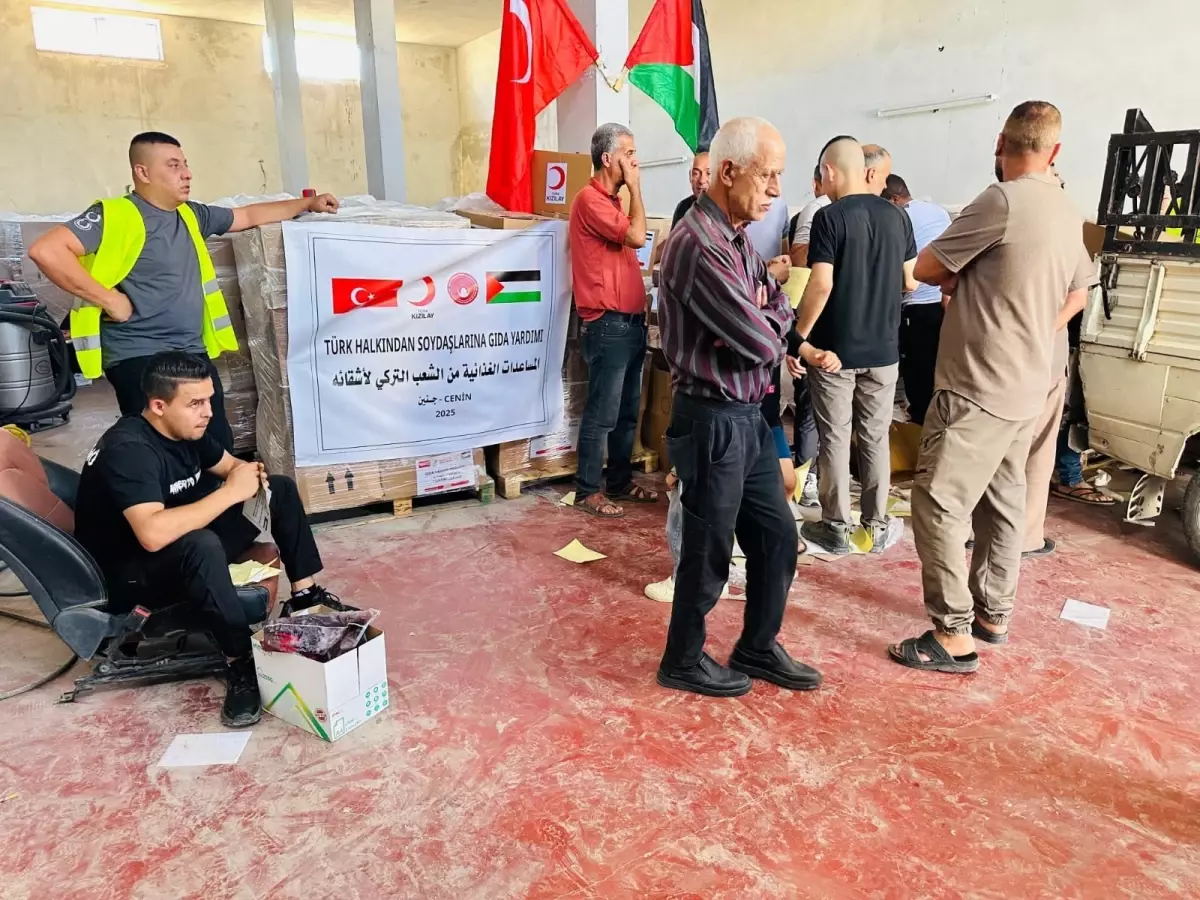
The urgency of the situation has prompted Turkish aid teams to accelerate their logistical efforts, including cross-border coordination, warehousing, and on-ground delivery mechanisms.
Aid Trucks Begin Entering Gaza
Following a temporary clearance by Israeli authorities allowing humanitarian passage, Turkish Red Crescent teams launched the transit of 165 aid trucks loaded with food staples through the Rafah Border Crossing between Egypt and Gaza. According to the organization, this aid shipment consists of nearly 3,000 tons of essential food items, including rice, lentils, flour, canned goods, baby formula, and cooking oil.
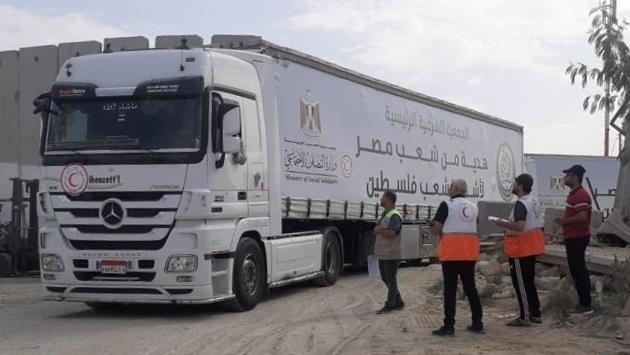
The aid delivery is coordinated with the Egyptian Red Crescent, which has facilitated customs clearance, security logistics, and unloading procedures on the Egyptian side of the border.
One of the Largest Food Convoys in Recent Months
This shipment represents one of the largest food aid convoys permitted into Gaza since the escalation began, providing a temporary buffer for tens of thousands of families. According to relief officials, the shipment is calculated to sustain approximately 50,000 people for 30 days, assuming equitable distribution and local coordination.
Yet, aid workers emphasize that this delivery is only a fraction of what is needed to stabilize the region. With over 2 million people affected, the food entering Gaza remains grossly insufficient under current blockade conditions.
Continued Support from Neighboring Countries
Beyond the Rafah corridor, the Turkish Red Crescent has also coordinated with the Jordanian Red Crescent to facilitate additional relief efforts through Jordan, aiming to open alternative aid channels amid frequently interrupted flows.
Since the beginning of the conflict, the Turkish Red Crescent has operated daily soup kitchens in Gaza, distributing hot meals, hygiene kits, and medical supplies to displaced populations — a task made increasingly dangerous by the volatility of the region.
Targeting of Aid Workers Condemned
Turkish Red Crescent President Prof. Dr. Fatma Meriç Yılmaz issued a firm statement condemning the targeting of humanitarian workers, particularly those affiliated with the Palestinian Red Crescent, which operates alongside Turkish teams in Gaza.
“We are deeply saddened by the deliberate targeting of aid workers in Gaza,” Yılmaz said. “One humanitarian worker has been killed and two others seriously injured while attempting to deliver life-saving assistance. Since October 6, at least 480 humanitarian aid workers have died in Gaza — a horrifying toll that stands as a clear violation of international law.”
Yılmaz emphasized that humanitarian personnel are protected under international humanitarian law, and attacks on them constitute not just legal violations, but an affront to basic human dignity.
The Numbers Behind the Tragedy
The figures tell a sobering story:
3,000 tons of food aid have now entered Gaza through Rafah
165 aid trucks are active in the corridor
50,000 people are expected to benefit from the current delivery
175 civilians, including 93 children, have died due to starvation
480 humanitarian workers have been killed since October 6
These numbers not only reflect the scale of need but also the operational peril involved in aid delivery.
Call for Ceasefire and Protection of Civilians
In her closing remarks, President Yılmaz reiterated Türk Kızılay’s urgent appeal for a ceasefire and the protection of civilians and aid personnel in Gaza.
“We renew our call: there must be a lasting ceasefire in Gaza,” she declared. “Civilians and humanitarian workers must be shielded from violence. The delivery of aid must not be conditional or weaponized.”
Her message aligns with growing international demands for safe humanitarian corridors, UN-monitored access points, and unimpeded relief operations, all of which remain elusive in the current political environment.
Global Reaction and International Law Implications
Human rights organizations, including Amnesty International and the UN Office for the Coordination of Humanitarian Affairs (OCHA), have expressed concern over the deteriorating humanitarian environment and the targeting of non-combatant aid operations. International legal scholars argue that the ongoing restrictions and attacks could amount to violations of the Geneva Conventions, which safeguard civilian infrastructure and relief personnel during wartime.
Türkiye has consistently advocated for diplomatic solutions, humanitarian access, and international accountability, using both multilateral platforms and regional partnerships.
Beyond Emergency Relief: Rebuilding Gaza’s Future
While Türk Kızılay’s aid convoy addresses immediate hunger needs, longer-term recovery will require massive investments in infrastructure, public health, and food security. Experts note that Gaza’s agricultural lands have been heavily damaged, water access is critically low, and health services are overwhelmed.
The Turkish Red Crescent, in cooperation with regional and international partners, plans to scale up operations, including:
Establishing modular field hospitals
Expanding mobile kitchen and food distribution units
Launching child nutrition programs targeting post-trauma support
Providing mental health counseling and trauma recovery services
These projects will only be viable under conditions of sustained peace, cross-border cooperation, and international oversight.
Türkiye’s Role in Humanitarian Diplomacy
The Turkish Red Crescent’s efforts in Gaza highlight Türkiye’s broader humanitarian diplomacy strategy, one that blends on-the-ground relief with political advocacy. As one of the most active national societies in the International Red Cross and Red Crescent Movement, Türk Kızılay plays a crucial role in crisis response, cross-border aid logistics, and emergency policy coordination.
Today’s successful entry of 165 aid trucks into Gaza may mark a small victory — but it also underscores the urgency for sustained humanitarian access, international legal protections, and global solidarity in one of the most challenging aid environments in recent history.