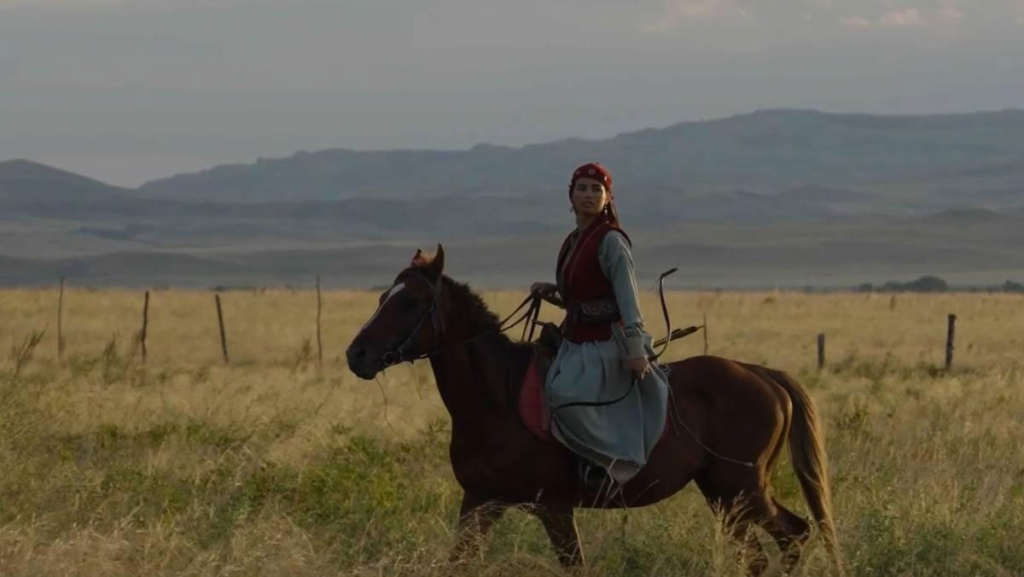

Under the auspices of the Presidency of the Republic of Türkiye, the “Turkic Legacy” project is bringing the deep cultural, social, and historical roots of the Turkish people to life through a massive multimedia endeavor. Initially planned as an 18-episode documentary with 17 accompanying volumes, the project has now expanded to a 26-part documentary series and a 20-volume academic compendium, reflecting its growing ambition and depth.
At its core, the project aims to tell the story of the Turks in their own voice, reclaiming historical narratives and presenting an alternative to Eurocentric interpretations of Turkic history.
From the Steppes to the Stage of Civilization
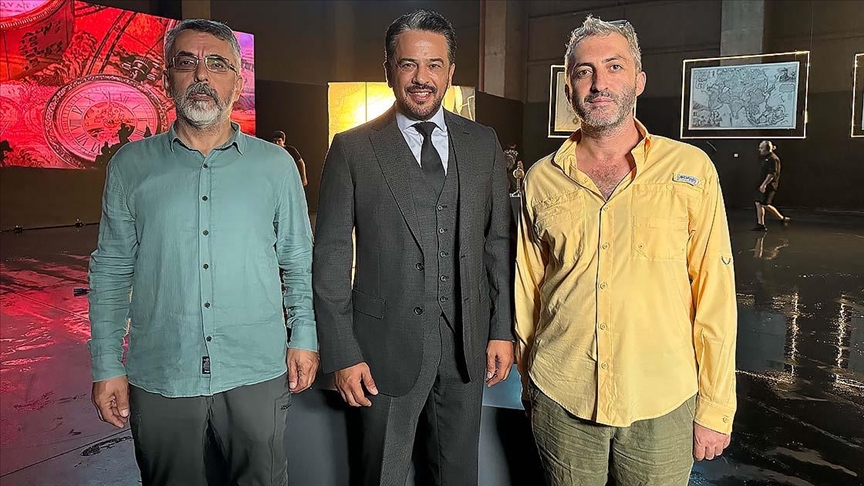
General Coordinator İbrahim Dıvarcı explains that Turkic Legacy – Part I covers the period from the early emergence of Turks on the world stage up to the end of the Karakhanid Empire. Later phases—Turkic Legacy II—will explore the Ottoman and Republican eras.
“We aim to annotate history—to show where we came from, what we built, and which civilization we are heirs to. Turks were not just warriors; they were city-builders, philosophers, and architects of a vast cultural sphere,” said Dıvarcı.
The project’s broader goal is to present the intellectual and spiritual DNA of the Turkish people—exploring their beliefs, cultural systems, urban designs, trade routes, and economic frameworks.
Global Footprint: 53 Countries, 100 Experts, One Unified Vision
Director Fatih Sezgin and his team traveled to over 50 countries including Mongolia, Kazakhstan, Kyrgyzstan, Uzbekistan, Azerbaijan, Iran, and Hungary, capturing the footprints of ancient Turkish states and communities.
“Our visuals stretch from the Ural-Altaic origins of the Turks to their present-day presence in Anatolia,” said Sezgin. “We’ve focused on the pre-Islamic period for the first stage—up to the 11th century.”
The project involves more than 100 academics, historians, and cultural experts and seeks to provide both scientific integrity and cinematic appeal.
More Than a Voice, a Personal Journey
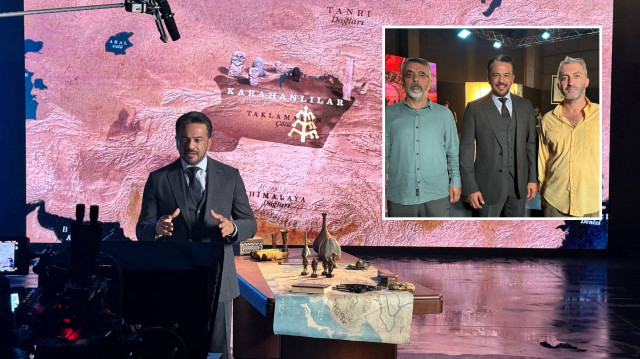
Well-known actor and singer Emre Altuğ, who serves as the documentary’s narrator, described the project as a deeply personal and educational journey.
“I didn’t just read the script—I studied it, understood it, felt it. It taught me about my ancestors. I hope viewers walk away with the same sense of enlightenment,” he said.
Altuğ emphasized the multidimensional narrative of the project, which doesn’t merely recount events chronologically but explores social, cultural, artistic, and architectural dimensions of Turkic civilization.
Powerful Institutional Support and High-Level Advisory Board
The project is backed by a broad coalition of public and private institutions, including:
Presidency of the Republic of Türkiye
Konya Selçuklu Municipality (primary project partner)
Ministry of Culture and Tourism
Ministry of Environment, Urbanization and Climate Change
TRT, TİKA, Turkish Airlines, Anadolu University, Selçuk University, VakıfBank, and IGA Airport Management
The Advisory Board includes top-level officials such as ministers, university rectors, and media executives, ensuring institutional alignment and national significance.
Scientific Foundation and Literary Depth
Beyond the documentary series, Turkic Legacy will include a 20-volume book series developed by a specialized editorial and academic board. These volumes provide deeper analysis and serve as a reference archive for future generations, covering topics like:
Turkic migration routes
Political and military structures
Urban planning
Religious thought and philosophy
Trade, roads, and economy
A Manifesto of Cultural Continuity
Dıvarcı explains that the project is not just about telling a story—but taking a stand:
“The Turk is loyal, and the Turk is expected to return. This civilization must be reborn with justice, compassion, and wisdom. Türkiye, as the heir of a 5,000-year-old legacy, has the responsibility to carry this vision forward.”
Rewriting the Historical Narrative
Rather than relying on Western narratives that often define the Turks as merely nomadic warriors, the project provides a holistic portrait of Turkic civilization, highlighting contributions to global culture, science, and governance.
By following a historical timeline from Siberia to Anatolia, the documentary explores the impact of Saka, Hun, Göktürk, Uighur, Seljuk, and Timurid states while challenging the limitations of Western historical discourse.
A Gift to Future Generations
Director Fatih Sezgin summarized the long-term goal:
“If we can offer even a small, well-documented and visually compelling archive for future generations, we’ll consider it our greatest success.”
The documentary, in its first phase, ends with the Anatolian Beyliks. The upcoming second phase will delve into the Ottoman Empire and the Republic of Türkiye, further solidifying the project’s ambition to present the full arc of Turkish civilization.