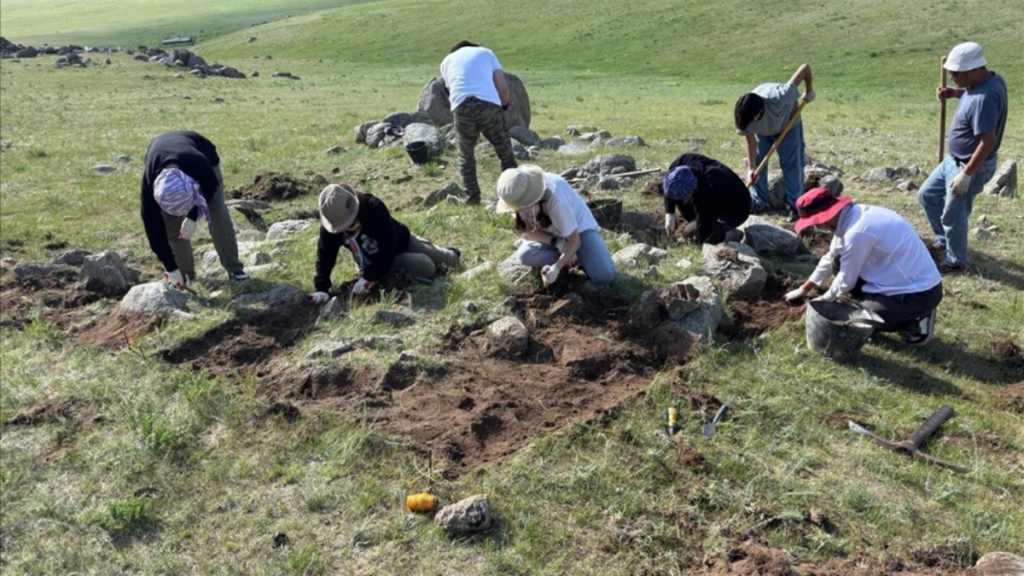

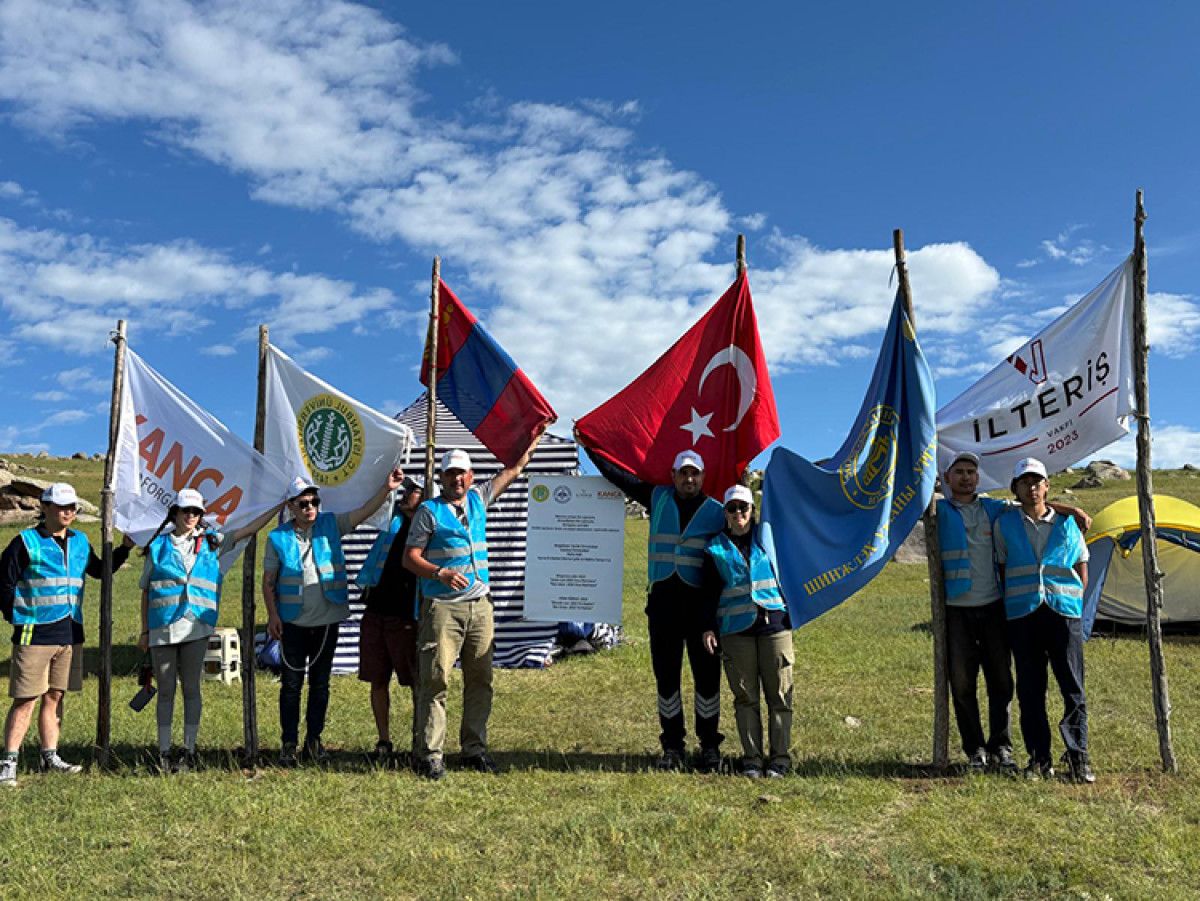
A unique cross-cultural archaeological collaboration between Istanbul University and National University of Mongolia is currently underway in the windswept landscapes of Mongolia’s Tuv and Arkhangai provinces. Titled “The Culture of Horsemen”, this project focuses on unearthing and documenting ancient nomadic burial mounds and ritual sites spanning from the Bronze Age to the 13th century.
Sponsored by Türkiye’s İlteriş Foundation, the project sheds light on the deeply rooted burial customs and spiritual traditions of Central Asia’s nomadic societies—cultures that laid the foundations for many aspects of early Turkic civilization.
Digging into the Heart of Eurasian Heritage
The excavations are centered in two strategic regions:
Shovh Uul Mountain and the Tuul River Basin in the Altanbulag District of Tuv Province
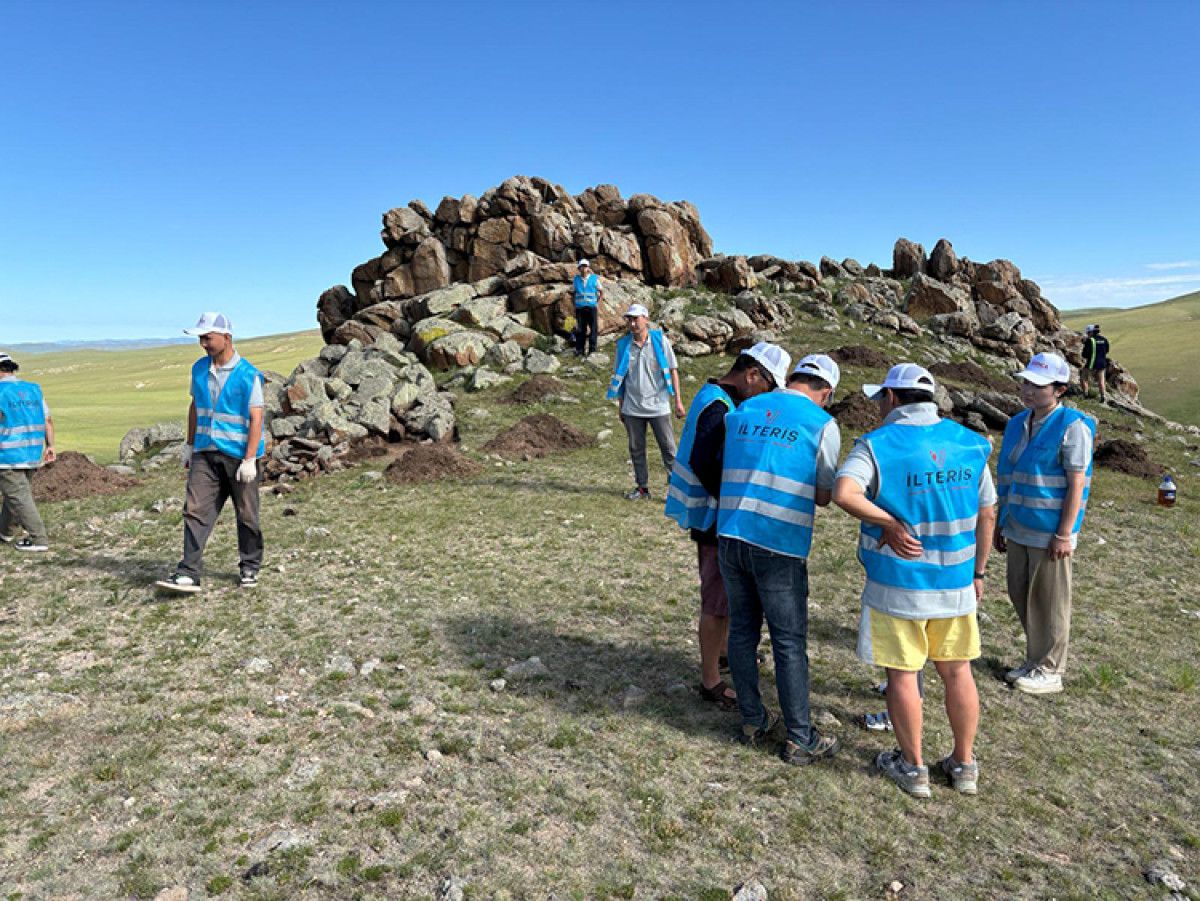
Bor Ovoo, a sacred hill in Arkhangai Province, adjacent to the famous memorial complex of Uighur Khagan Moyen Chur
These locations are considered vital archaeological hotspots, offering rare insights into the religious, political, and social structure of ancient steppe cultures. The goal for this year is to complete active excavation phases, paving the way for extensive documentation and academic publication.
A Collaborative Scientific Force from Two Nations
The excavation team is composed of leading experts from both countries. From the Turkish side, the mission is led by Prof. Dr. Kürşat Yıldırım, Assoc. Prof. Dr. Elvin Yıldırım, Dr. Ferhat Çiftçi, and Şeyma Sapma, all affiliated with Istanbul University. Their Mongolian counterparts include Assoc. Prof. Dr. Ulziibayar Sodnom, Prof. Dr. Erdene Myagmar, and researcher Tsenguun Ganbold.
The collaborative nature of the project enhances both methodological quality and cultural sensitivity, as Mongolian archaeologists bring regional familiarity and traditional context, while Turkish scholars contribute interdisciplinary perspectives on Turkic heritage.
Bor Ovoo: A Sacred Summit of the Steppe
Among the most spiritually significant sites in the project is Bor Ovoo, a hill that has served as a ceremonial location for thousands of years. Located next to the memorial stele of Moyen Chur, Bor Ovoo embodies both physical prominence and symbolic reverence.
According to Prof. Dr. Kürşat Yıldırım:
“Bor Ovoo is not only adjacent to a major Uighur monument but is also a site where sacred ceremonies have taken place for millennia. The name itself is telling—‘Bor’ means brown in Mongolian, while ‘Ovoo’ refers to sacred stone cairns present in both Turkish and Mongolian cultures.”
Excavations at Bor Ovoo have already identified five kurgans—artificial burial mounds used by nomadic cultures to honor their dead. These structures reflect a timeline stretching from 2000 BCE to the 13th century, highlighting a long-standing tradition of ancestor worship and spiritual continuity in the region.
Tracing a Cultural Continuum from the Bronze Age to the Middle Ages
Yıldırım emphasizes that one of the excavation’s main aims is to analyze burial architecture and mortuary practices, which can reveal social hierarchy, religious belief systems, and cross-generational cultural transmission.
Findings are expected to include:
Pottery shards
Bronze and iron artifacts
Animal and human remains
These materials will help illustrate how early Turkic societies perceived life, death, and legacy. The researchers believe that understanding burial customs can provide a deeper appreciation for cultural integration across Siberia, Central Asia, and beyond.
“This isn’t just archaeology; it’s about understanding the philosophical and social foundations of ancient Turkic civilization,” Yıldırım noted.
Knowledge Exchange and Scientific Growth
One of the core benefits of the project is the knowledge transfer between Mongolian and Turkish experts. Mongolian archaeologists bring centuries of traditional expertise in steppe archaeology, while Turkish researchers contribute analytical techniques and theoretical frameworks that align with the broader Turkic historical narrative.
Yıldırım acknowledged that Türkiye still has a limited tradition in steppe archaeology:
“Our Mongolian colleagues are highly skilled, both theoretically and practically. Working alongside them is an invaluable learning opportunity for Turkish archaeologists.”
This partnership not only strengthens scientific ties but also inspires a new generation of scholars in both countries to engage with the shared nomadic past of the Turkic world.
Preservation and Presentation of Artifacts
All artifacts unearthed during the project will be cataloged and protected under Mongolian state oversight. Items deemed suitable for public viewing will be displayed in Mongolian museums, ensuring the integrity of the country’s cultural heritage remains intact.
Prof. Dr. Yıldırım clarified that transferring such artifacts to Türkiye is not currently viable due to logistical and legal challenges. However, shared academic access and digital archiving will ensure that Turkish scholars and the public can engage with the findings meaningfully.
A Living Archive of Turkic Civilization
Looking ahead, the project team plans to continue excavation in other parts of Mongolia, which is considered the cradle of early Turkic empires. Regions like the Orkhon Valley and Ötüken serve as central reference points for understanding the birth and evolution of Turkic identity.
The culmination of this year’s project will result in scientific reports and publications available in Turkish, Mongolian, and English. Sponsors such as İlteriş Foundation and Kanca Steel Tools & Machinery Industry Co. are helping ensure that the findings reach a global academic audience.
As these burial mounds are opened to the light after centuries of silence, they not only tell us about the dead but also illuminate the shared legacy of the living—a legacy that connects the steppes of Mongolia with the hearts of the Turkish people.