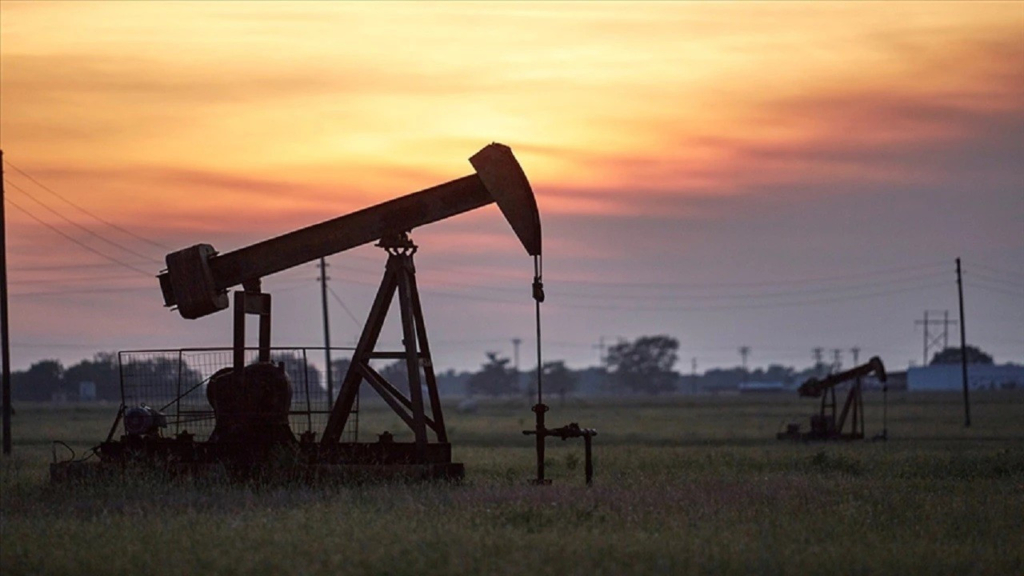

In a recent projection that could ripple across global energy markets, Goldman Sachs has warned that Brent crude oil prices may dip below 50 dollars per barrel by the end of 2026, driven by a growing global oil surplus and weakening demand. The forecast marks a stark shift from current levels hovering around 70 dollars, signaling potential relief for oil-importing nations—Türkiye among them—but also raising flags for oil producers and energy investors worldwide.

A Growing Global Oil Glut
According to Goldman Sachs analysts, the world is heading into a phase of sustained supply surpluses, which could drastically impact both pricing and inventory levels across major economies. The bank estimates that between Q4 2025 and Q4 2026, global oil oversupply could reach an average of 1.8 million barrels per day. This would lead to a cumulative stockpile increase of approximately 800 million barrels by the end of 2026.
The surplus is not just a matter of daily flow; it’s about storage, market capacity, and long-term resilience. In this context, Goldman Sachs specifically highlights OECD countries, where stored oil volumes are projected to climb to 270 million barrels, amounting to nearly one-third of global reserves by 2026.
Impact on Brent Crude Trajectory
The projections suggest that Brent crude, a global benchmark for oil pricing, will likely remain aligned with current futures contract prices throughout 2025. However, as OECD inventory growth accelerates, the bank expects Brent prices to gradually fall, potentially dropping below the psychological threshold of 50 dollars per barrel by the close of 2026.
This downward trend is closely tied to a combination of excess supply and reduced demand, both of which are influenced by macroeconomic factors such as:
A potential slowdown in global industrial activity
Greater investment in renewable energy
Rising vehicle electrification and declining dependence on fossil fuels
Post-pandemic demand normalization in certain sectors
What This Means for Türkiye
For a country like Türkiye, which relies heavily on energy imports, declining oil prices could offer substantial economic relief. Despite recent exploration and development efforts, including offshore natural gas discoveries in the Black Sea, Türkiye’s domestic energy output remains insufficient to meet national demand.
As a result, fluctuations in global oil prices have a direct impact on Türkiye’s:
Current account balance
Foreign exchange reserves
Industrial production costs
Consumer energy bills
Should Brent prices indeed fall below 50 dollars, Türkiye could see a meaningful reduction in its energy import bill, which remains one of the country’s largest external expenditures. This, in turn, could ease inflationary pressure, support industrial competitiveness, and narrow the current account deficit—a longstanding structural challenge for the Turkish economy.

Industrial and Consumer Impacts
Lower oil prices typically cascade through the entire value chain. For Türkiye’s industrial sector, which depends heavily on oil and natural gas for both energy and raw materials, this could mean:
Lower input costs for manufacturers
Increased export competitiveness due to reduced production expenses
Potential stability or decline in utility prices, particularly in energy-intensive sectors such as metallurgy, automotive, and textiles
On the consumer side, reduced fuel and energy prices may translate into slower price increases or even price reductions in transportation, heating, and other oil-dependent services. This can bolster household purchasing power and enhance economic sentiment.
But Not Without Risks
While the short-term implications for Türkiye’s import balance may be positive, a prolonged downturn in oil prices also brings potential challenges:
Weaker investment sentiment in global energy markets could delay upstream oil and gas development, including collaborative projects involving Turkish firms.
Geopolitical volatility may rise in regions where economies depend heavily on oil revenues, potentially impacting Türkiye’s broader foreign policy and trade environment.
Long-term price volatility could complicate strategic planning for energy infrastructure and make future domestic exploration efforts less financially attractive.
Global Energy Landscape in Flux
Goldman Sachs’ forecast does not exist in isolation. It aligns with broader market signals suggesting that the age of high oil prices may be tapering off, at least in the medium term. The confluence of technological advancement, policy-driven decarbonization, and changing consumption patterns is redefining energy dynamics across the board.
While OPEC+ may attempt to manage prices via coordinated production cuts, sustained surpluses and shifting demand make such efforts increasingly complex. Additionally, US shale production, which remains flexible and price-sensitive, adds another layer of unpredictability.
Strategic Takeaways for Policymakers and Investors
In light of these forecasts, Türkiye’s economic planners may find renewed momentum in:
Expanding renewable energy projects (solar, wind, hydro) to reduce dependency
Accelerating storage capacity development, both for oil and natural gas
Diversifying energy trade partners and securing long-term supply contracts at more favorable terms
Investing in energy efficiency programs across industry and households
For investors, particularly those exposed to oil and gas equities, ETFs, or commodity futures, Goldman Sachs’ prediction may prompt a reassessment of risk-reward ratios. It could also encourage a strategic pivot toward green energy portfolios, emerging markets with alternative energy capacities, or infrastructure funds focused on sustainability.
A Watchpoint for the World, an Opportunity for Türkiye
As oil markets brace for a potential oversupply-driven price shift, the 2025–2026 window could become a transformative period for energy strategies worldwide. For Türkiye, it presents a dual narrative: a welcome cost reprieve on the import front, and an urgent reminder to double down on diversification and sustainability.
While global dynamics remain unpredictable, one thing is clear—adaptability will be key. How Türkiye and other energy-dependent nations respond to this shifting terrain will shape not just their economic futures, but their geopolitical leverage as well.