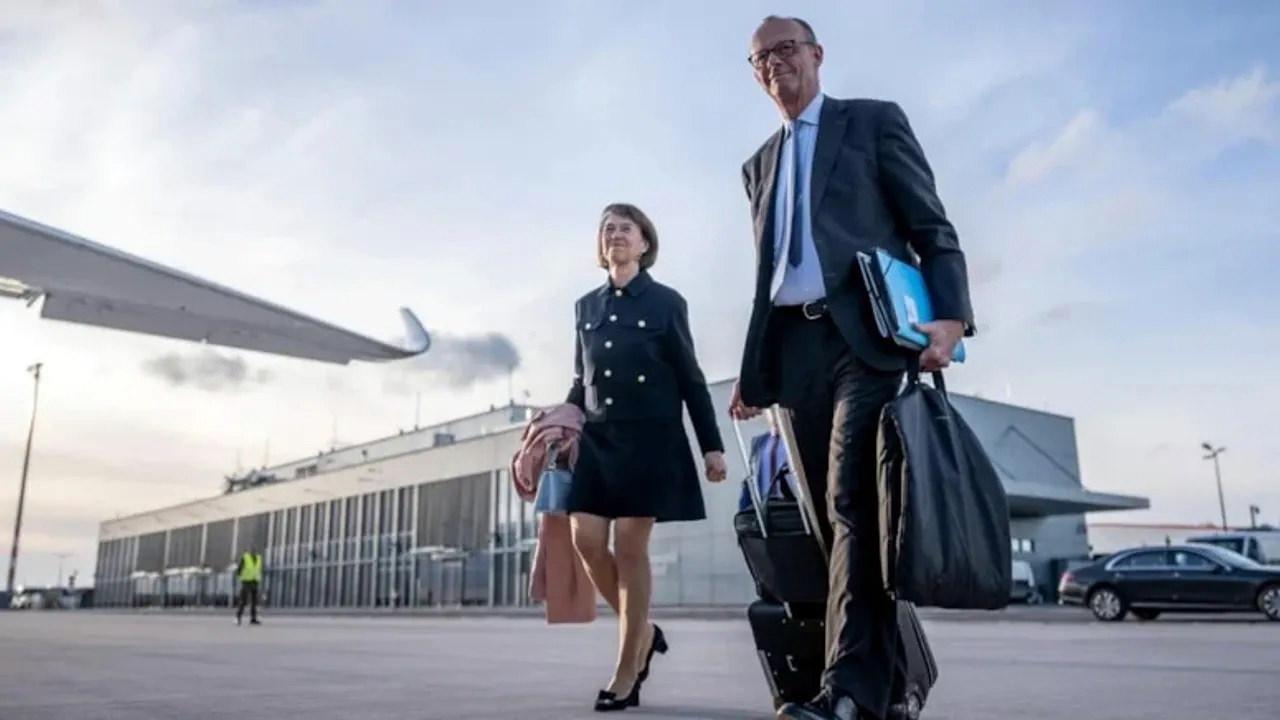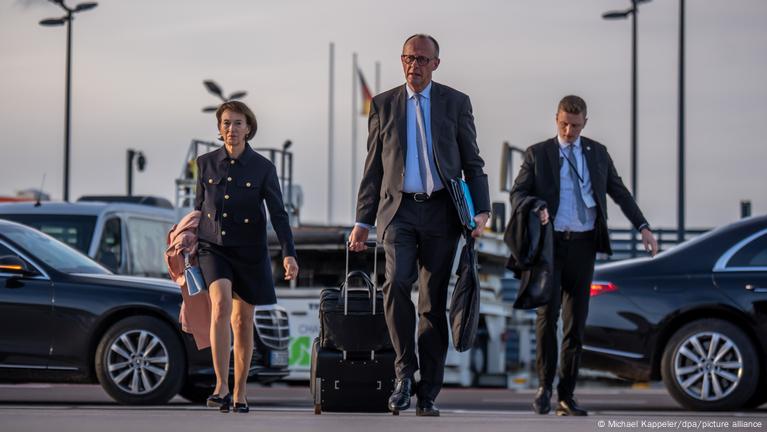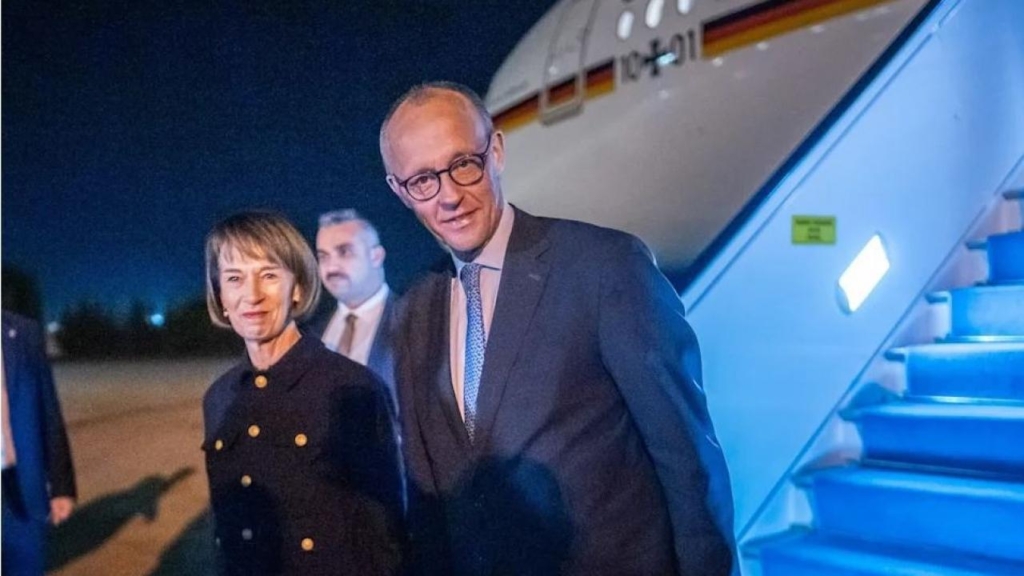

Germany’s Chancellor Friedrich Merz has arrived in Türkiye with his wife, Charlotte Merz, marking a surprise and highly symbolic diplomatic visit. The couple’s trip has drawn attention both in Ankara and across Europe, as it comes at a pivotal moment for Türkiye–Germany relations and signals a desire to open a “new chapter” in the long-standing partnership between the two nations.
According to official sources, Chancellor Merz is expected to meet with President Recep Tayyip Erdoğan to discuss a wide range of strategic topics, including bilateral trade, migration management, regional security, and cooperation in energy and defense sectors.
This marks Merz’s first official visit to Türkiye as Chancellor, underscoring Ankara’s central role in European diplomacy.

A Rare Appearance by the German First Lady
The presence of Charlotte Merz alongside her husband has been described as highly unusual in German media.
To date, she has not attended any formal state visits except for her appearance at the G7 Summit in Canada, where she joined the ceremonial reception of Pope Leo XIV.Germany’s Bild newspaper highlighted that her participation in this Türkiye visit aligns with President Erdoğan’s 2024 “Year of the Family” initiative, suggesting it may serve as a symbolic gesture of respect and goodwill toward Türkiye’s emphasis on family values.
Sources close to Ankara confirmed that Emine Erdoğan and Charlotte Merz are scheduled to attend a private dinner hosted at the Presidential Complex, focusing on family policies, social inclusion, and women’s empowerment initiatives.
Türkiye as the First Stop in Merz’s Diplomatic Tour
Analysts in Berlin emphasized that choosing Türkiye as the first destination before Chancellor Merz’s upcoming European and U.S. visits was no coincidence. The move is widely interpreted as a strategic decision reflecting Türkiye’s importance in both geopolitical and migration-related matters.
The German government is reportedly seeking Türkiye’s assistance in resettling Syrian refugees back to their home country, as part of an EU-wide initiative to address the long-term migration challenge.
A senior diplomatic source noted:
“Germany acknowledges Türkiye’s key role as both a humanitarian partner and a stabilizing force in the region. Merz’s visit aims to reinforce trust and cooperation in these sensitive areas.”
Migration and the Syrian Refugee Issue
One of the most pressing subjects expected to dominate the Ankara talks is the Syrian refugee crisis. With millions of refugees currently residing in Türkiye, and tens of thousands seeking asylum across Europe, both nations are eager to find sustainable and humane solutions.
Chancellor Merz is anticipated to request Ankara’s continued support in managing refugee returns to Syria, while also discussing broader EU–Türkiye cooperation frameworks under the SAFE program.
The visit also comes amid increasing domestic pressure within Germany, where migration remains a politically sensitive issue. According to recent data, 22,256 Turkish citizens currently residing in Germany are listed under the “persons required to leave the country” category—a matter that could also be addressed during bilateral meetings.

Trade, Energy, and Security Cooperation
Beyond migration, economic and energy ties remain a cornerstone of Türkiye–Germany relations.
Both countries share a robust trade partnership, with Germany consistently ranking among Türkiye’s top trading partners in both exports and imports.The two leaders are expected to discuss energy diversification projects, particularly in the fields of renewable energy, hydrogen technology, and natural gas supply security. Türkiye’s strategic position as a transit hub between Europe, Asia, and the Middle East continues to strengthen its leverage in energy diplomacy.
In the security domain, cooperation under NATO frameworks, regional defense production, and counterterrorism are also expected to feature prominently in the Ankara discussions.
Public Diplomacy and Mutual Statements
Merz’s Message on Social Media
Prior to the meetings, Chancellor Merz shared a post on his official X (Twitter) account expressing optimism about the visit:
“Türkiye and Germany share a special and multifaceted relationship. Our discussions will cover foreign and security policies, as well as cooperation in migration, energy, and trade. I am here in Ankara to further deepen our partnership.”
The message quickly gained traction on both Turkish and German social media, with many commentators describing the visit as an “opportunity for reset” in bilateral relations that have occasionally been strained over political and human rights issues.
Diplomatic Tone Focused on Cooperation
Turkish officials have echoed similar sentiments, emphasizing that Türkiye values its ties with Germany and remains committed to dialogue grounded in mutual respect and shared interests.
Ankara is reportedly preparing to present new proposals for economic and technological cooperation that could benefit both sides amid shifting global trade dynamics.A Gesture Toward Renewed Friendship
Family and Cultural Diplomacy at the Forefront
The Erdoğan–Merz meeting, accompanied by their spouses, is being viewed as a carefully crafted example of family-centered diplomacy—a softer form of political engagement aimed at strengthening public goodwill.
Turkish media has highlighted that the planned private dinner between Emine Erdoğan and Charlotte Merz represents not just courtesy, but a symbolic reaffirmation of shared values such as family cohesion, education, and the role of women in society.
Experts argue that this level of personal engagement can often pave the way for deeper understanding between nations, especially at times when formal negotiations face challenges.
Ankara’s Central Role in Europe’s Future
A Meeting with Broader Implications
Merz’s decision to prioritize Türkiye at the beginning of his international agenda underscores a wider acknowledgment in Europe that no lasting regional stability or migration policy can succeed without Türkiye’s involvement.
Beyond its bilateral significance, this visit could set the tone for EU–Türkiye relations in the post-2025 period, potentially reopening discussions on trade facilitation, customs union modernization, and visa liberalization for Turkish citizens.
Diplomatic analysts note that both sides stand to gain from a constructive partnership, as Germany seeks reliable allies amid rising global uncertainty, and Türkiye continues to expand its diplomatic influence in Europe and the Middle East.
Signals and Expectations
Although official statements remain measured, insiders suggest that Chancellor Merz’s talks with President Erdoğan will cover not only practical cooperation but also symbolic reconciliation.
The visit represents a mutual acknowledgment that both nations—despite occasional disagreements—share deep economic, cultural, and human ties that cannot be overlooked.Whether the outcomes will translate into concrete policy steps remains to be seen, but the tone of the engagement suggests a turning point in one of Europe’s most complex and consequential bilateral relationships.
At the heart of this diplomatic encounter lies a simple yet powerful message:
Türkiye and Germany are choosing cooperation over distance, dialogue over division, and renewal over stagnation.
As Ankara welcomes Chancellor Merz and his wife, all eyes remain on what this visit may herald for the future of European diplomacy.