

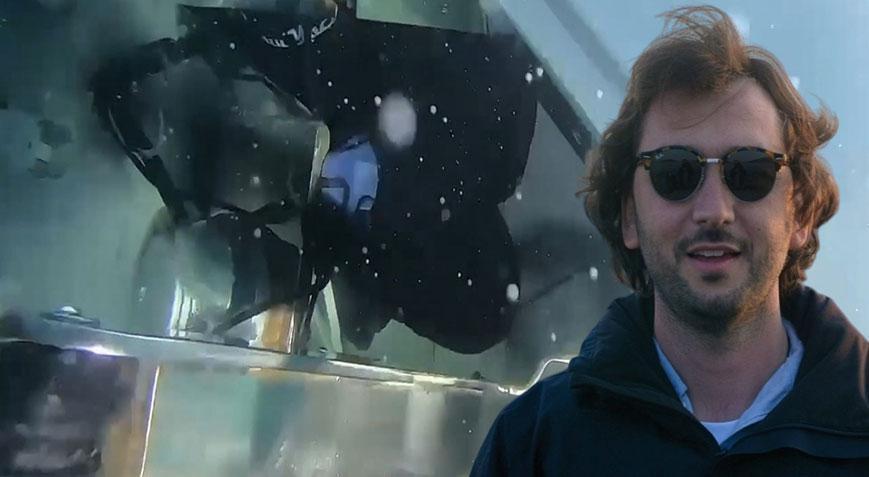
The search for missing businessman Halit Yukay, whose damaged and partially submerged boat was found drifting at sea, has now entered its fifth day with no confirmed trace of his whereabouts. Yukay, 43, had set out from Yalova for Bozcaada, a route that takes sailors across the Marmara Sea and into the Aegean, but somewhere along the way, disaster struck. His disappearance has sparked a large-scale rescue mission involving maritime police, coast guard teams, local fishermen, and civilian volunteers, all racing against time in what experts describe as “the most critical hours” for a potential rescue.
A routine journey turns into a maritime emergency
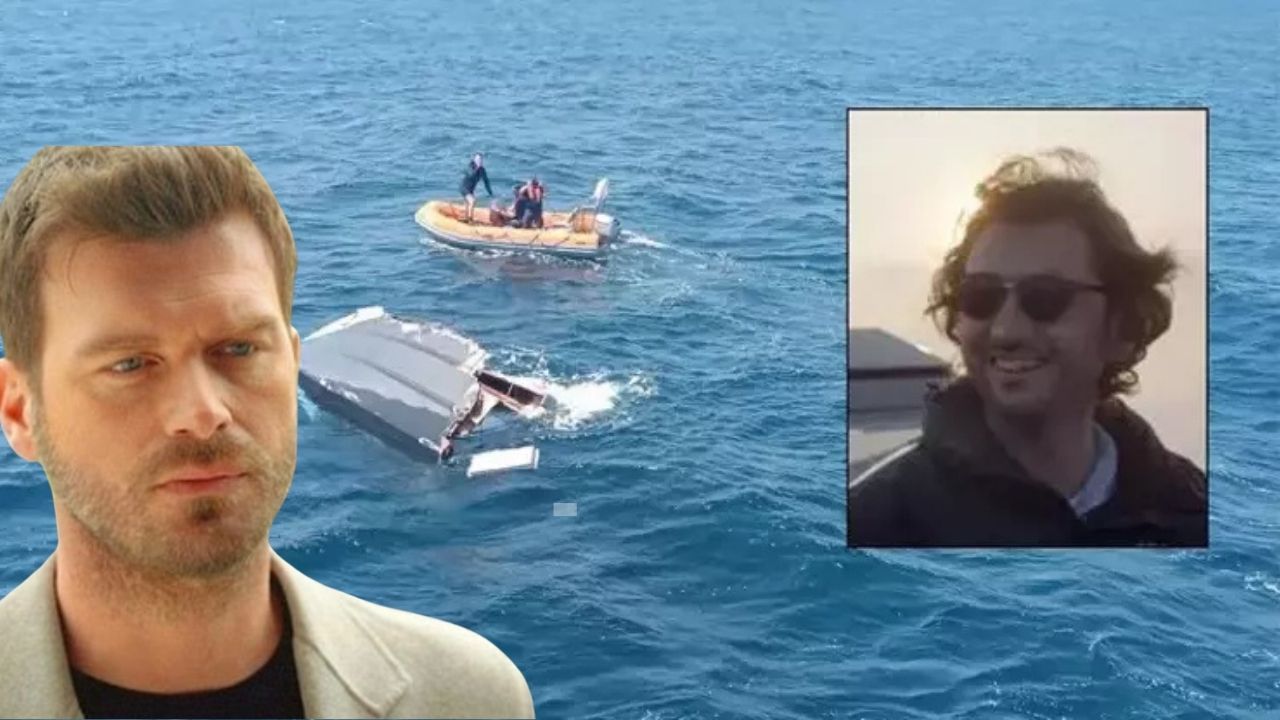
On the day of the incident, Yukay departed Yalova at approximately 3:30 p.m., navigating toward Bozcaada. According to information shared by his friends and maritime officials, conditions were initially stable, and Yukay, an experienced boat owner, was familiar with the route. However, at some point during the voyage, his vessel suffered a catastrophic failure. When authorities later located the boat, it was in pieces and partially underwater, indicating a severe impact or structural damage.
The Turkish Coast Guard immediately classified the situation as a maritime emergency. All available search and rescue units in the surrounding provinces were put on alert, and a coordinated mission began.
Actor Kıvanç Tatlıtuğ’s public appeal
Adding to the urgency of the search, renowned actor Kıvanç Tatlıtuğ, a close friend of Yukay, released an emotional video on his social media platforms. In the video, Tatlıtuğ described the disappearance and urged everyone in the region to assist in any way possible.
“Good morning everyone. As you know, four days ago, my dear brother Halit Yukay departed from Yalova at 3:30 p.m. heading toward Bozcaada. Due to a tragic accident, he disappeared. Today is the morning of the fifth day, and we are in very critical hours. My call to everyone living in the area is to help in the marked search zone. From 5 a.m., we will continue our efforts. The maritime police are on site, all state authorities, local fishing boats, and civilians — we need your help. Please explore within your means and report any clues or information,” he said.
Tatlıtuğ’s message quickly went viral, drawing attention from both the public and the media. His appeal mobilized more volunteers, particularly from nearby coastal communities, and highlighted the importance of civilian participation in maritime rescue operations.
How search and rescue operations are being conducted
Maritime rescue missions in Türkiye follow a strict protocol, especially in cases where a vessel is found damaged. For this operation, the search teams have been using a combination of advanced and traditional methods:
Sonar scanning to detect objects or anomalies on the seabed.
Aerial drones to scan the water surface and shoreline for debris or signs of life.
Patrol boats sweeping the marked search zone systematically.
Diver teams conducting underwater inspections in areas with low visibility.
The search zone includes both open waters and coastal inlets, as there is a possibility that currents could have carried Yukay away from the original incident location.
Challenges of the Yalova–Bozcaada route
The waters between Yalova and Bozcaada can be deceptively dangerous. While the Marmara Sea often appears calm, sudden weather changes and shifting winds can create challenging conditions. The transition into the northern Aegean introduces additional factors such as stronger currents and more open sea exposure. Even seasoned sailors must remain vigilant, and experts note that weather forecasts, though generally accurate, cannot predict every microclimate hazard.
Additionally, the route includes busy maritime traffic lanes. Cargo ships, ferries, and fishing vessels frequently cross these waters, increasing the risk of collisions, particularly in reduced visibility.
Possible scenarios under investigation
While the investigation is still ongoing, maritime safety experts suggest several possible causes for the damage to Yukay’s boat:
Collision with another vessel or large floating debris, which could have caused severe hull damage.
Mechanical failure in the engine or structural components, leading to loss of control and eventual capsizing.
Weather-related incidents, such as sudden squalls or rogue waves, which can overwhelm smaller boats.
Investigators are also examining whether all required safety equipment was on board and functioning, including life jackets, flares, and an emergency position-indicating radio beacon (EPIRB).
The role of local fishermen and volunteers
Local fishermen have been at the forefront of the civilian effort, using their knowledge of the coastline and currents to guide search teams. Many of them know the waters intimately, including areas where debris might accumulate or where a person might drift ashore. Their involvement has been crucial in covering areas that larger vessels cannot access easily.
Volunteer divers, some from nearby diving schools, have also joined the mission, offering their expertise in underwater searches. The combined effort of professionals and volunteers demonstrates the strong sense of solidarity in coastal communities when faced with maritime tragedies.
Public awareness and safety lessons
The disappearance of Halit Yukay has reignited discussions about maritime safety in Türkiye. Boating associations and safety advocates are using the incident as an example to stress the importance of:
Regular boat maintenance and pre-departure safety checks.
Carrying functioning communication devices at all times.
Wearing life jackets, even in seemingly calm conditions.
Informing authorities or trusted contacts about travel routes and estimated arrival times.
Data from the Turkish Coast Guard shows that dozens of small vessel incidents occur every year, often due to avoidable factors such as equipment failure, navigational errors, or lack of weather awareness.
Emotional impact on family and friends
For Yukay’s loved ones, the wait for news has been agonizing. Friends describe him as a passionate sea enthusiast, devoted to both his family and his work. The uncertainty surrounding his fate has made the emotional strain even more difficult to bear. His family remains close to the search site, in constant communication with authorities, hoping for a breakthrough.
Support has poured in from across Türkiye, with messages of solidarity flooding social media. Many posts emphasize that such tragedies underline the fragility of life at sea and the importance of community support during crises.
The clock is ticking
Rescue experts caution that as each hour passes, the chances of finding Yukay alive diminish. However, there have been cases where survivors have been found days after an incident, clinging to debris or stranded on uninhabited islets. For this reason, search efforts remain relentless.
Authorities have stated that they will continue the mission until all possibilities have been exhausted. Meanwhile, Tatlıtuğ and other friends of Yukay remain active in rallying public attention, ensuring that the search does not lose momentum.
A community united by hope
As the search enters its most critical phase, one thing is clear — the disappearance of Halit Yukay has united people from all walks of life. From professional rescuers to local fishermen, from celebrities to ordinary citizens, the collective effort reflects the deep cultural value placed on helping those in need.
Whether the outcome brings relief or grief, the solidarity and determination demonstrated in this search will be remembered as an example of how communities in Türkiye come together in times of crisis. For now, all eyes remain on the waters between Yalova and Bozcaada, and every wave carries the hope of finding answers.