
Recent remarks made by U.S. Ambassador nominee David Barrack, suggesting that “the Ottoman system is the most suitable for Turkey,” have sparked intense reactions within Turkey’s political landscape. His comments have reignited discussions around Turkey’s national sovereignty, historical identity, and foreign interference, all taking center stage in the Ankara political agenda and the broader context of the Türkiye Politika Raporu 2025.
This article analyzes the implications of Barrack’s statements, the domestic political response, and the underlying tensions they expose in U.S.-Turkey relations.
The Ottoman System Controversy
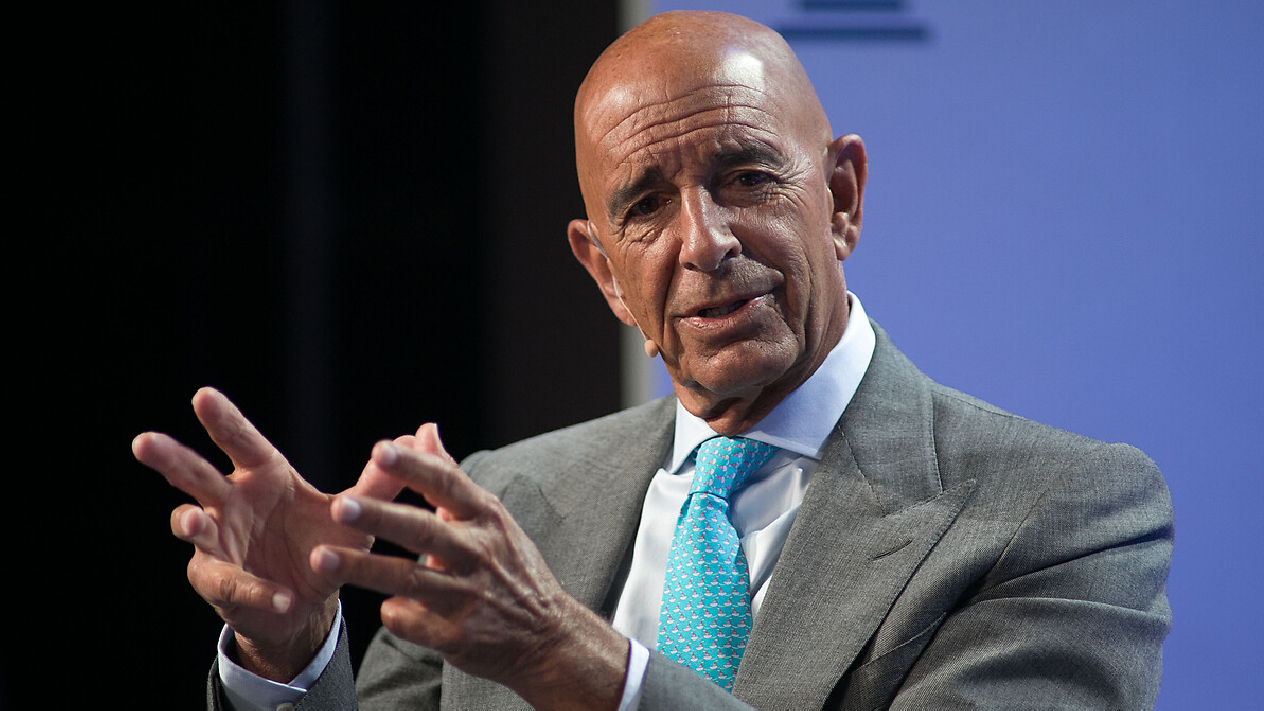
Ambassador-designate David Barrack recently asserted that “the Ottoman state structure and millet system are the most appropriate models for Turkey.” While the statement may have been intended as a historical or cultural reference, Turkish political figures interpreted it as a suggestion of regime change, touching a nerve in a nation founded upon a secular, unitary republic.
Understanding the Ottoman Reference
The Ottoman millet system was a form of governance that grouped subjects by religion, granting autonomous status to various communities under imperial oversight. While it served a multi-ethnic empire, critics argue that applying this model to modern Turkey would challenge its unitary secular constitution, established in 1923 under Mustafa Kemal Atatürk’s leadership.
Ottoman System vs. Republican Constitution
Turkey’s transformation from the Ottoman Empire to a modern republic was rooted in principles of secularism, nationalism, and the sovereignty of the people. The 1924 Constitution, and later reforms, explicitly rejected religious or communal classifications as part of governance.
In this context, Barrack’s Ottoman references can be seen not merely as historical nostalgia, but as fundamentally incompatible with modern Turkish statehood. Legal scholars argue that the millet system’s core structure contradicts the unitary, indivisible nature of the Turkish state as enshrined in Articles 1, 2, and 3 of the current Constitution.
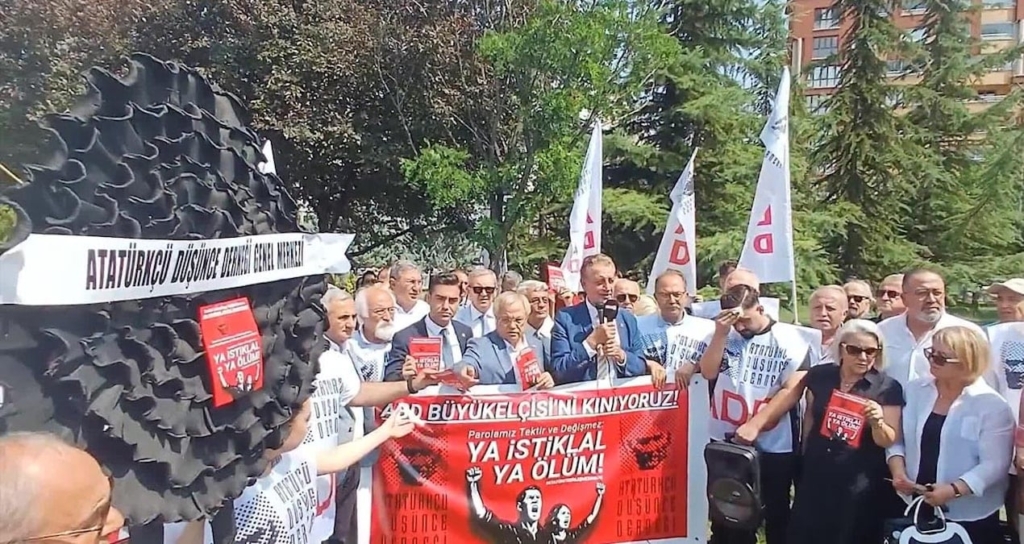
Sharp Rebuke from ADD and Hüsnü Bozkurt
One of the most outspoken critics of Barrack’s remarks was Hüsnü Bozkurt, chairman of the Atatürkist Thought Association (ADD). Bozkurt rejected the idea that any foreign diplomat should propose a political model for Turkey, stating:
“Just as Turkey’s ambassador to Washington cannot say ‘California should be an independent state,’ the U.S. ambassador to Ankara cannot impose the Ottoman system.”
He further labeled the statement as “imperialist rhetoric” and “a breach of diplomatic decorum,” urging the Turkish Ministry of Foreign Affairs to take the necessary diplomatic steps.
Diplomatic Boundaries and National Sovereignty
The incident raises broader questions about the limits of diplomatic commentary. While ambassadors may offer insight into bilateral relations, statements perceived as interference in domestic politics often lead to serious diplomatic strain.
Experts warn that such remarks can undermine public trust and political dialogue, especially during critical times when regional cooperation and global alliances are vital.
Allegations of U.S. Support for Armed Groups
Adding fuel to the fire, Barrack also addressed the U.S. relationship with Kurdish-led groups in Syria, notably the PYD (Democratic Union Party) and the Syrian Democratic Forces (SDG). Bozkurt harshly criticized these comments, claiming they constituted a de facto confession of U.S. support for groups linked to the PKK, which Turkey designates as a terrorist organization.
A Direct Quote from Bozkurt
“Mr. Ambassador is openly saying: ‘While you focus on the PKK laying down arms, we’ve trained and armed its extension, the PYD, and built an army for them.’ This is not diplomacy—it’s arrogance.”
This statement echoes long-standing concerns in Turkish politics that U.S. involvement in northern Syria may destabilize national security and undermine regional peace efforts.
National Unity and the Role of the Constitution
The ADD chairman also reaffirmed Turkey’s unitary, secular, and national state structure, invoking the foundational principles of the Republic.
Core Message from the ADD
“The Turkish nation is the foundation of the Republic. Turkey is not merely a geographical entity—it represents the will of a people. We will not allow this to be compromised.”
This sentiment resonates particularly with secular and nationalist constituencies who consider the preservation of the republican system a non-negotiable element of national identity.
The Role of the Foreign Ministry
In light of the controversy, ADD filed an official request to the Turkish Ministry of Foreign Affairs, urging a formal diplomatic response. Although no public statement has yet been made, many analysts believe a note of protest or private rebuke is likely, especially if public sentiment continues to escalate.
Public Reaction and Media Coverage
The Turkish public has responded with a wave of concern, voicing anger on social media with trending hashtags condemning “foreign interference.” Editorials in independent outlets questioned the appropriateness of ideological commentary by foreign diplomats.
This comes at a politically sensitive time, as Turkey prepares for upcoming municipal elections, heightening the impact of such statements on voter perception and domestic discourse.
Global Parallels
This is not the first time a foreign diplomat has sparked outrage by commenting on internal affairs. In 2017, a German ambassador faced criticism for expressing support for political protests in Hungary. Similarly, a British envoy drew backlash in India after remarks about religious freedom.
Such incidents underscore the importance of diplomatic neutrality, especially in politically complex environments like Turkey, where historical memory and institutional identity are deeply ingrained in the national consciousness.
What’s Next?
While this controversy has caused a stir, U.S.–Turkey relations are layered with strategic cooperation in areas such as NATO, energy security, and trade. Political analysts suggest several possible trajectories:
Diplomatic Cooling: Turkey may temporarily scale back official engagements with U.S. representatives.
Behind-the-Scenes Mediation: Quiet diplomacy could be used to smooth tensions without public escalation.
Public Clarification: The U.S. Embassy may release a statement reframing Barrack’s remarks.
Regardless of the path taken, the event serves as a stress test for bilateral communication and mutual respect.
A Diplomatic Wake-Up Call
David Barrack’s remarks have sparked a political firestorm that reveals deep sensitivities within Turkish society, particularly regarding sovereignty, secularism, and historical identity. In the context of the Türkiye Politika Raporu 2025, this incident highlights the urgency for all stakeholders—domestic and foreign—to approach political discourse with respect, accuracy, and restraint.