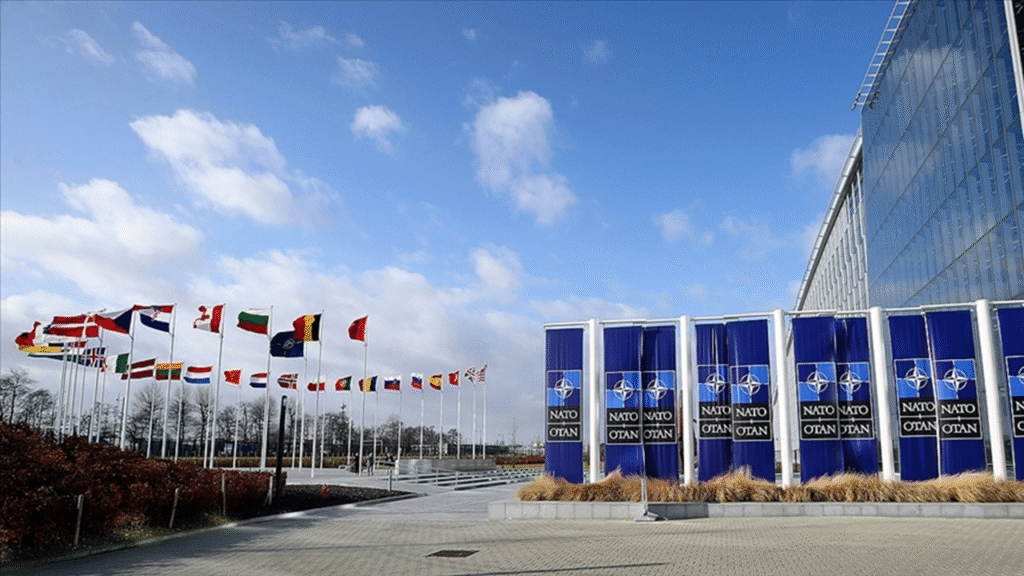

In a landmark development for global defense and security strategy, NATO has announced that all 32 member nations are on track to meet the long-standing goal of allocating at least 2 percent of their gross domestic product (GDP) to defense by 2025. This is the first time in NATO’s history that every member is expected to reach the threshold—marking a pivotal shift in collective commitment amid growing geopolitical tensions.
According to the latest data released by NATO, the alliance is not only achieving old targets but also laying the groundwork for more ambitious defense postures in the years ahead. The news signals a renewed focus on deterrence, military readiness, and strategic investment across the Euro-Atlantic region.

A Historic Milestone in NATO’s Defense Strategy
The 2 percent benchmark, first set as a non-binding guideline during the 2006 NATO summit in Riga, gained renewed urgency following Russia’s annexation of Crimea in 2014 and the full-scale invasion of Ukraine in 2022. These events pushed NATO members to reassess their defense capabilities and accelerate spending commitments.
Until recently, only a handful of nations consistently met the 2 percent threshold. Now, the entire alliance is projected to reach or exceed it by 2025, reinforcing the bloc’s unified stance in an increasingly complex security environment.
Jens Stoltenberg, NATO’s Secretary General, hailed the development as “a sign of real political will,” adding that “meeting the 2 percent mark is not just a financial commitment, but a message of resolve.”
Who’s Leading the Pack? Baltic and Eastern European Surge
Among the 32 nations, three countries—Poland (4.48%), Lithuania (4%), and Latvia (3.73%)—have already surpassed the more aggressive 3.5 percent target set during the June NATO summit in The Hague. Their swift mobilization is driven by proximity to Russia, lessons from the war in Ukraine, and a historical understanding of the consequences of under-preparedness.
These countries have significantly expanded military budgets, launched rapid procurement programs, and enhanced domestic defense production. Their efforts underscore a larger regional trend: eastern NATO members are not just catching up—they are setting the pace.
The United States Still Leads in Dollar Terms
While the U.S. allocates 3.22 percent of its GDP to defense—lower than Poland or Lithuania—its sheer economic size means it continues to dominate NATO’s defense spending in absolute terms. American contributions make up the largest portion of the alliance’s combined defense budget, including global power projection, nuclear deterrence, and high-tech R&D investments.
The U.S. also remains the backbone of NATO’s strategic infrastructure, from airlift capabilities to advanced intelligence networks, ensuring interoperability across the alliance.
Türkiye’s Defense Commitment Gains Momentum
Türkiye has made significant strides in meeting and exceeding NATO’s spending guidelines. In 2025, the country is expected to allocate 2.33 percent of its GDP to defense—well above the 2 percent minimum. This marks a notable rise from 2.13 percent in 2024 and just 1.48 percent in 2023.
This upward trajectory reflects Türkiye’s broader strategy to enhance military readiness, support domestic defense production, and assert regional influence. The country’s investment in unmanned systems, missile technologies, naval modernization, and cyber capabilities signals a commitment to long-term resilience and technological autonomy.
“Türkiye’s rising defense budget is not only a NATO obligation—it’s a reflection of changing regional dynamics and national security priorities,” noted a defense analyst based in Ankara.
NATO’s New Horizon: 5 Percent Target for Comprehensive Security
While meeting the 2 percent target is a milestone, NATO’s vision has evolved. The alliance now aims to move toward a broader 5 percent of GDP benchmark—one that includes not only military spending but also investments in cyber defense, infrastructure modernization, logistics resilience, and troop readiness.
This holistic approach acknowledges that 21st-century warfare is not confined to battlefields. From cyberattacks on energy grids to disinformation campaigns and supply chain vulnerabilities, NATO’s new ambition seeks to build full-spectrum security across all member states.
Achieving 5 percent, however, will require a fundamental shift in budgetary planning and public perception. For many nations, balancing domestic priorities like healthcare, education, and energy security with defense spending remains a delicate task.
What’s Driving the Spending Surge?
Several key factors are fueling NATO’s rising defense budgets:
The Russia-Ukraine War: A wake-up call that prompted Europe to rearm and rethink security dependencies.
China’s Global Ambitions: Heightened concerns about Indo-Pacific stability and NATO’s role beyond the Atlantic.
Technological Competition: Investments in AI, space, quantum computing, and cyber warfare are redefining what it means to be “secure.”
Hybrid Threats: Increasingly frequent cyberattacks, sabotage, and asymmetric tactics require constant preparedness.
Public Pressure: Citizens across NATO countries are demanding stronger responses to perceived threats, pushing governments to act decisively.
Challenges on the Road to 5 Percent
While the renewed defense commitment is welcome news for the alliance’s cohesion, challenges persist:
Economic constraints: Inflation, post-COVID recovery, and energy crises continue to strain national budgets.
Defense industry bottlenecks: Rapid demand for ammunition, vehicles, and weapons has created supply chain issues.
Personnel shortages: Recruiting and retaining skilled military personnel remains an issue for many NATO members.
Political polarization: In some countries, defense spending is still a contentious issue in public discourse.
Despite these hurdles, experts believe that the momentum created by collective defense concerns will keep NATO nations on course—especially if future threats escalate.
Türkiye’s Role in NATO’s Strategic Future
As a bridge between Europe, Asia, and the Middle East, Türkiye’s geographical position grants it a unique role within the alliance. From the Black Sea to the Eastern Mediterranean, Türkiye is a key player in multiple theaters of strategic concern.
Its defense industry, led by firms such as Baykar, ASELSAN, and Roketsan, has been instrumental in supplying NATO partners and allies with cost-effective, high-performance systems. Türkiye’s increased budget not only enhances its own capabilities but contributes directly to alliance-wide readiness.
NATO’s Transformation Is Far From Over
The alliance’s ability to reach and even exceed its long-held 2 percent defense spending goal marks a turning point—but not an endpoint. The road to 3.5 and eventually 5 percent reflects the evolving nature of global threats and the realization that peace requires sustained investment.
NATO is no longer just a military bloc; it is becoming a multidimensional security framework for the 21st century. From drones to data, from trenches to satellites, the alliance is positioning itself to address modern risks with modern tools.