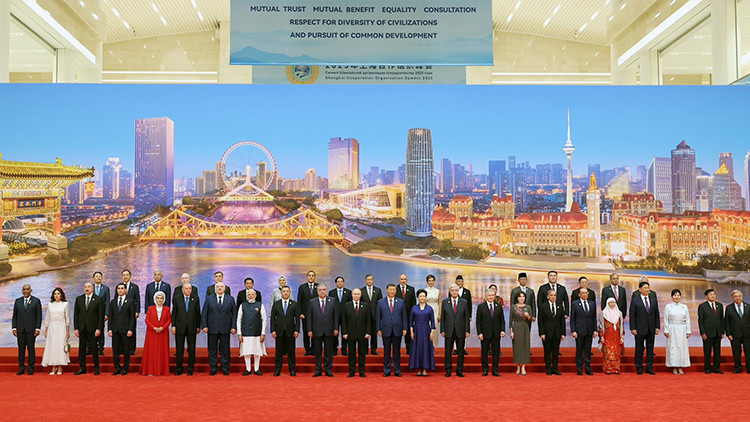

China is seizing on the unpredictability of United States foreign policy to position itself as a central convener of regional powers. The latest Shanghai Cooperation Organization (SCO) summit in Beijing brought together leaders from Türkiye, Russia, India, and several other nations. The gathering aimed to present a unified response to the shifting geopolitical environment, particularly to counter what many perceive as the erratic approach of Washington.
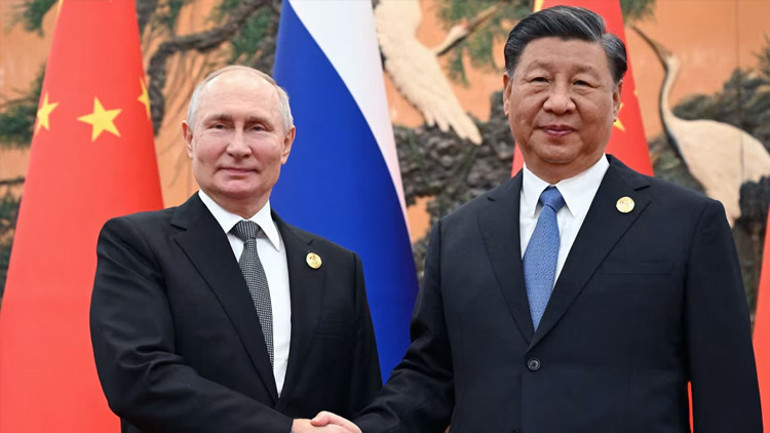
Chinese President Xi Jinping opened the summit with a strong call for solidarity, urging member states to oppose what he described as US hegemony and power politics. His remarks set the tone for discussions that underscored a growing desire among participating nations to chart a path less dependent on Western influence.
Xi’s Message of Multipolarity
Since its establishment, the SCO has promoted multilateralism, cooperation, and mutual benefit as its guiding principles. Xi emphasized that the organization has become an effective counterbalance to unilateralism by advocating inclusivity, dialogue among civilizations, and global equality.
In his speech, Xi called on members to set aside differences and strengthen cooperation to foster a more balanced multipolar world order. He also underscored the importance of an inclusive economic globalization process that ensures fairness and justice. Xi proposed the creation of an SCO development bank to bolster regional economic ties and revealed that China has already invested 84 billion dollars in member states, with an additional 1.4 billion dollars in credit to be provided over the next three years.
Putin’s Remarks and the Ukraine Conflict
Russian President Vladimir Putin addressed the summit in Tianjin, claiming that the war in Ukraine was not initiated by Russia but was instead provoked by Western-backed political shifts in Kyiv. He argued that the crisis stemmed from the West’s continuous efforts to draw Ukraine into NATO.
Putin’s comments highlighted the extent to which the Ukraine war remains a central issue in global politics, with Russia leveraging platforms like the SCO to challenge Western narratives. His stance found resonance among some member states wary of US and NATO expansion.
Modi’s Visit Signals Shifting Dynamics
One of the most notable developments during the summit was Indian Prime Minister Narendra Modi’s first visit to Beijing in seven years. According to reporting by the Washington Post, Modi’s presence underscored China’s attempt to strengthen ties with countries unsettled by US trade policies.
This diplomatic move suggests that even nations with complex relationships with China are reconsidering their strategic alignments in light of America’s unpredictable policies. For China, welcoming Modi served as both a diplomatic win and a signal of its growing ability to bridge regional divides.
The Trump Factor
The shadow of former US President Donald Trump loomed over the summit, as many discussions focused on the long-term effects of his trade tariffs and foreign policy decisions. Xi specifically criticized unilateral tariffs and positioned the SCO as a collective response to such policies.
Analysts argue that Trump’s approach inadvertently pushed nations closer together in opposition to Washington. Claus Soong from the Mercator Institute for China Studies in Berlin noted that Trump’s unpredictability helped fuel the formation of a coalition-like atmosphere among countries that might otherwise have struggled to find common ground.
Security Concerns as a Driving Force
Beyond economics, security concerns were another key theme. Zhu Yongbiao, an international relations scholar at Lanzhou University, pointed out that the forum was not explicitly designed as an anti-US bloc but acknowledged that Washington’s policies have intensified global instability.
The Russia-Ukraine conflict and turbulence in the Middle East have amplified the sense of vulnerability among member states. As a result, many see the SCO as a vehicle for fostering closer ties in the face of common security challenges.
Carla Freeman from Johns Hopkins University described the SCO as still functioning primarily as a discussion platform. However, she emphasized that it provides China with a valuable stage for building friendships and promoting an alternative vision of global order.
The Evolution of the SCO
The SCO traces its roots to 1996, when China, Russia, Kazakhstan, Kyrgyzstan, and Tajikistan formed an alliance focused on border security and economic cooperation. Initially known as the Shanghai Five, the group became the SCO in 2001 when Uzbekistan joined.
The organization has since expanded significantly. India and Pakistan became members in 2017, Iran joined in 2021, and Belarus followed in 2024, bringing total membership to ten states. Mongolia and Afghanistan currently hold observer status, while 14 other countries — including Türkiye — participate as dialogue partners.
Collectively, SCO member states account for approximately 65 percent of Eurasia’s landmass, 40 percent of the global population, and 30 percent of the world’s GDP. This scale gives the organization considerable potential influence in shaping global affairs.
Toward a New Balance of Power
The summit in Beijing reflects a broader trend of rising powers seeking to assert greater control over the international system. By emphasizing inclusivity, multipolarity, and cooperation, the SCO presents itself as a counterweight to Western-led institutions.
Still, challenges remain. Differences among member states — from border disputes to diverging economic priorities — complicate efforts at unity. Yet the shared frustration with US unpredictability provides a powerful incentive for closer collaboration.
As Xi called for deeper solidarity and Putin pushed back against Western influence, the SCO demonstrated its ambition to become more than just a regional alliance. Whether it can translate that ambition into tangible geopolitical influence will depend on its ability to maintain cohesion and deliver results for its diverse membership.
Editor’s Note: The Beijing summit underscores a shifting world order in which the SCO is emerging as a platform for alternative visions of global governance. While it may still function primarily as a forum for dialogue, its growing membership and shared goals reflect the increasing momentum toward a multipolar world.