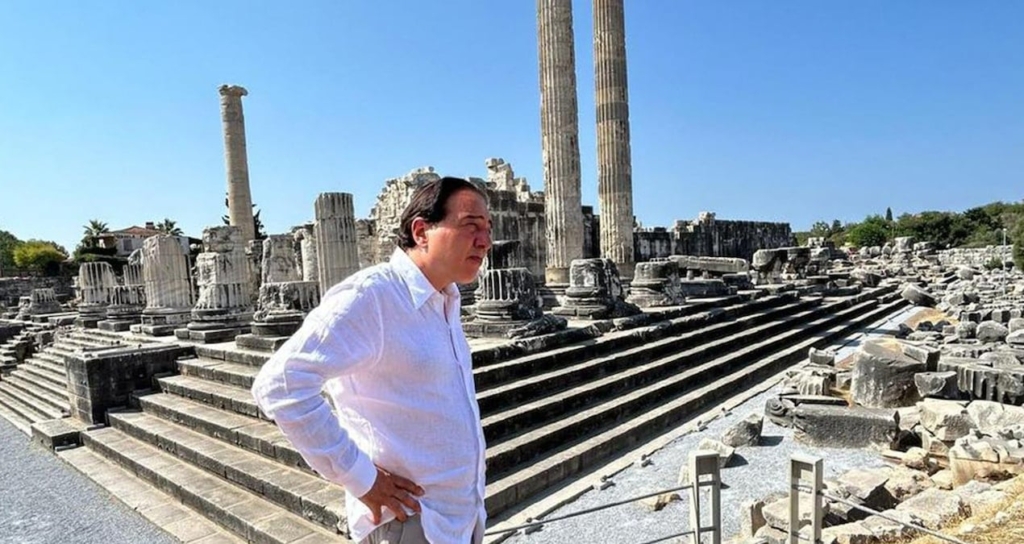

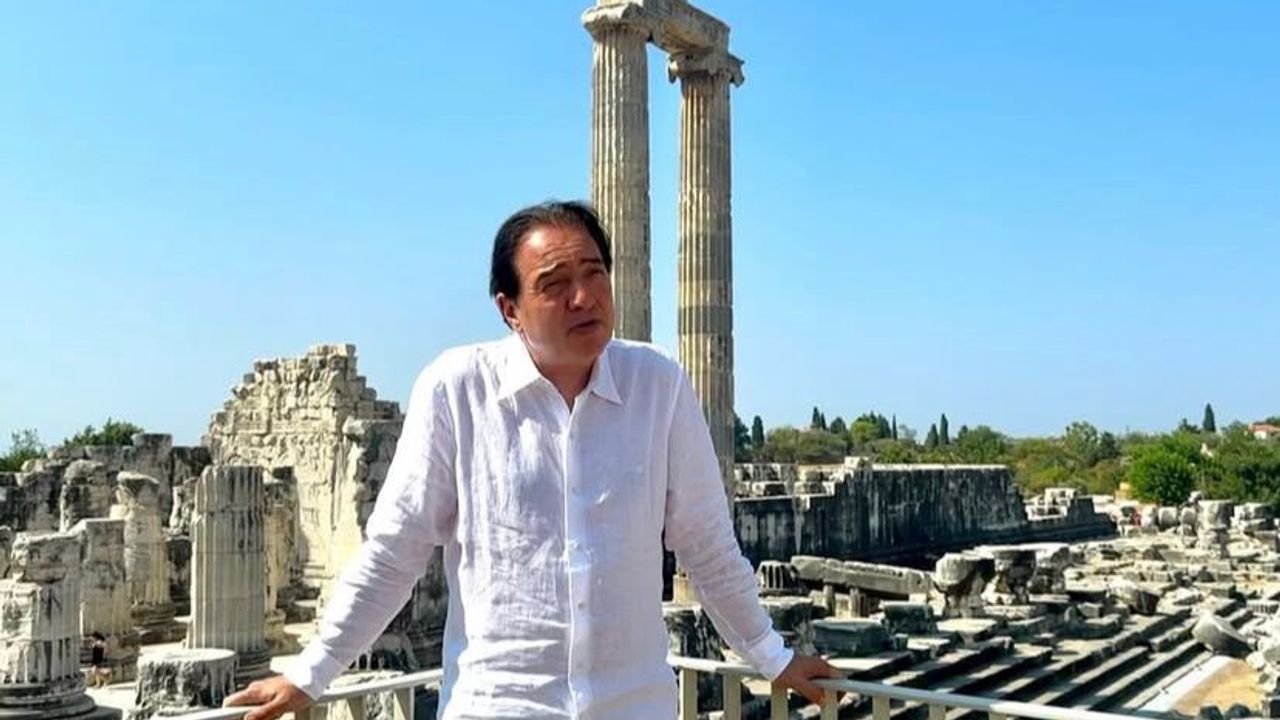
World-renowned Turkish pianist and composer Fazıl Say recently visited the iconic Apollon Temple in Didim, sharing his admiration for the ancient site and suggesting that the experience might inspire a future composition. Say, known for blending classical music with Anatolian themes, expressed his fascination with Türkiye’s rich cultural heritage during a personal trip to the Aegean town.
In a statement posted on his official social media account, Say wrote:
“During the wonderful days we spent in Didim, I had the chance to revisit the Apollon Temple after many years. Who knows? I’m deeply intrigued by the ancient history of Anatolia. Perhaps, one day, a composition inspired by the Apollon Temple will emerge.”
A Composer Drawn to History
Fazıl Say has long incorporated Anatolian culture and history into his musical repertoire, with works such as “Istanbul Symphony”, “Troy Sonata”, and “1001 Nights in the Harem”. His recent visit to one of Anatolia’s most significant archaeological landmarks is another sign of his continuous engagement with the region’s ancient legacy.
Located in Aydın’s Didim district, the Apollon Temple is one of the best-preserved examples of classical Greek architecture in Türkiye. Dedicated to the god Apollo, the sanctuary once served as an important oracle center, rivaling even the famous Delphi in Greece.
Music and Heritage Intertwined
Say’s subtle mention of a potential “Apollon Tapınağı bestesi” (Apollon Temple composition) has already generated excitement among fans and classical music enthusiasts. Known for transforming historical and cultural motifs into deeply emotional and dynamic musical pieces, Say’s possible homage to the temple could become yet another cultural bridge between Türkiye’s antiquity and its contemporary art scene.
The idea of honoring the Apollon Temple in music also echoes Say’s lifelong mission of bringing Anatolia’s stories to global stages through piano and symphonic expression.
A Timeless Source of Inspiration
The Apollon Temple, with its towering columns and mythological depth, continues to captivate artists, historians, and travelers alike. Fazıl Say’s visit serves as a reminder of how Türkiye’s ancient landmarks still fuel modern creativity and dialogue.
Whether or not a composition materializes from this visit, the mere suggestion enriches the cultural conversation around how music and heritage can intersect. Until then, Say’s fans—and lovers of Anatolian history—will eagerly await what melodies might one day rise from the ruins of Didim.