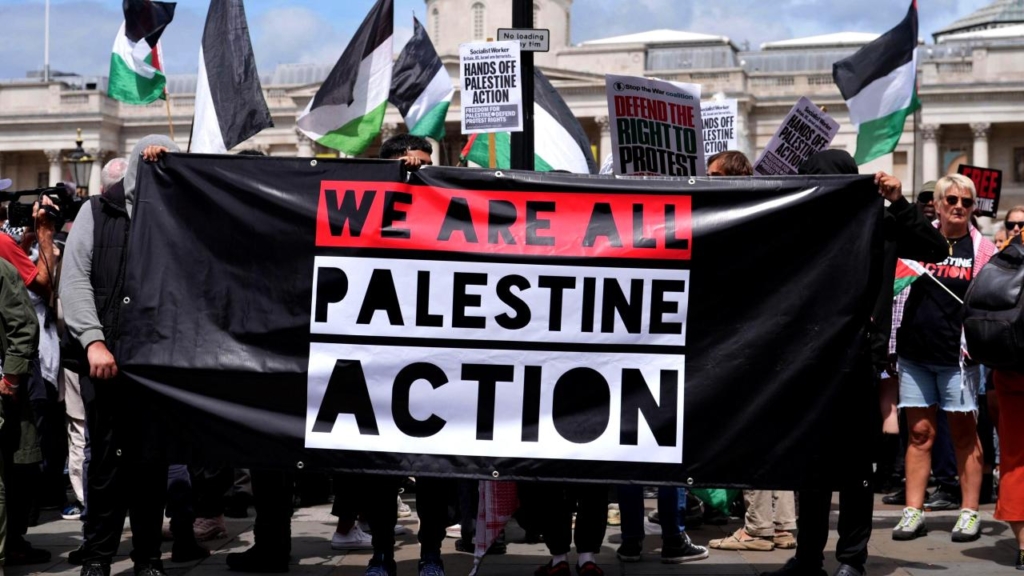

Hundreds of demonstrators gathered at London’s Parliament Square to protest the UK government’s ban on the activist group Palestine Action, which was officially designated a terrorist organization last month. The protest began at 1:00 p.m. local time, drawing attention to the group’s history of direct action against companies linked to Israel.
Protesters arrived with blank placards and markers, writing the slogan “I am against genocide, I support Palestine Action”. The act was intended as a symbolic defiance against the government’s crackdown, but it quickly drew the attention of the London Metropolitan Police.
Mass Arrests Following Ban Enforcement
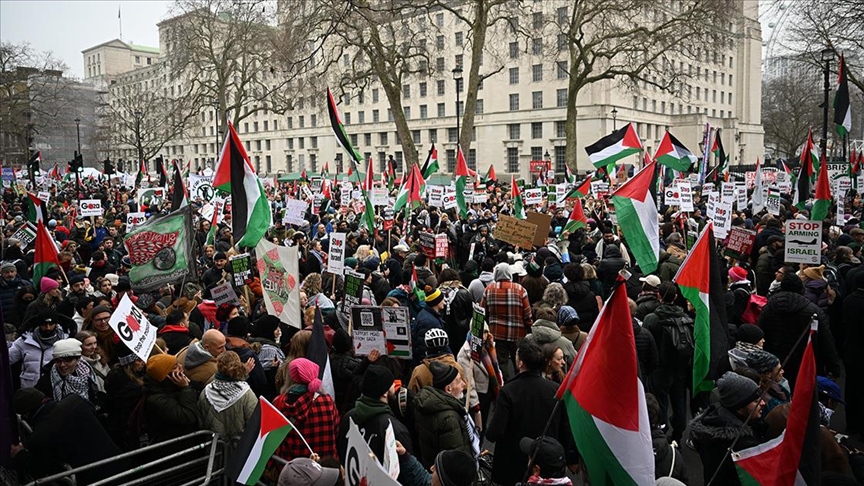
The Metropolitan Police reminded protesters that Palestine Action is now classified as a prohibited organization under UK law. By 6:00 p.m., authorities reported that 365 people had been arrested for expressing support for the banned group.
An additional seven individuals were detained on other charges, including five for allegedly assaulting police officers. Authorities cited a prior warning issued on August 5, stating that mass arrests would be carried out if people gathered in public to support the group.
Why Palestine Action Was Banned
Founded in 2020, Palestine Action gained prominence after the escalation of Israeli military operations in Gaza following October 7, 2023. The group is known for high-profile disruptions targeting facilities and companies linked to Israel’s defense industry.
Notably, the group’s activists halted drone production at Elbit Systems’ factory in Bristol in 2023 and caused an estimated £1 million in damages at Thales’ submarine parts manufacturing facility in Glasgow.
The turning point came on June 20, when activists entered the Royal Air Force’s Brize Norton airbase in Oxfordshire. They sprayed red paint on the engines of two British military aircraft, claiming the planes were used in Middle Eastern operations. They also placed a Palestinian flag at the site.
Following the incident, Home Secretary Yvette Cooper proposed legislation to add Palestine Action to the UK’s list of proscribed terrorist organizations, alongside two far-right extremist groups operating in Europe.
The proposal passed the House of Commons on July 2 and the House of Lords on July 3. A subsequent appeal by the group to the High Court to overturn the decision was rejected on July 4. The ban officially took effect on July 5.
Legal Consequences of the Ban
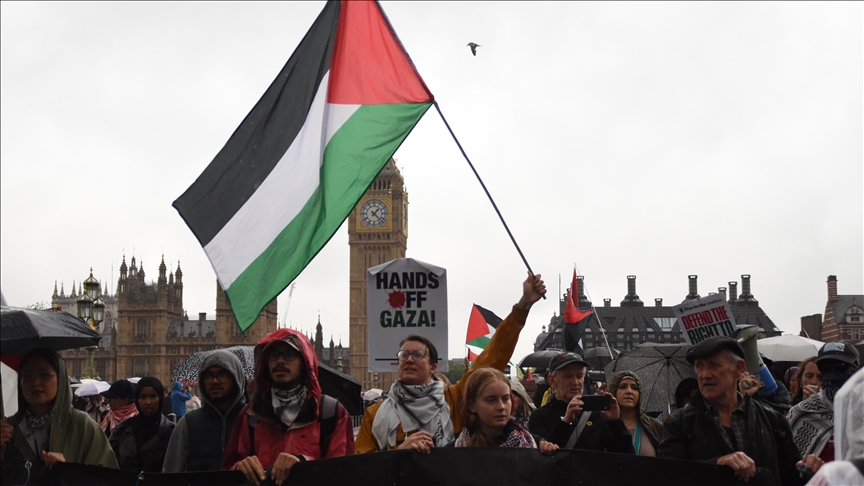
Under UK anti-terror legislation, membership in or public support for Palestine Action can lead to prison sentences of up to 14 years. Wearing clothing or accessories displaying the group’s name could result in up to six months in jail.
Since the ban took effect, hundreds of supporters have been arrested across the country. Many activists have criticized the government’s move, claiming it criminalizes political dissent and suppresses advocacy for Palestinian rights.
A Divisive Debate on Civil Liberties
The mass arrests in London have intensified the debate over the balance between national security and freedom of expression. Supporters of the ban argue that Palestine Action’s tactics — which include trespassing, property damage, and industrial disruption — go beyond peaceful protest and threaten public safety.
Critics counter that the group’s actions are a form of civil disobedience aimed at exposing what they see as the UK’s complicity in human rights violations in Gaza. Human rights organizations have expressed concern that the broad scope of the ban could set a precedent for criminalizing non-violent activism.
The incident has also sparked international attention, with observers noting that the UK’s approach contrasts sharply with other European countries, where pro-Palestinian activism remains largely legal.
What Comes Next
With the ban firmly in place, legal experts expect a rise in court cases challenging arrests under the new rules. Activists have vowed to continue their work through decentralized networks, potentially under different names to circumvent legal restrictions.
Meanwhile, the UK government is under pressure to justify the severity of the ban amid growing scrutiny of its stance on the Israel–Palestine conflict. As arrests continue, the clash between state authority and activist movements shows no sign of easing.