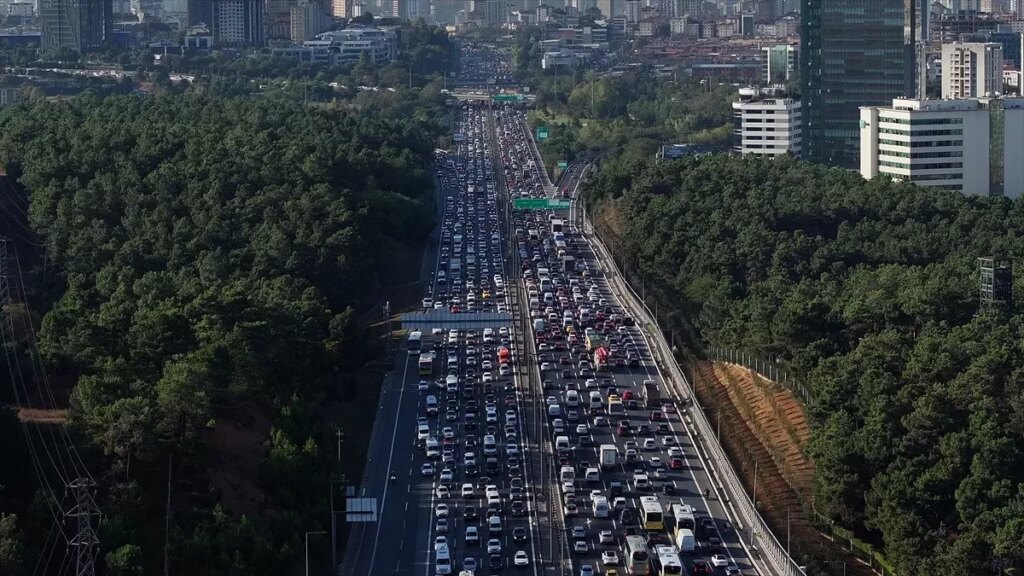

The second working day of the week brought familiar congestion to Istanbul, as the reopening of schools combined with the regular morning commute to create significant traffic delays across both the European and Asian sides of the city. With the 2025–2026 academic year having started yesterday, roads, bridges and public transport systems were pushed to their limits once again.
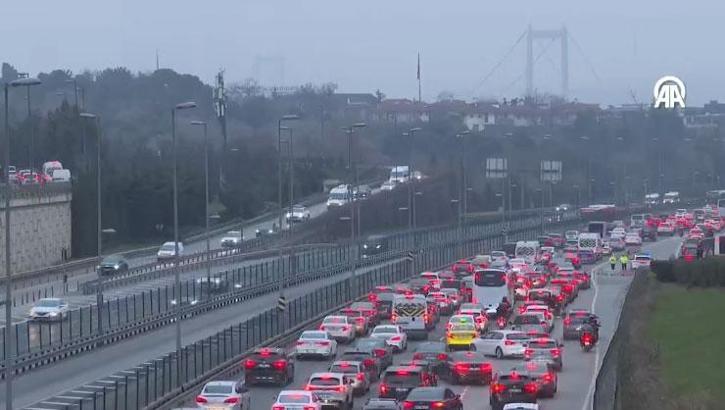
Congestion Across Bridges and Major Highways
From the early hours, traffic built up on the city’s main arteries as students and office workers headed out simultaneously. On the 15 July Martyrs Bridge, congestion stretched back to Uzunçayır, while on the Fatih Sultan Mehmet Bridge, traffic extended all the way to Kozyatağı. An additional complication arose in Beykoz’s Elmalı district, where a vehicle breakdown worsened bottlenecks in the area.
The D-100 highway in the direction of Edirne was particularly problematic, with congestion starting from Kartal Cevizli and continuing heavily through Bostancı, Kozyatağı, Göztepe, Uzunçayır and the approach to the Eurasia Tunnel.
In the opposite direction, traffic slowed in Uzunçayır and Göztepe, while between Bostancı and Maltepe vehicles moved at a crawl, and between Kartal and Pendik conditions were described as heavy but flowing.
On the TEM Highway, drivers faced delays from Sancaktepe through the Çamlıca toll booths and on to Altunizade.
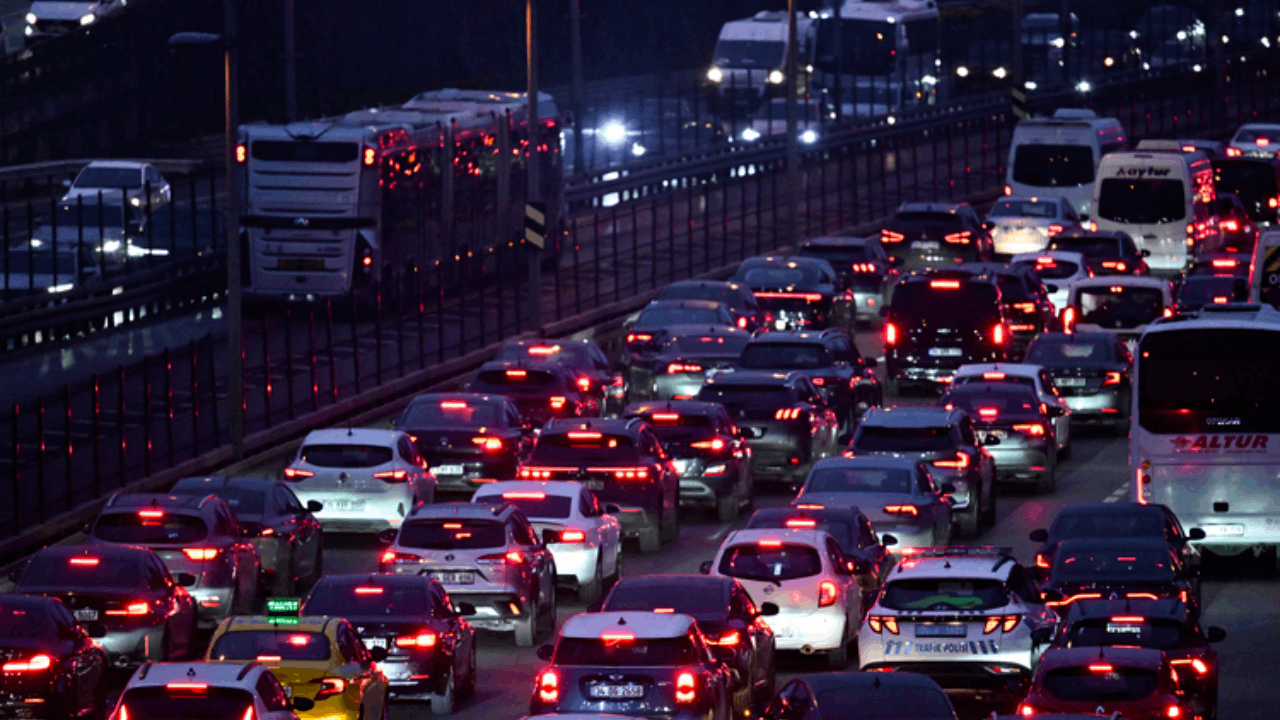
Asian Side Traffic Peaking at 76 Percent
According to Istanbul Metropolitan Municipality’s (İBB) mobile traffic map, congestion levels on the Asian side peaked at 76 percent, reflecting the heavy load on the D-100 and TEM routes.
Meanwhile, on the European side, drivers also experienced significant delays. On the D-100 highway heading toward Ankara, vehicles slowed to a crawl in Avcılar, Yenibosna, Zeytinburnu, Cevizlibağ, Haliç Bridge, Çağlayan, Okmeydanı and Mecidiyeköy. The TEM Highway in the direction of Ankara also experienced sluggish traffic in Bahçeşehir and Gaziosmanpaşa.
Public Transport Strained
Commuters turning to public transport in an attempt to avoid gridlock found little relief. Metro, bus and especially metrobus stations—already key transfer hubs—were overcrowded during peak hours. Images and reports showed long queues and packed vehicles, with many passengers enduring extended waits.
Citywide Congestion Index
Overall, Istanbul’s traffic congestion index was measured at 62 percent during the morning rush. While the European side recorded 53 percent congestion, the Asian side—home to a large share of the city’s schools—saw rates climb much higher, underlining the added strain brought by the new school year.
Editorial Note
The beginning of the academic year has once again highlighted the challenges of urban mobility in Istanbul, where nearly 16 million residents juggle daily routines in one of the world’s busiest metropolises. The return to full schedules after the summer break underscores the urgency of long-term solutions, from infrastructure improvements to expanded public transport. For now, though, residents must continue to navigate a city where morning commutes remain a test of patience.