
A powerful 8.8 magnitude earthquake struck off the coast of the Kamchatka Peninsula, shaking the Pacific region and prompting immediate tsunami warnings across multiple countries, including the United States, Japan, Hawaii, and Alaska. According to data from the United States Geological Survey (USGS), the quake occurred at a shallow depth of just 19 kilometers beneath the ocean floor, increasing its potential to trigger widespread seismic waves and coastal damage.
In the hours following the quake, the first tsunami waves began reaching shorelines, prompting mass evacuations and renewed concerns over the fragile balance of marine ecosystems already under pressure from climate change and ocean disturbances.
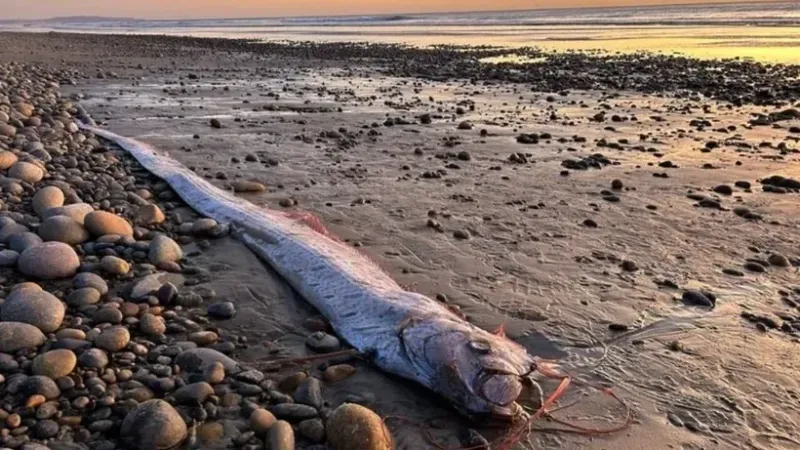
Tsunami Warnings Activate Across the Pacific Rim
The shallow nature of the earthquake raised immediate red flags for coastal regions. In the United States, tsunami alerts were issued along the West Coast, and civil defense agencies in Hawaii and Alaska began implementing emergency protocols. Japan, with its robust disaster preparedness infrastructure, responded quickly, urging residents in coastal towns to evacuate inland.
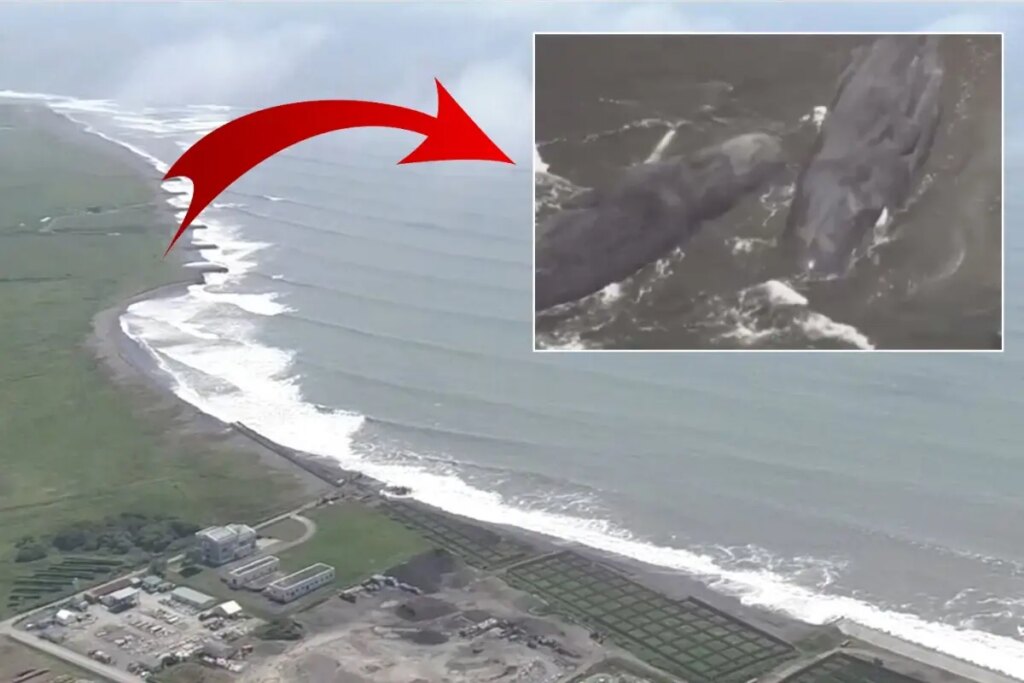
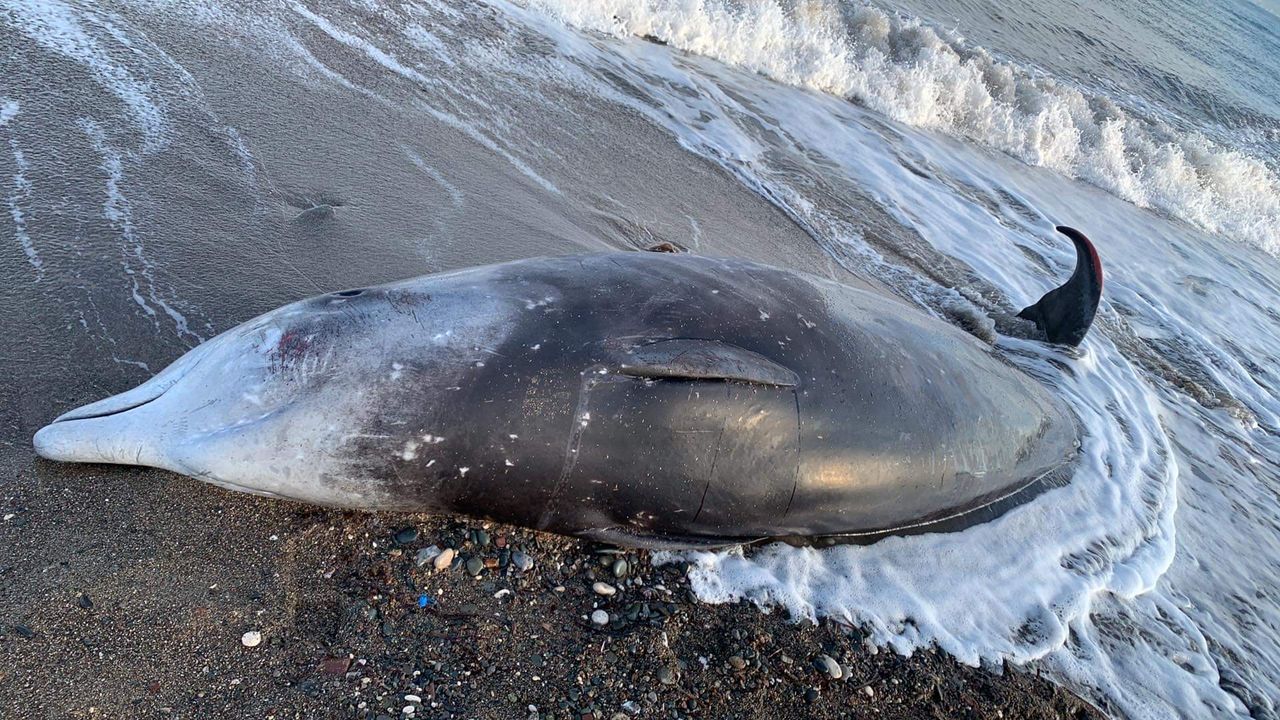
As seismic waves traveled outward through the Pacific Ocean, the Japanese Meteorological Agency and local broadcasters began live coverage of the unfolding situation. Among the more unusual yet alarming developments was the sudden appearance of stranded whales on Japanese beaches, most notably in the coastal town of Tateyama, located in Chiba Prefecture.
Whales Wash Ashore in Japan Following Tsunami Alert
Residents of Tateyama were stunned to find multiple whales washed ashore as tsunami warnings were still active. The footage, broadcast live on Japanese national television, captured the gravity of the moment as volunteers and authorities scrambled to assess the scene.
Marine biologists and environmental scientists were quick to comment on the phenomenon. According to experts, whales can become disoriented by rapidly shifting water levels and powerful undercurrents generated by an incoming tsunami. While these large mammals are usually unaffected by tsunami waves in deep ocean waters, their behavior changes significantly as they approach shallow coastal zones.
The Science Behind Whale Strandings and Tsunami Activity
Whale strandings during seismic events are not new, but they remain complex and poorly understood. In this instance, scientists explained that the whales likely became trapped in nearshore shallows due to the receding effect that precedes a tsunami wave.
As the ocean water is pulled outward, the seabed becomes exposed in many coastal regions. Whales that were swimming close to shore may find themselves caught in dangerously low waters, unable to escape before the tsunami surge hits. The disruption to their natural sonar and navigation systems, already sensitive to underwater anomalies, may further contribute to their disorientation.
This phenomenon offers yet another sobering reminder of the ripple effects of seismic events—not just for human populations, but for marine life as well.
Evacuations Underway and Coastal Monitoring Intensifies
Back in Japan, evacuation procedures were well underway in several prefectures as government officials urged people to move to higher ground. Coastal monitoring systems tracked the incoming waves in real time, and emergency shelters began receiving residents in at-risk areas.
Meanwhile, in the United States, tsunami watches and warnings extended from California to Oregon and Washington. Emergency alerts were broadcast through mobile networks, radio, and TV, while coast guard and disaster response teams were placed on high alert.
In Hawai’i, authorities closely monitored wave movement through deep-ocean tsunami detection buoys. Similar precautions were being taken in Alaska, where vulnerable coastal villages remain at particular risk.
Environmental and Ecological Impacts Still Unfolding
While human safety remains the immediate priority, environmental experts caution that the full ecological impact of the quake and tsunami may take weeks to understand. Seismic events of this magnitude can alter seafloor topography, displace sediment, and disturb marine habitats in irreversible ways.
The stranding of whales, while highly visible, may only be one of many signs of deeper marine disruption. Coral reefs, fish nurseries, and plankton-rich zones can all suffer damage from changes in ocean currents and temperature that follow such undersea earthquakes.
Moreover, if the tsunami results in coastal flooding, there is also the risk of contamination from industrial runoff, sewage, and debris—threatening not just marine life but also human health in the aftermath.
Türkiye’s Role in Monitoring Global Seismic Events
Although Türkiye is geographically distant from the Pacific Ring of Fire, the country’s scientific institutions and disaster agencies closely follow developments in global seismic activity. As a nation prone to earthquakes itself, Türkiye has developed sophisticated early-warning systems and collaborates with international networks like the Pacific Tsunami Warning Center (PTWC).
Scientists and policymakers in Türkiye often study the Pacific region to improve their understanding of seismic behavior and to enhance domestic resilience strategies. The data from events such as the Kamchatka earthquake are valuable for forecasting and modeling, even for regions that might not be directly affected.
Call for Greater Global Preparedness and Marine Protection
As the world grapples with increasing natural disasters—many exacerbated by climate change—experts are calling for a more integrated approach to disaster management. This includes not only building resilient infrastructure for human populations but also implementing protections for marine ecosystems.
Marine conservation groups are urging governments to invest in sonar-safe zones and tsunami buffer strategies that protect both wildlife and coastlines. There is also a push for international scientific cooperation to improve predictions of marine animal behavior in response to seismic activity.
The recent earthquake near Kamchatka is a stark reminder that the Earth’s natural forces remain powerful and unpredictable. As technology advances, so too must our collective capacity to respond, adapt, and protect both people and the planet.