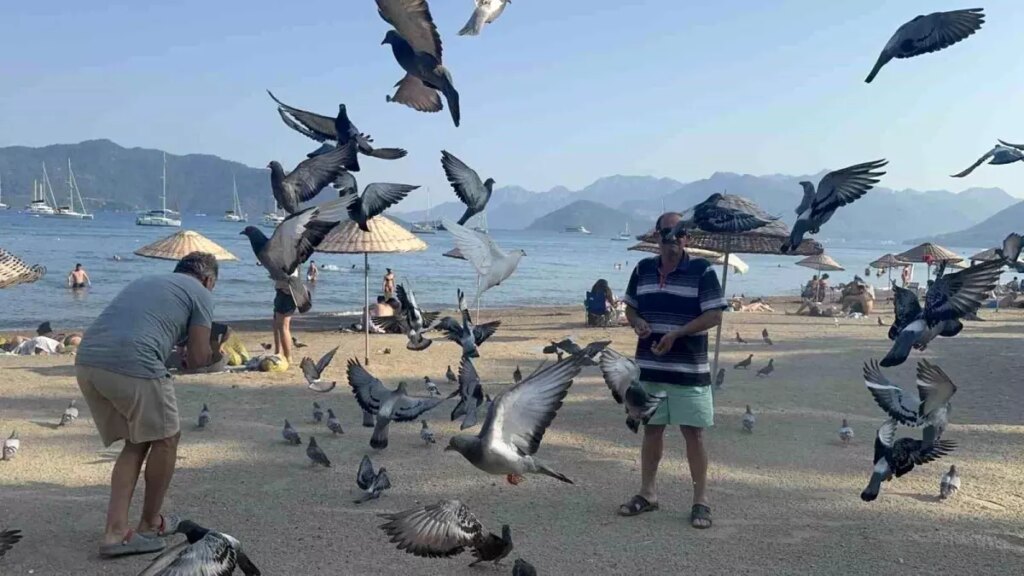

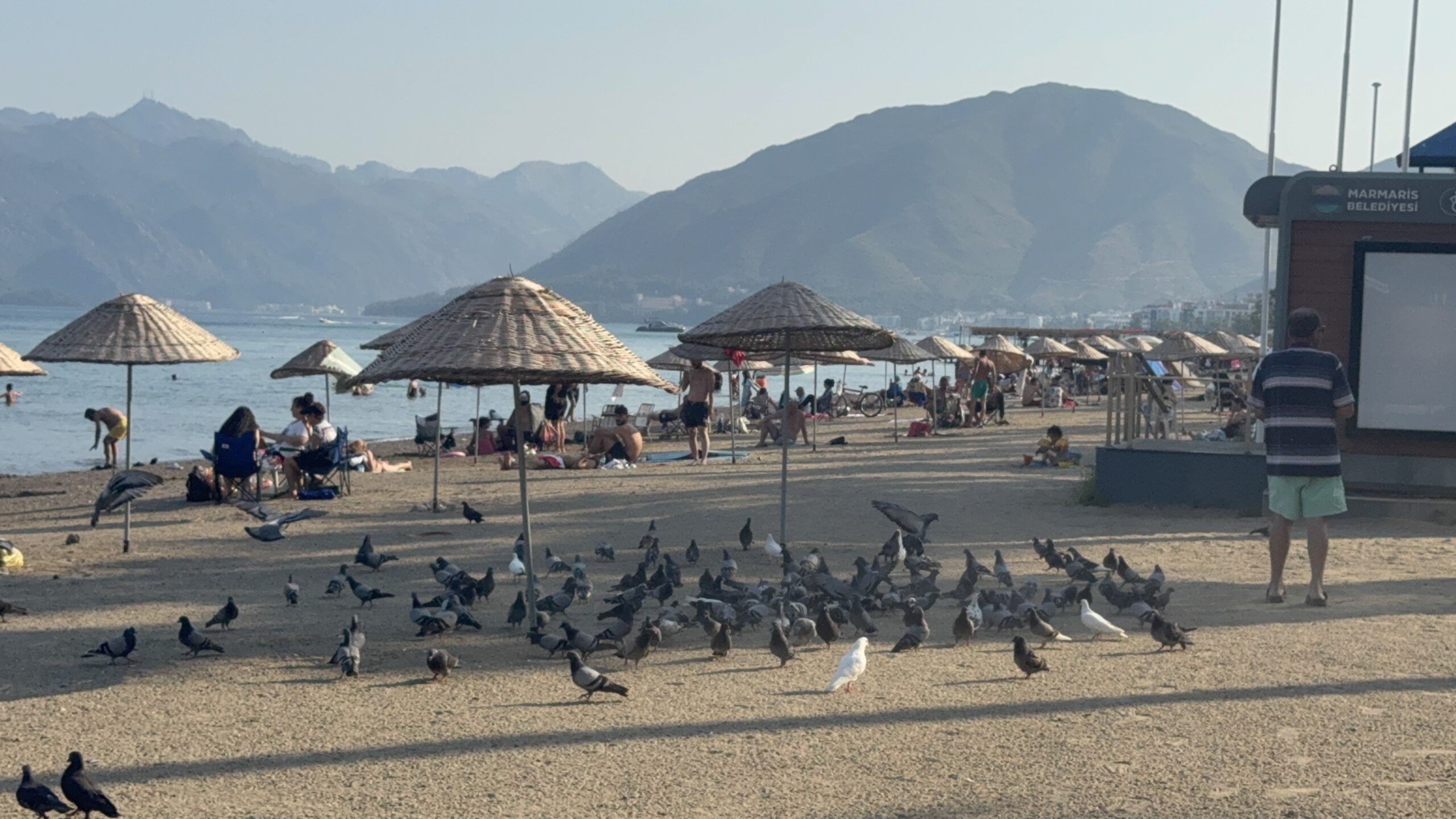
In the coastal town of Marmaris, located in the picturesque southwestern corner of Türkiye, the Halk Beach has become more than just a sunbathing and swimming destination. It is home to an unexpected yet heartwarming presence that has captivated both residents and visitors alike—the doves of Marmaris.
Through every season, rain or shine, these gentle birds gather along the shoreline, forming a daily ritual that has become a cherished part of the town’s identity. What makes this phenomenon truly special is not just the birds themselves, but the deep bond of care established between them and the local community.
A Daily Gathering That Goes Beyond Feeding
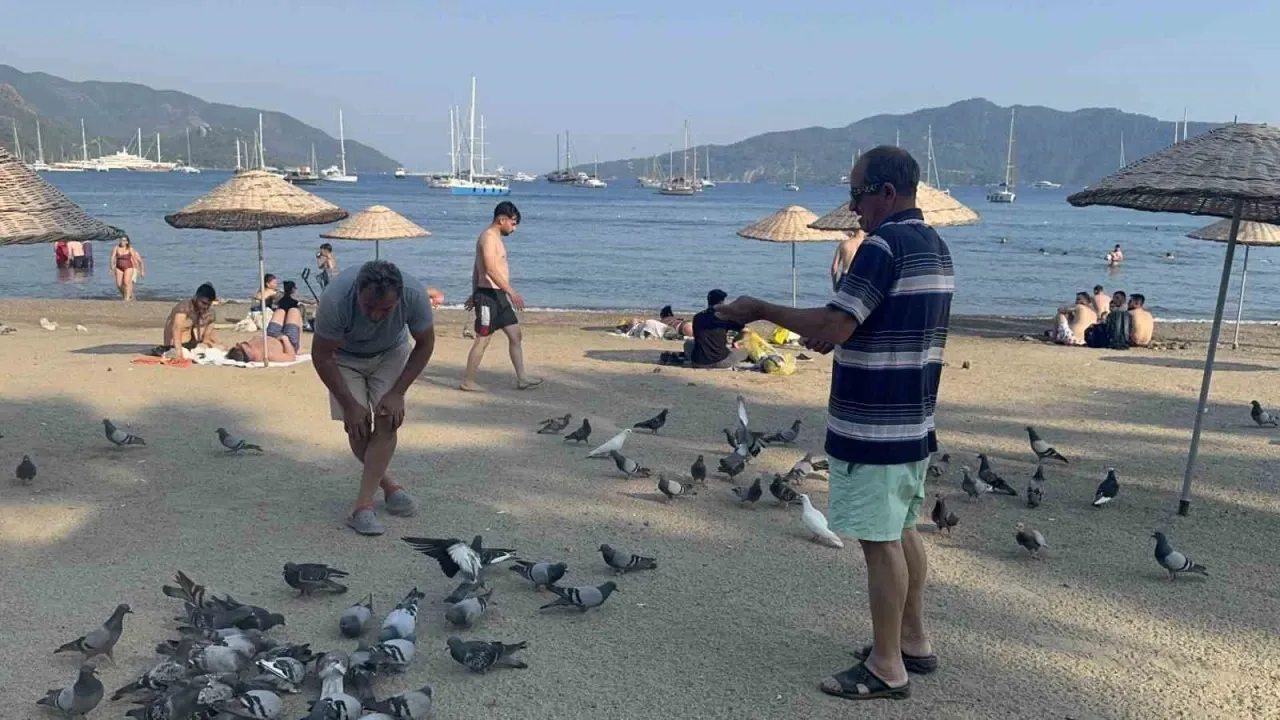
Every day, often at the same hours, caring citizens from Marmaris arrive at the Halk Beach with small bags of wheat, breadcrumbs, or birdseed. But their interaction with the doves is far more meaningful than a simple act of feeding. For many, it is a spiritual routine, a moment of connection with nature, and a quiet act of kindness in a busy world.
The doves, familiar with the regular visitors, descend from nearby trees and rooftops to join the daily feast. Some fly in with grace, others hobble across the warm sand, their wings brushing the air with a softness that complements the sea breeze.
Challenges Faced by Urban Wildlife
Despite the idyllic scenes, the doves of Marmaris face serious and often invisible dangers. The beach, like many public spaces, is not immune to the byproducts of human activity. Fishing lines, plastic strings, metal scraps, soda can lids, and chewing gum pose real threats to these birds.
In particular, entanglement with discarded fishing lines and wires around their feet can cripple them. Others suffer from foreign objects glued to their wings, making flight nearly impossible. Such injuries can leave birds vulnerable to further harm or starvation.
These challenges reflect a broader issue of urban wildlife suffering from pollution and a lack of environmental awareness. However, in Marmaris, the story does not end with neglect.
Local Heroes Step Up to Protect the Doves
The people of Marmaris, especially those who frequent Halk Beach, have become guardian angels for these birds. Residents routinely inspect the flock, gently approaching injured doves to offer assistance. Some bring small scissors to cut away tangled string, while others carry antiseptic wipes and makeshift splints.
“They are the most beautiful ornaments of our beach,” one local resident said.
“Some have fishing lines wrapped around their legs, others cannot fly. We try to help every time we can. This beach is not just for humans—it belongs to them too.”
Such statements reflect a growing environmental consciousness among the Turkish public, one that sees humans and animals as co-inhabitants rather than separate entities.
A Lesson in Coexistence and Civic Responsibility
The relationship between the people of Marmaris and their local dove population offers a powerful example of coexistence. Instead of viewing urban wildlife as a nuisance, residents have chosen to embrace and care for the animals sharing their public spaces.
This practice is not only about compassion, but also about instilling a sense of responsibility in future generations. Children often accompany their parents during feeding routines, learning firsthand about empathy, environmental care, and community spirit.
Such small-scale, community-driven actions can have a ripple effect, inspiring other towns in Türkiye and around the world to take similar steps.
Marmaris Doves as an Environmental Indicator
Ecologists often refer to urban birds as indicators of environmental health. A thriving bird population can signify a balanced ecosystem, while injured or vanishing flocks may point to pollution and ecological imbalance.
The situation in Marmaris is a double-edged message. On one hand, the presence of so many doves shows that the coastal ecosystem still supports life. On the other hand, the frequency of injuries signals an urgent need for better waste management, stricter littering controls, and public education.
Supporting Wildlife Through Local Policies and Community Action
Municipalities across Türkiye have been slowly integrating animal welfare policies into urban planning. Marmaris, with its already-engaged population, is ideally positioned to become a model town for wildlife-friendly urban spaces.
Potential future initiatives could include:
Installing educational signage about not littering and the dangers of plastic
Providing designated feeding stations with bird-safe food
Organizing volunteer bird monitoring teams
Collaborating with wildlife rescue organizations for injured birds
Hosting school programs that connect children to nature
These small but meaningful actions could further enhance the community’s role in protecting urban wildlife.
A Reflection of Turkish Culture and Kindness
The story of Marmaris’ doves also mirrors a deeper cultural trait. Türkiye, as a nation, has a long history of showing kindness to animals. From historic fountains built specifically for birds and stray animals during the Ottoman era to contemporary animal shelters and feeding programs, compassion toward living beings is rooted in Turkish identity.
This makes the efforts of Marmaris residents not an exception, but a continuation of a legacy—a quiet but steadfast commitment to respecting life in all forms.
Building a Future Where All Creatures Belong
What is happening in Marmaris is more than a local story. It is a microcosm of what is possible when humans view animals not as intrusions but as partners in the urban experience. The daily rituals on Halk Beach show that compassion can thrive even in small, ordinary moments.
By nurturing these doves, the people of Marmaris are also nurturing values—empathy, responsibility, and harmony—that are urgently needed in a world struggling with environmental decline and social division.
This story serves as a reminder that every town, beach, and neighborhood can choose to be a place where all creatures—winged or not—are welcomed, protected, and cherished.