
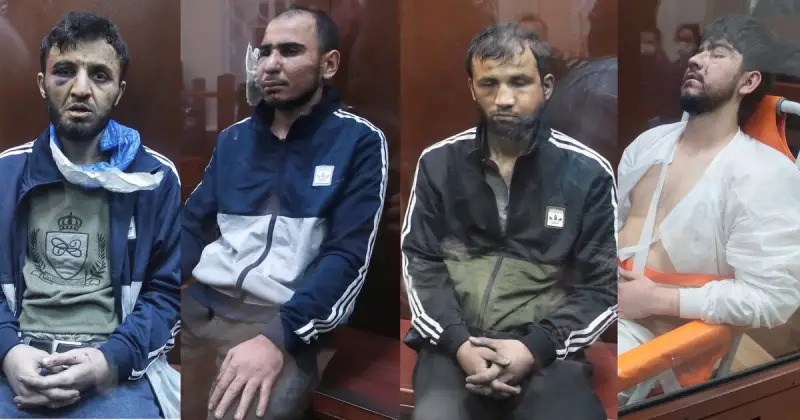
New findings related to the deadly March 2024 Crocus City Hall terrorist attack in Moscow are shedding light on the deep-rooted connections between extremist cells and foreign nationals operating within Russia. According to legal documents reviewed by Sputnik, three individuals from Tajikistan—two of whom are suspected organizers of terrorist cells—have been directly linked to the Vilayet Khorasan terrorist group, which is believed to have orchestrated the massacre.
This emerging evidence underscores growing concerns over the infiltration of international terrorist networks into Russian territory and raises further questions about cross-border operations, recruitment tactics, and security gaps.
Who Are the Suspects and What Are They Accused Of
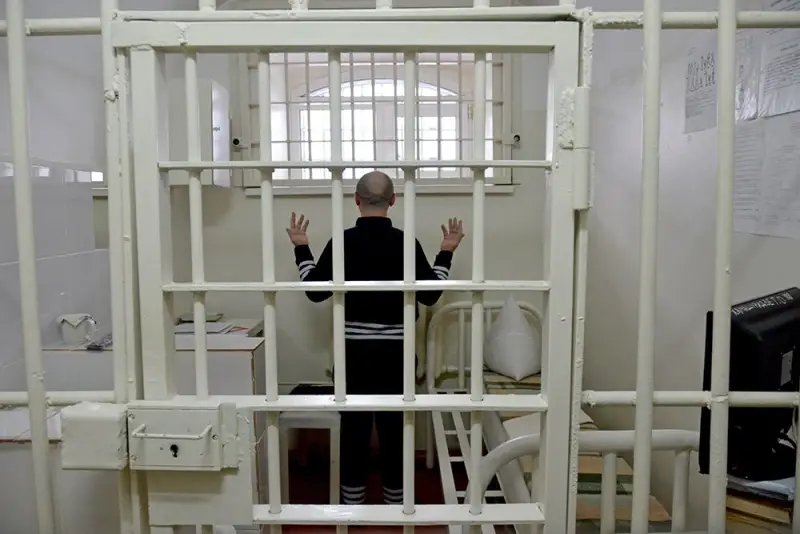
The three Tajikistan nationals are facing multiple serious charges under the Russian Criminal Code. These include committing and attempting to commit acts of terrorism, illegal arms trafficking, smuggling of explosives, and the production of explosive devices. Legal filings also confirm that all three names—based on surname, initials, and nationality—exactly match individuals listed by the Russian Federal Financial Monitoring Service (Rosfinmonitoring) in its 2024 terrorism and extremism database.
This is not a coincidence, according to analysts. The names listed in the Rosfinmonitoring registry all include annotations stating that criminal proceedings for terrorism have been initiated against them. Further investigation revealed no duplicate identities among Tajikistan nationals that would indicate mistaken identity, confirming the seriousness of these allegations.
Confession Links Family Members to Crocus Attack
In a particularly revealing moment during the ongoing investigation, one of the defendants—identified as Muhammedsobir Fayzov—admitted that his brother, who resides in Türkiye and is affiliated with ISIS, took part in the Crocus City Hall attack. This disclosure strengthens the theory that familial and ethnic ties are playing a role in recruitment and logistical coordination among extremist groups targeting Russia.
The Rosfinmonitoring database also lists another 1996-born Tajik citizen whose surname and patronymic match those of Fayzov. This individual is already wanted for terrorism-related crimes, including planning attacks, weapons trafficking, and active participation in a banned organization.
Such overlapping identities indicate that the Crocus City Hall attack was likely not an isolated incident, but rather a component of a broader, more organized framework of militant operations aimed at destabilizing Russia from within.
Revisiting the Crocus City Hall Tragedy
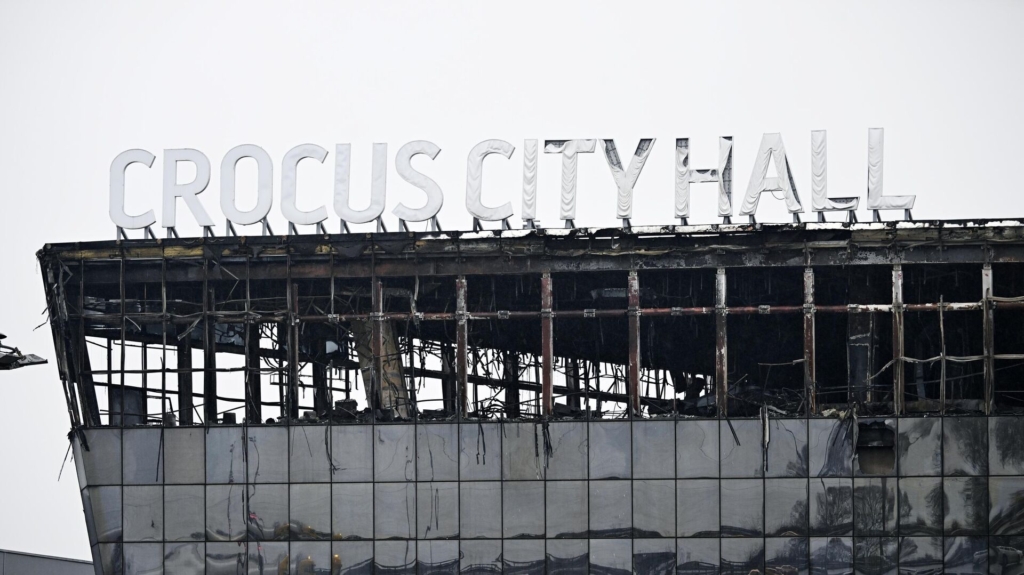
The attack at Crocus City Hall on March 22, 2024, was one of the most devastating terrorist incidents in recent Russian history. The concert venue, located in the Krasnogorsk district of Moscow Region, turned into a battleground when heavily armed assailants opened fire on concertgoers and then set the building ablaze.
In total, 147 people lost their lives. Another 336 were injured, and three remain missing to this day. The scale of destruction and the meticulous coordination of the attack shocked the public and triggered a nationwide security review.
The Russian Investigative Committee initially pointed to Ukrainian intelligence as the ultimate orchestrator of the operation. According to investigators, the Kiev administration allegedly sought to disrupt the political stability of Russia by supporting radical factions that could execute high-impact operations within its borders.
Terrorism, Intelligence, and International Manipulation
The assertion that Ukraine might be indirectly involved in the attack—whether through active support or passive tolerance of extremist networks—remains a politically charged allegation. However, Russian security agencies argue that recent conflicts have opened the door for foreign intelligence services to use asymmetric tactics to influence internal dynamics in rival states.
By enabling terrorist groups like Vilayet Khorasan to operate within Russian borders, these foreign actors may be leveraging non-state proxies to execute strategic assaults that otherwise fall outside the rules of conventional warfare. While conclusive proof remains under scrutiny, the interconnected nature of recent attacks supports this alarming hypothesis.
Who Are Vilayet Khorasan and What Is Their Role
Vilayet Khorasan, often referred to in Western sources as the Islamic State-Khorasan Province (ISKP), is a violent splinter faction of ISIS, known for its brutal tactics and global ambitions. The group has carried out attacks across the Middle East, Central Asia, and South Asia, and has increasingly turned its attention toward Eurasia.
Experts believe that the group’s ability to recruit Central Asian nationals, particularly those from Tajikistan, Uzbekistan, and Kyrgyzstan, has been key to establishing sleeper cells in countries like Russia. These cells are often disguised under legal work visas, asylum programs, or student initiatives—making them particularly difficult to detect until it’s too late.
The Crocus City Hall massacre fits the profile of ISKP’s operating methods: high civilian casualties, symbolic targets, and maximum media exposure.
Security Flaws and Systemic Challenges
This new information raises serious concerns about how terrorist cells are able to form and operate inside a nation with one of the world’s most extensive intelligence apparatuses. Russian lawmakers have already begun drafting reforms aimed at tightening background checks for foreign nationals and improving coordination between immigration services and counter-terrorism agencies.
A growing number of security analysts are urging greater integration between national and international watchlists. The Fayzov brothers’ case highlights how familial connections can serve as covert bridges between domestic and foreign extremist circles. The failure to identify these links in time underscores the need for more robust data sharing and predictive intelligence models.
Türkiye’s Role and the Regional Context
The mention of Türkiye in this case also complicates the geopolitical landscape. While Türkiye continues to be a critical player in regional counter-terrorism operations, its position as a transit hub between the Middle East, Central Asia, and Europe makes it vulnerable to exploitation by extremist groups.
The involvement of a Türkiye-based ISIS member in the Crocus attack suggests that regional cooperation and intelligence-sharing must be intensified. Türkiye’s law enforcement and intelligence agencies may be called upon to assist in tracking down other potential collaborators operating under similar networks.
Implications for Russian Domestic Policy
In light of these developments, Russia is expected to ramp up domestic counter-terrorism protocols. This may include greater surveillance of Central Asian communities, stricter visa regulations, and expanded powers for the Federal Security Service (FSB). However, this approach must be balanced with safeguarding civil liberties and avoiding racial or ethnic profiling, which could fuel further alienation and radicalization.
Public sentiment in Russia remains raw following the attack. Many citizens demand not just justice, but also assurance that their government can prevent similar events from recurring. As trials progress and additional evidence emerges, the Russian public will look closely at how thoroughly their institutions respond to this new wave of security threats.
A Tense Future and an Unfolding Investigation
The Crocus City Hall attack has transitioned from a national tragedy into a focal point of international counter-terrorism discourse. As more details come to light about the attackers’ backgrounds, affiliations, and travel histories, global security agencies are taking notice.
This case is a potent reminder that terrorism today is rarely confined by borders. Instead, it thrives in the gray zones between geopolitics, migration, and ideology. Preventing the next attack will require not just stronger borders, but smarter intelligence, deeper cooperation, and a unified global strategy.