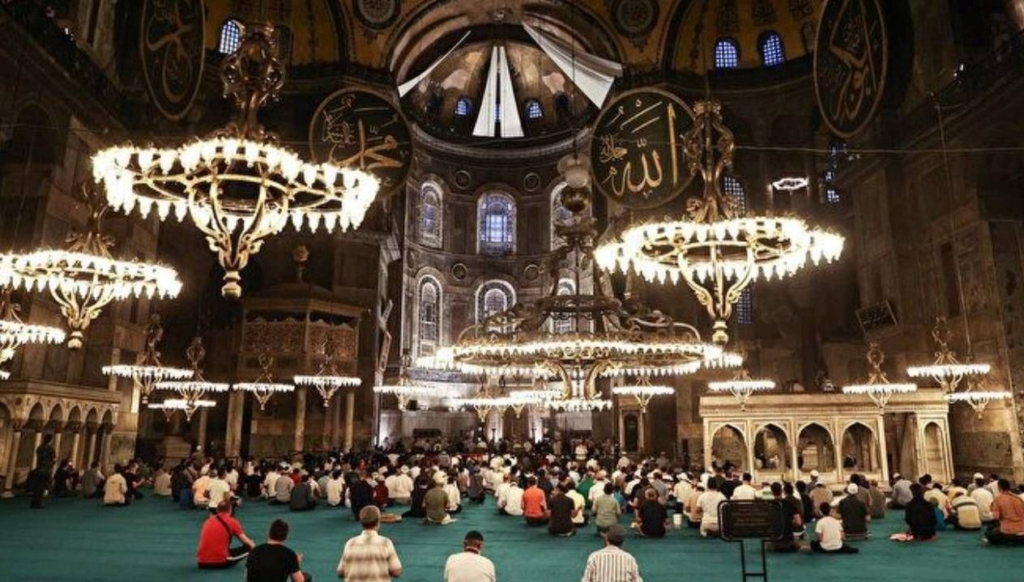

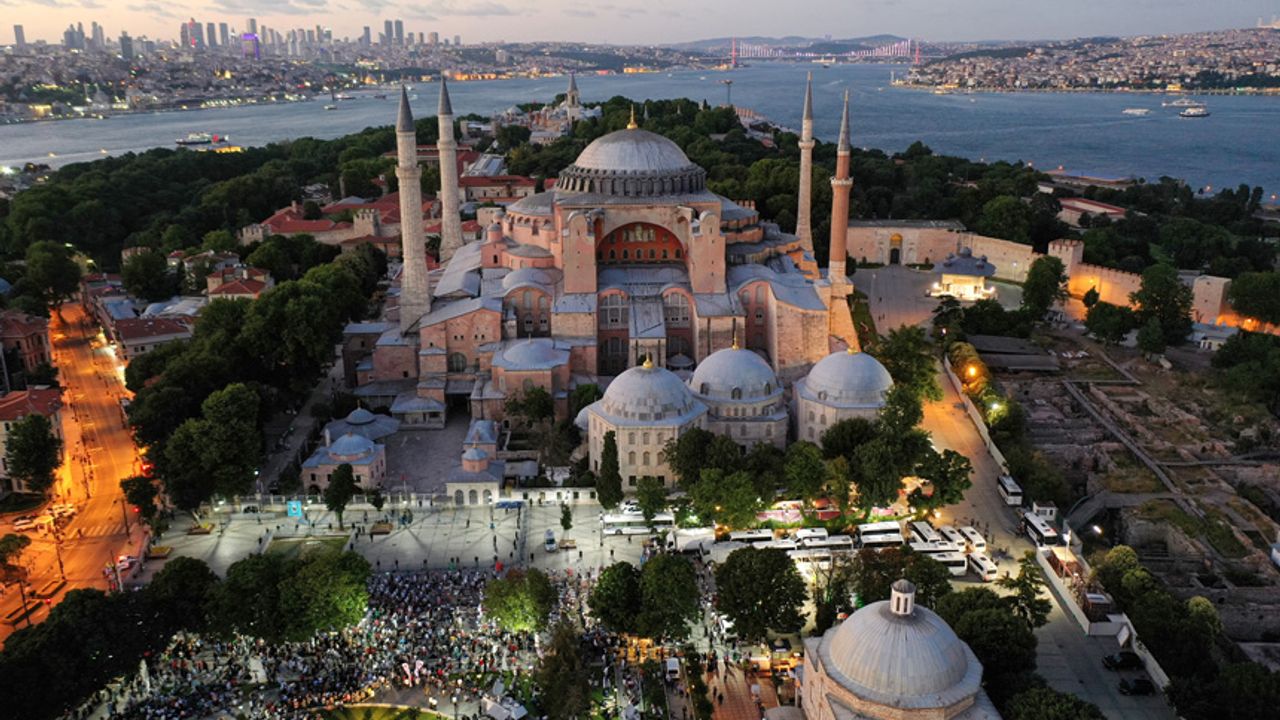
Hagia Sophia, known as Ayasofya in Türkiye, stands as a monumental symbol of architectural brilliance and spiritual depth. For nearly 1,500 years, it has served as a cornerstone of religious, cultural, and political transformation. Originally constructed as a cathedral in 537 during the Byzantine Empire, Ayasofya functioned as a church for 916 years before being converted into a mosque following the conquest of İstanbul in 1453. For 481 years, it was one of the most important mosques in the Ottoman Empire.
In 1934, Ayasofya was turned into a museum by a Cabinet decree. This transition marked the beginning of its 86-year chapter as a secular, yet spiritually resonant, museum that attracted millions of visitors annually. However, the tides of history shifted once again on July 10, 2020, when Türkiye’s highest administrative court, the Council of State (Danıştay), annulled the 1934 decree. This decision opened the path for Ayasofya to resume its original function as a mosque.
The Legal and Political Turning Point
The journey to Ayasofya’s reinstatement as a mosque was driven by a legal case filed by the “Permanent Foundations Association for Historical Artifacts and Environment”. Their request for the annulment of the 1934 decree was eventually upheld unanimously by the Council of State’s 10th Chamber.
On the very day of the ruling, President Recep Tayyip Erdoğan signed a Presidential Decree that formally transferred Ayasofya to the Presidency of Religious Affairs (Diyanet İşleri Başkanlığı). The mosque was officially reopened for worship with a historic Friday prayer on July 24, 2020, attended by tens of thousands and watched by millions worldwide.
Ayasofya as a Center of Worship and Learning
Ayasofya has never been a mere architectural marvel. Throughout its long history, it has functioned as a dynamic religious and educational hub. Prof. Dr. Safi Arpaguş, the Mufti of İstanbul, emphasized in his remarks that Ayasofya was historically surrounded by madrasas (Islamic schools), making it a center of Islamic learning.
Following its reopening as a mosque, this educational mission was immediately revived. The Mufti explained that lessons in Qur’anic interpretation (tafsir), prophetic traditions (hadith), and Qur’an recitation (qiraat) began within the mosque. Every Friday, spiritual wisdom sessions are held, while Saturdays feature authentic hadith lessons from Sahih al-Bukhari.
This transformation signifies more than religious revival—it is a cultural awakening that seeks to reconnect modern society with Türkiye’s deep-rooted Islamic identity.
A Dual-Purpose Space
Ayasofya’s unique status as both a mosque and a UNESCO World Heritage Site required a delicate balance between religious use and public access. According to Arpaguş, this was accomplished by allocating the ground floor exclusively for Muslim worshippers, while the upper galleries remain open to local and international tourists under the supervision of the Ministry of Culture and Tourism and the Directorate General of Foundations.
This strategic arrangement ensures that visitors can appreciate Ayasofya’s historical significance without interfering with its primary function as a place of prayer. Guided tours in multiple languages, coordinated by İstanbul’s Mufti Office, provide guests with valuable insights into Islamic belief, prayer traditions, and mosque architecture.
A Place of Guidance for New Converts
Perhaps one of the most remarkable developments in Ayasofya’s new era is the growing number of individuals who choose to embrace Islam after visiting the mosque. Arpaguş shared that several tourists, moved by the spiritual ambiance and teachings, have expressed their wish to convert.
In such cases, they are referred to the İstanbul Mufti Office, where official conversion ceremonies (ihtida) are held. The ceremony includes a detailed explanation of Islamic beliefs, followed by the recitation of the declaration of faith (shahada). New converts receive a comprehensive religious package prepared by the Presidency of Religious Affairs, along with a certificate of conversion. Continued support is provided to ensure they are not isolated in their new spiritual journey.
Preserving the Sacred Atmosphere
Ensuring that Ayasofya maintains its spiritual sanctity requires more than architectural preservation. According to Mufti Arpaguş, the selection of imams and muezzins (those who call the prayer) is conducted with great care. Only the most qualified individuals—those who combine mastery in Islamic sciences with eloquent recitation—are appointed to serve at Ayasofya.
These religious leaders are tasked not only with leading prayers but also with mentoring students and engaging with the community. Their melodic recitations echo under Ayasofya’s majestic dome and through its historic minarets, ensuring that the divine call to prayer remains a living heartbeat within the ancient walls.
A Cultural Destination with Global Appeal
Since its reclassification as a mosque, Ayasofya has welcomed approximately 40 million visitors. The influx of tourists—both domestic and international—has been consistent, with 10 to 15 million people visiting annually despite the challenges posed by the COVID-19 pandemic.
This extraordinary interest underscores Ayasofya’s dual identity as a place of worship and a cultural landmark. It has become a point of intersection between the spiritual and the secular, the past and the present, the local and the global.
Reviving a Legacy of Knowledge and Faith
In alignment with the vision of Sultan Mehmed the Conqueror, who endowed Ayasofya with a religious and educational mission after the conquest of İstanbul, the current administration continues to emphasize its role as a beacon of knowledge.
Regular Qur’anic recitations, special programs during religious nights and holidays, and collaborations with religious schools reflect a broader effort to rejuvenate Türkiye’s cultural heritage. Through partnerships with imam hatip high schools and theology faculties, Ayasofya serves as a bridge between historical tradition and modern religious education.
Ayasofya’s Message to the World
Ayasofya’s return to its mosque status has sparked global discussions on the intersection of heritage preservation, religious identity, and national sovereignty. While some international actors expressed concern over the change, Türkiye has consistently reiterated that Ayasofya remains accessible to all—Muslims and non-Muslims alike—and that its historical integrity will be preserved.
As a functioning mosque and a global landmark, Ayasofya now carries the dual responsibility of safeguarding Türkiye’s religious identity while continuing to inspire millions as a marvel of world heritage.
Conclusion
The story of Ayasofya is not just a tale of bricks and minarets—it is the living chronicle of Türkiye’s spiritual resilience and cultural continuity. As a sacred mosque, a historical icon, and an educational center, Ayasofya continues to be an enduring symbol of unity, knowledge, and divine beauty.
Its reconversion to a mosque after 86 years marks not a return to the past, but a powerful reassertion of identity in the present. For Türkiye and for the world, Ayasofya remains a luminous testament to faith, history, and the unbreakable bond between people and their sacred spaces.